


 Apple Supplier Luxshare Faces US Patent Probe, Sees Limited Impact
  Meta Launches Muse Wonder AI Models, Shares Rise 3.7%
  Tencent Shares Fall as $5 Billion AI Bond Sale Weighed
  Zcash Plans Quantum-Resistant Security Upgrade for January
  Solidigm Taps Goldman, Morgan Stanley for $10 Billion US IPO
  OpenAI Revenue Hits $50 Billion, Below Earlier $70 Billion Estimate
  OpenAI Annualized Revenue Hits $50 Billion, Below Earlier Estimates
  TSMC Q3 Revenue Beats Estimates as AI Chip Demand Surges
  Elon Musk Eyes Semiconductor Manufacturing Expansion With $15 Billion Terrafab Project
  Elon Musk Accuses Indian Telecom Giants of Blocking Starlink Launch
  Trump Buys Up to $25M in Meta Stock, Invests in SpaceX Debt
  Yandex Data Center Hit by Drone Strike as Russia-Ukraine Cyber Infrastructure Attacks Escalate
  Jameson Lopp Downplays AI Threat to Bitcoin Cryptography
  Anthropic Launches Claude Dashboards and Motion AI Tools
  Apple Names Steve Smith M&A Chief in Leadership Shakeup
  Epic Games Delays Disney Shooter, Shifts to AI-First Development


 Add as a preferred source on Google
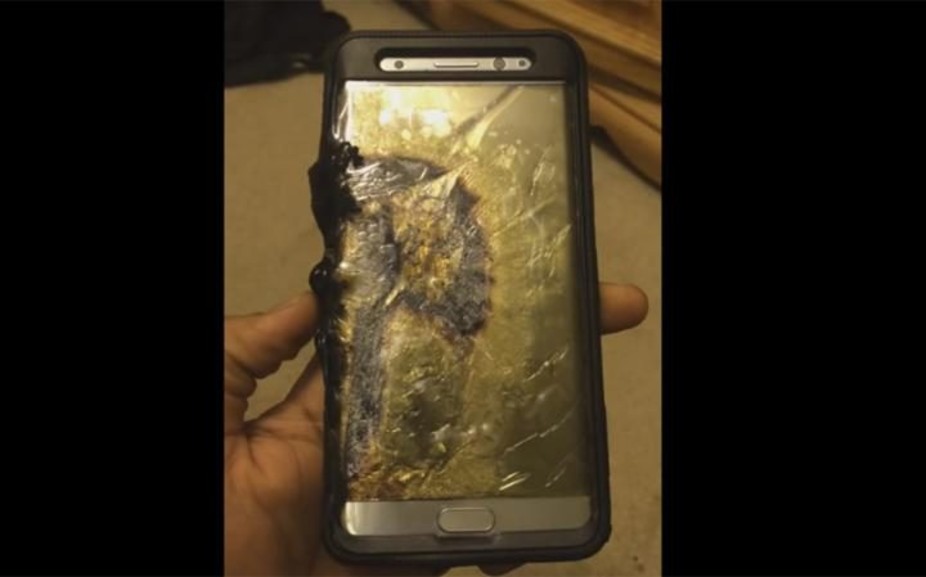

Samsung’s release of its latest phone, the Galaxy Note 7 has turned into a financial and PR disaster with the halting of sales of the phone and recall of millions of phones that have been sold so far.
The problem has been with batteries on the phones catching fire although Samsung’s statement only alludes to their being a “battery cell issue” and that only 35 cases have been reported so far.
Exploding Galaxy 7 Note
For Samsung, the recall couldn’t have come at a worse time. Apple is due to release its new iPhone, also likely to be numbered the 7, this week and Samsung was hoping to steal some of the news spotlight with its massive presence at the Berlin IFA consumer electronics show that is going on at the same time.
Exploding phone batteries is not a new thing and they are not confined to Samsung’s phones. There have been many reports of previous phones that have spontaneously burst into flames, in some cases unfortunately injuring, and even killing the carrier of the phone. Even iPhones have suffered this problem with at least one case occurring as a result of impact when a mountain bike rider fell of his bike and landed on his iPhone 6.
Smart phones have batteries that work through the use of lithium ion. These batteries have the advantage of being quick to charge and producing a lot of power in a compact, lightweight format. The problems start when chemical reactions occur, through overcharging, impurities in the battery or through a sudden impact, and the battery starts to overheat. Unchecked, the heat causes the reactions to go faster causing more heat, resulting in “thermal runaway”. Once the temperature hits 150 degrees Celsius, things proceed until the battery, and phone, catches fire.
A particular issue for the Samsung Galaxy Note 7 is that it uses a USB type C socket for its power charging. Using nonstandard USB to USB C adaptors and even USB C cables has been shown to be extremely risky because of the possibility of putting too much voltage into devices and essentially “frying” them. Using such an adaptor may have been the reason behind at least one of the Samsung Galaxy Note 7 fires.
Exploding batteries have been common in cheaper “hoverboards” which caught fire on charging. But even shipping batteries can end in disaster with the fatal crash of a 747 UPS plane being blamed on its cargo of lithium ion batteries catching fire.
The risk of phones and their batteries catching fire has raised the issue of safety of electronic devices on domestic aircraft. The crew of an international Qantas flight recently, had to extinguish a fire in a seat that was caused by a phone that was crushed after the passenger who dropped it into the mechanisms, moved the seat in an attempt to retrieve it. The airline explicitly warns passengers about this scenario in its safety video.
It is also common for airlines to restrict the carrying of spare batteries on flights to carry-on luggage. The US Federal Aviation Authority are specifically concerned about spare batteries that have exposed terminals that could potentially short circuit through coming into contact with other metal in a bag. The external portable phone re-chargers are less of a problem because they don’t have these exposed terminals and so don’t present so much of an issue.
Most airlines have already also banned hoverboards from being taken onto flights. It didn’t take many confirmed incidents of hoverboards catching fire for this action to be taken. Given that Samsung has explicitly declared that its Galaxy Note 7s suffer from the same issue, and the number of reported incidents is similar to that of the hoverboard, it would not be unreasonable for airlines to take the same precaution with the specific Galaxy Note 7 phone.
The problems with airlines trying to do this in practice however would be significant. Hoverboards were far more obvious to spot than a particular make of phone and the danger presented by the Galaxy Note 7 would largely disappear after the recall has taken place. Telling a passenger that they are not allowed to take their phone onto a flight would present a far greater public relations challenge than stopping them take a hoverboard.
One has to assume that people who have bought a recalled phone will be sufficiently motivated to exchange it as soon as possible in any event. This would make the relative risk to airline flights over the coming weeks extremely low. Given that other stories of exploding phone batteries have not affected phone sales previously, it is unlikely that this issue will impact Samsung in the long run.
 Disclosure
David Glance owns shares in Apple
This article was originally published on The Conversation. Read the original article.







