


 Yes, government influences wages – but not just in the way you might think
  Time to buy local: war fuel price shocks reveal the folly of a long food supply chain
  The ghost of Robodebt – Federal Court rules billions of dollars in welfare debts must be recalculated
  Jordan Bardella Antisemitism Allegations Threaten Le Pen’s Campaign
  AI is driving down the price of knowledge – universities have to rethink what they offer
  Google promotes ‘teacher approved’ apps for kids. Here’s what parents should know
  Booked to travel through the Middle East? Here’s why you shouldn’t cancel your flight
  Trump Announces Massive Oil and Mineral Exploration Plans in Greenland
  6 simple questions to tell if a ‘finfluencer’ is more flash than cash
  Why a ‘rip-off’ degree might be worth the money after all – research study
  Zelenskiy Says Trump’s Support for Russia Is ‘Painful’
  Why have so few atrocities ever been recognised as genocide?
  Debate over H-1B visas shines spotlight on US tech worker shortages
  UN Urges Talks on Lebanon Peacekeeping Mission Extension


 Add as a preferred source on Google
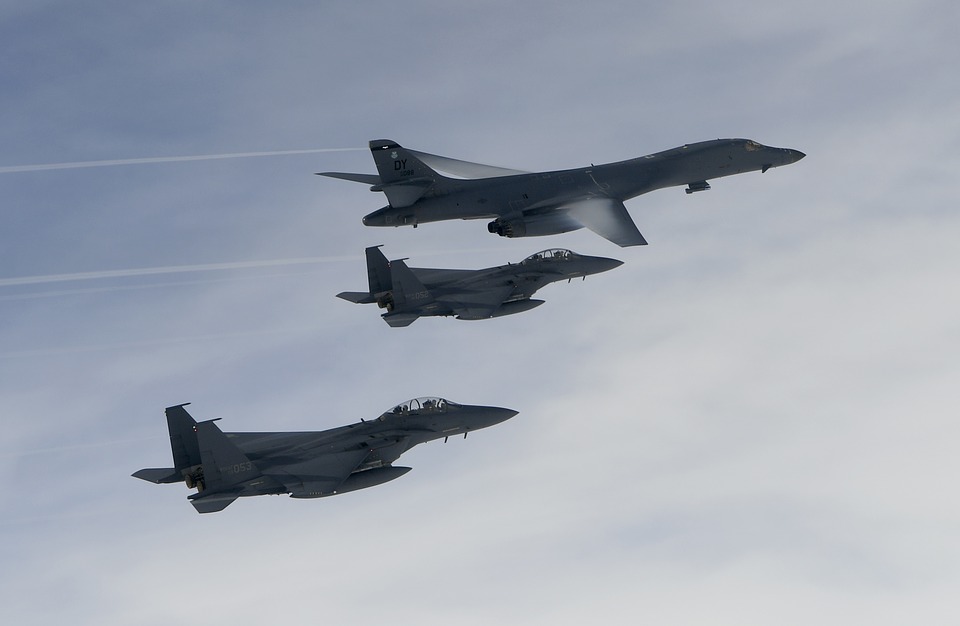
Tensions between South Korea and Russia and China could also become a catalyst to a possible all-out conflict. Fears of a possible world war 3 have since been stoked in the area when South Korea deployed fighter jets upon spotting Russian and Chinese warplanes above its skies.
The South Korean military confirmed its deployment of warplanes into its skies following the detection of 19 warplanes from Russia and China pass over its airspace. Four Chinese warplanes and 15 Russian fighter jets were seen flying into South Korea’s Air Defense Identification Zone or KAIDZ. The country’s joint chiefs of staff said the air force was already instructed to take tactical measures in intercepting the foreign warplanes. They also noted that China and Russia may have been conducting a joint military training exercise but they will continue to look into the incident.
This latest encounter follows an incident in 2019 when South Korean warplanes opened fire at a similar joint fly-in. The air forces fired warning shots in the sky when Russian and Chinese warplanes were seen in its airspace. Fighter jets from Japan also joined Seoul in firing the warning shots and have since accused Moscow and Beijing of intruding in its airspace. Both Russia and China have dismissed the accusations.
Officials from Seoul and Moscow have since engaged in a diplomatic feud following the incident. South Korea’s presidential press secretary Yoon Do Han claimed that Russia had apologized for the incident and would investigate the matter. This has been denied by officials from the Russian Embassy in Seoul.
Meanwhile, world war 3 fears have also been stoked regarding the tensions between Taiwan and China. Taipei has now ramped up its military efforts by beginning the construction of a fleet of advanced submarines to combat potential attacks made by China on the island nation. Experts have predicted that the new military fleet that Taiwan is building could obstruct China’s plans to invade or create a naval blockade. Construction of the first eight submarines already began in November at Kaohsiung. The first fleet is expected to start tests at sea by 2025.
Taiwanese President Tsai Ing-wen called the move “historic” during a ceremony to commemorate the start of the new program.







