The United States launched a sweeping military operation against Iranian targets under “Operation Epic Fury,” deploying advanced weaponry that included Tomahawk cruise missiles, B-2 stealth bombers, F-35 and F/A-18 fighter jets, and low-cost one-way attack drones modeled after Iran’s Shahed systems. U.S. Central Command (CENTCOM) released images detailing the strikes, highlighting the scale and technological depth of the mission.
A notable element of the operation was the reported use of artificial intelligence tools from Anthropic. According to a source familiar with the matter, the Pentagon utilized Anthropic’s Claude AI services during the campaign. The development is significant, as it followed a U.S. declaration labeling Anthropic a potential supply chain risk. The precise role AI played in the strikes remains unclear, though AI technologies have increasingly been integrated across U.S. intelligence and defense operations.
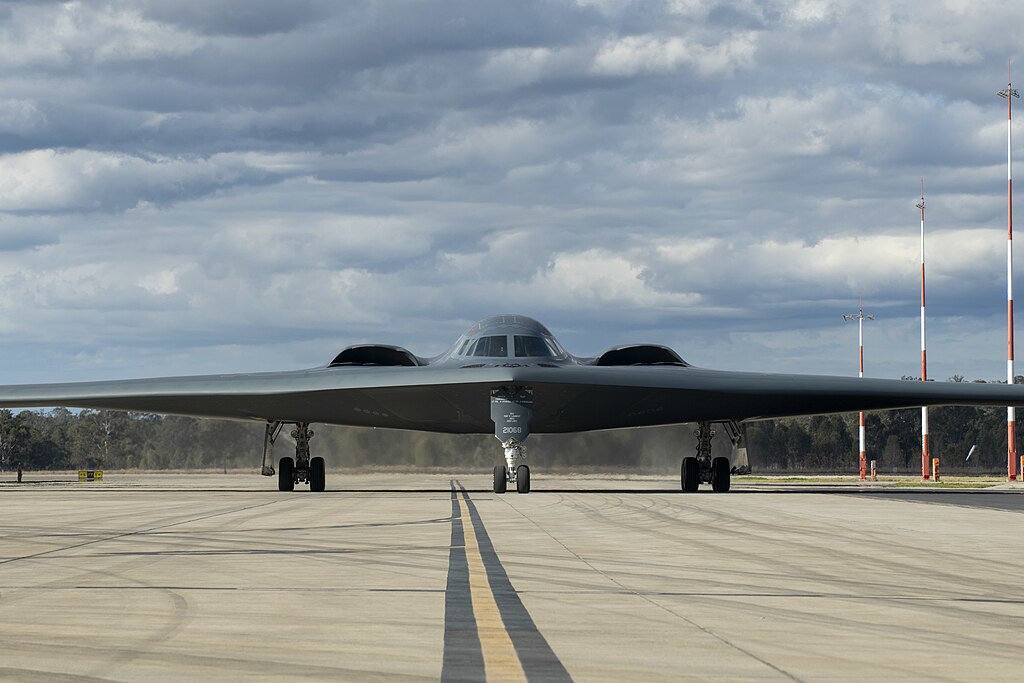
The Pentagon intensified its assault by deploying B-2 Spirit stealth bombers to target hardened, underground missile facilities with 2,000-pound bombs. Built by Northrop Grumman, the $2 billion B-2 features a 172-foot wingspan and long-range stealth capabilities, making it ideal for deep-strike missions against fortified targets.
In a first for CENTCOM, the U.S. military used low-cost kamikaze drones resembling Iran’s Shahed drones. The LUCAS (Low-Cost Unmanned Combat Attack System), priced around $35,000, reflects a broader “affordable mass” strategy emphasizing high-volume, cost-effective weapons. More advanced MQ-9 Reaper drones and counter-drone systems were also deployed.
RTX’s Raytheon-manufactured Tomahawk missiles played a central role. Capable of striking targets up to 1,000 miles away, each missile costs approximately $1.3 million. The Pentagon plans to increase procurement and production capacity significantly.
F-35 stealth fighters and Boeing-built F/A-18 jets supported the operation, conducting air-to-air and air-to-ground missions. The F-35’s radar-evading design and precision-guided munitions capability underscore its continued importance in modern warfare across the Middle East.