
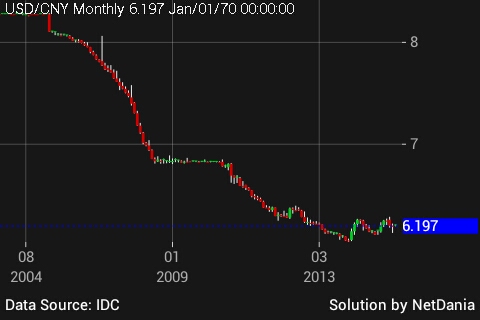
Western countries have been accusing China for keeping the value of Yuan low against dollar. China Officially removed the peg long back around 2005, however volatility has been low since it was managed by Peoples bank of China. That didn't discourage traders to bet against Yuan's appreciation against dollar.
- Chinese Yuan strengthened against dollar from 8 in 2006 to 6 in 2014. It was slow but steady one way appreciation. Volatility has been going up since Yuan reached 6 mark against dollar while PBOC has increased the daily band of Yuan trading by 2%.
Now International Monetary Fund (IMF) has declared that Chinese Yuan is no longer undervalued, raising speculation that IMF might add Yuan to its SDR basket this year. IMF reviews SDR composition every 5 years.
However according to IMF, China's current account surplus and forex reserve are still too strong. IMF is unlikely to add a currency to SDR basket that is heavily managed by the country's central bank, with large forex reserve. IMF also predicated China's growth to be 6.8% this year, lower than 7% official target.
PBOC is likely to push for greater reform this year and the coming next, in a bid to internationalize Yuan. Yuan is currently trading at 6.197 against dollar.
PBOC has kept volatility low as China experience record capital account outflow in tune of $150 billion in first three months of the year.


