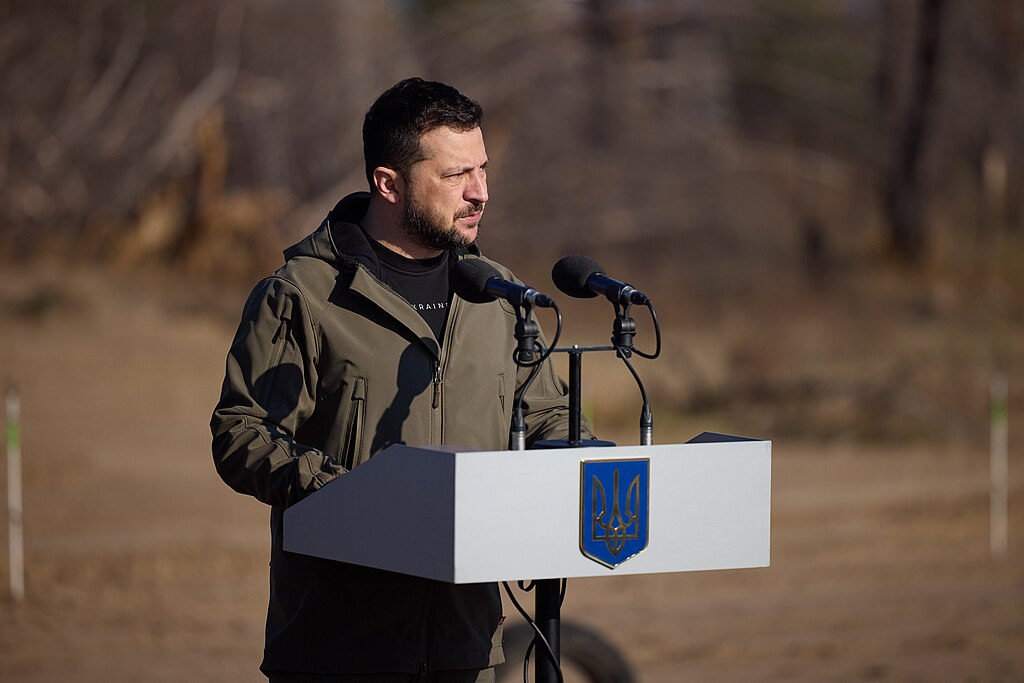
Ukrainian President Volodymyr Zelenskiy said on Saturday that Ukraine is awaiting further information from the United States regarding upcoming peace talks, signaling that new diplomatic meetings could take place as early as next week. The statement highlights ongoing international efforts to explore potential pathways toward ending the war between Ukraine and Russia, while also underscoring the uncertainty surrounding current negotiations.
In his nightly video address, President Zelenskiy emphasized that Ukraine remains in close and continuous communication with U.S. officials. According to him, Kyiv is expecting concrete details from Washington about the format, agenda, and timing of future meetings focused on peace initiatives. Zelenskiy noted that Ukraine is actively preparing for these discussions and is counting on progress in the coming days, reinforcing the country’s commitment to diplomatic engagement alongside its defense efforts.
Zelenskiy’s remarks also appeared to cast doubt on a previously anticipated meeting scheduled for Sunday in the United Arab Emirates. That meeting was expected to bring together representatives from Ukraine, Russia, and the United States. However, his comments suggested that the gathering may no longer be taking place as planned, raising questions about shifting diplomatic timelines and behind-the-scenes negotiations.
The potential delay or cancellation of the UAE meeting reflects the complex and fluid nature of peace talks related to the Ukraine war. While the United States has played a central role in facilitating dialogue and supporting Ukraine diplomatically and militarily, concrete outcomes from peace discussions have remained elusive. Zelenskiy has repeatedly stressed that any negotiations must respect Ukraine’s sovereignty, territorial integrity, and long-term security guarantees.
As global attention remains focused on the conflict, expectations are building around the possibility of renewed talks next week. Analysts see Zelenskiy’s statement as a cautious but hopeful signal that diplomatic channels remain open, even as fighting continues on the ground. With Ukraine, Russia, and the United States all involved in shaping the next steps, the coming days may prove critical in determining whether meaningful progress toward peace can be achieved.