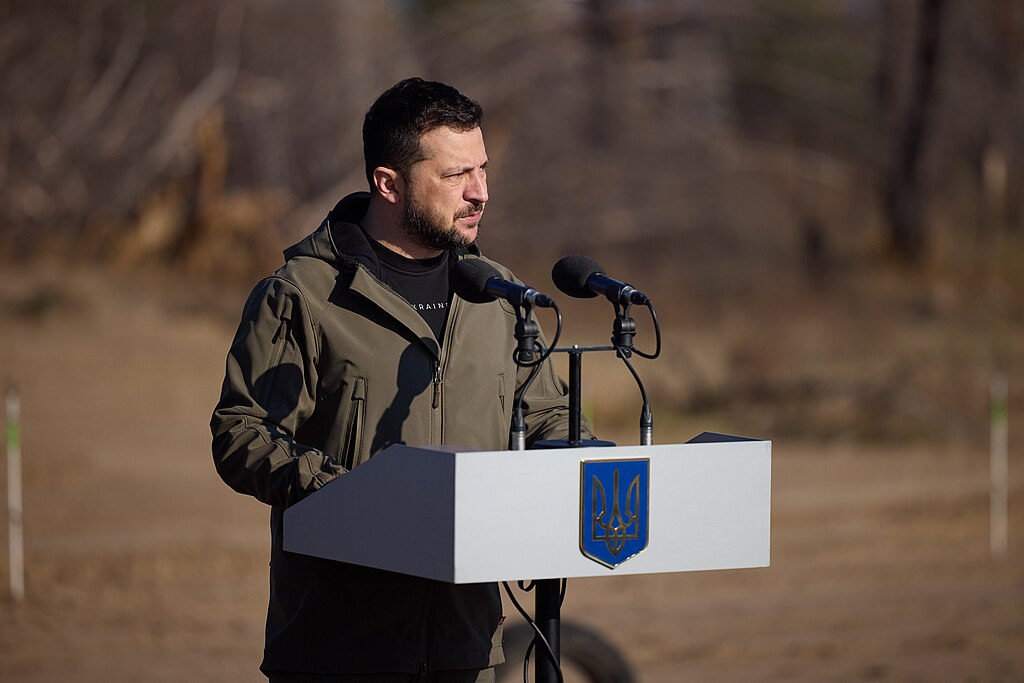
Ukrainian President Volodymyr Zelenskiy has reaffirmed Kyiv’s willingness to support U.S.-led peace proposals aimed at ending the Russia-Ukraine war, as President Donald Trump intensifies efforts to broker a resolution ahead of the upcoming U.S. midterm elections. In an interview published by The Atlantic, Zelenskiy emphasized that Ukraine is open to diplomatic solutions but will not accept a peace agreement that compromises its national interests or long-term security.
Zelenskiy explained that Ukraine’s strategy is to demonstrate constructive engagement with Washington’s peace initiatives. By backing U.S. proposals in formats designed to accelerate negotiations, Kyiv aims to counter any perception that it seeks to prolong the conflict with Russia. The Ukrainian leader made clear that his government is prepared to hold both a presidential election and a national referendum on any potential peace deal, provided that strong security guarantees and a formal ceasefire are in place.
Addressing domestic and international concerns, Zelenskiy stated that he is not holding onto power and is ready for elections once security conditions allow. He rejected a reported proposal to announce elections and a referendum on February 24, the anniversary of Russia’s 2022 invasion, noting that key issues such as a ceasefire and U.S. security guarantees remain unresolved.
Central to ongoing negotiations are assurances that would protect Ukraine from future Russian aggression. Zelenskiy acknowledged that discussions are still underway, including whether the United States would intercept incoming missiles if Russia violates a peace agreement. He stressed that all security commitments must be clearly documented before any deal is finalized.
Russian President Vladimir Putin has questioned Zelenskiy’s legitimacy due to the absence of recent elections, but Kyiv maintains that wartime conditions have prevented voting. As diplomatic talks continue, Ukraine remains focused on securing a peace agreement that ensures sovereignty, stability, and lasting protection against renewed conflict.