

 Menu
Menu

 Search

- News

- Economy

- Central Banks
- Investing
- Research
- Roundups
- Digital Currency
- Insights
- Technical Analysis
- Technology
- Business
- Law
- Health
- Nature
- Fintech
- Science
- Topic
- Opinions
- ©Econometrics LLC . All Rights Reserved.
Ben Handel
Ben Handel is an economist at the Unversity of Claifornia at Berkeley whose research focuses on health care markets. His research has studied consumer decision-making and market design of health insurance markets, and illustrates the interplay between consumer decision-making and market regulation. Ben has also researched provider financial incentives and take up of preventive care in health care markets.
Ben received his Ph.D. in economics from Northwestern in 2010 and an A.B. in Economics from Princeton in 2004. In addition to his teaching at Berkeley, he has advised numerous businesses and policymakers on a range of issues related to health economics.

Less 
Ben Hayes
Director, Centre for Animal Science, The University of Queensland
Professor Hayes has extensive research experience in genetic improvement of livestock, crop, pasture and aquaculture species, with a focus on integration of genomic information into breeding programs, including leading many large scale projects which have successfully implemented genomic technologies in livestock and cropping industries. Author of more than 300 journal papers, including in Nature Genetics, Nature Reviews Genetics, and Science, contributing to statistical methodology for genomic, microbiome and metagenomic profile predictions, quantitative genetics including knowledge of genetic mechanisms underlying complex traits, and development of bioinformatics pipelines for sequence analysis. Clarivate Highly cited researcher.
Less
Ben Heard
Ben Heard is a doctoral student at the University of Adelaide, examining pathways for the decarbonisation of Australian electricity with the inclusion of nuclear energy.
As director of (currently in hiatus) ThinkClimate Consulting he delivered modelling of carbon neutral pathways for South Australia's largest local government and recently advised the South Australian Freight Council in a detailed report called Green Freight.
Ben’s appreciation of the climate crisis forced a rethink of his long-held opposition to nuclear power. In early 2011 he delivered his seminal presentation Nuclear Power: From Opponent to Proponent to a strong response. Ben has since become one of Australia’s most prominent nuclear advocates, presenting his work to audiences large and small around Australia including the 2011 Local Government Association State Conference, the 2012 Frontiers in Science conference and a landmark televised nuclear debate victory in 2012. Ben has written on nuclear power extensively in print and on-line media, including a recent popular article for ABC Environment, Renewable vs nuclear is the wrong battle. His advocacy website, Decarbonise SA, has become a popular resource, attracting over 100,000 hits.
In 2012 he launched his independently funded research Zero Carbon Options, with a first-of-a-kind direct comparison of nuclear and renewable options for the replacement of coal-fired electricity in Australia. In July 2013 he was a presenter and panellist for the ATSE conference "Nuclear power for Australia?"
Ben lives in Adelaide with wife Gemma Munro and their two children.
Less
Ben Hirsch
Senior Lecturer in Zoology and Ecology, James Cook University
I'm a wildlife biologist with 25+ years experience studying animal behavior, mostly focusing on the behavioral ecology of mammals. I was a senior lecturer at JCU for 8 years and I've published ~50 papers in journals such as PNAS, Ecology Letters, Methods in Ecology and Evolution, etc..
Less
Ben Horne
Assistant Professor in the School of Information Sciences, University of Tennessee
Less
Ben Jervis
Professor of Medieval Archaeology, University of Leicester
I am professor of medieval archaeology, specialising in the archaeology of medieval Britain and the analysis of ceramics. My research seeks to use material culture to understand how people coped with and experienced change, and how the roots of contemporary society are planted in the medieval period. For example, my research into diet examines how communities adapted to social and political change in the early medieval period and my analysis of medieval rural material culture considers how the development of commercial attitudes can be seen in the archaeological record. My work also applies archaeological theory (particularly ‘non-representational’ theories such as Assemblage Theory and Actor-Network Theory) to important archaeological questions. I also examine the relationship between historical text and the archaeological record.
I am currently PI of the UKRI funded research project ENDURE: Urban Life in a Time of Crisis, which examines lived experiences of the 14th century crises among the populations of small towns in medieval England.
Honours and awards
PI: UKRI funded project: ENDURE: Urban Life in a Time of Crisis
Co-Investigator, Leverhulme Trust funded project Living Standards and Material Culture in English Rural Households 1300-1600
Recipient of grant from the Royal Archaeological Insitute Tony Clark Fund (2016)
Recipient of research grant from Society of Antiquaries (2016)
Recipient of research grant from Society for Medieval Archaeology (2016)
Recipient of grant from Society for Medieval Archaeology Eric Fletcher Fund (2009)
AHRC Doctoral Award (2008)
AHRC MA studentship (2006)
Previous academic positions
2014 -2023: Lecturer/Senior Lecturer/Reader in Archaeology, Cardiff University
2012-13: Lecturer in Medieval History & Archaeology, Birkbeck
2012: Research Associate, Faculty of History, University of Cambridge
2010: Research Assistant, Institute of Archaeology, UCL.
2006: Graduate Attachment, British Institute in East Africa, Nairobi.
Speaking engagements
Less
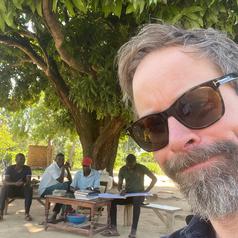
Ben Jones
Senior Lecturer, University of East Anglia
PhD London School of Economics
MA Johns Hopkins University
BA Cambridge University
Less
Ben Kisby
Senior Lecturer in Politics, University of Lincoln
Ben Kisby is Senior Lecturer in Politics at the University of Lincoln, UK. He has published widely on citizenship education. His research interests include British politics, public policy and youth political engagement. He co-founded the Political Studies Association’s Young People’s Politics specialist research group.
Less
Ben Kolosz
Lecturer (Assistant Professor) of Renewable Energy and Carbon Removal, University of Hull
Ben is a Lecturer (Assistant Professor) in renewable energy and carbon removal at the Energy and Environment Institute, University of Hull (UK).
He holds a PhD in Civil and Environmental Engineering from the University of Leeds and has held prestigious research appointments in the United Kingdom and the United States. He is a former member of the Kleinman Center for Energy Policy, University of Pennsylvania (U.S.).
His work seeks to understand the dynamics and quantification of environmental emissions and energy needs of technological systems. His research also aims to anticipate the impact of new technologies and their infrastructure, and to develop practical modelling strategies for avoiding negative impacts, as well as the societal consequences of using such technologies on local and global communities. Research interests include geospatial integration strategies for carbon dioxide removal technologies coupled with renewable energy, sustainable fuels as well as low carbon mine remediation using waste carbon and geothermal energy supply from mine wastewater. His methods to accomplish this work include but are not limited to Life Cycle Analysis (LCA), Techno-Economic Analysis (TEA) and Artificial Intelligence (AI).
Research interests:
Renewable Energy
Carbon Dioxide Removal
Life Cycle Analysis
Data Science
Sustainable Transport
Less
Ben Kravitz
Assistant Professor of Earth and Atmospheric Sciences, Indiana University
I run climate models on global and regional scales. My main area of research is climate engineering, or deliberate modification of the climate system to offset global warming. I have completed postdoctoral research associate positions at the Carnegie Institution for Science and Pacific Northwest National Laboratory (PNNL). I was then a staff scientist at PNNL for 3 years before accepting a faculty position at Indiana University, starting 2019.
Less
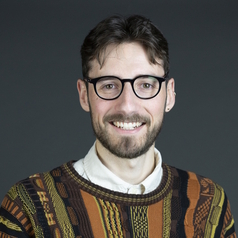
Ben Lyall
Research fellow, School of Social Sciences, Monash University
Ben is a digital sociologist currently working in the School of Social Sciences at Monash University. He is interested in the social lives of technologies, and has a background in self-tracking practices and wearable devices. His current projects probe the intersections of digital platforms, health and wellbeing, e-government, and public services.
Less
Ben Marshall
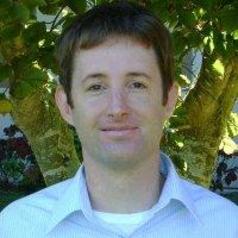
Professor Ben Marshall holds the MSA Charitable Trust Chair in Finance at Massey University, New Zealand. Among other topics, his research interests include: return predictability including the rigorous testing of trading strategies, mechanisms for minimising transaction costs in order placement, ETFs, hedging commodity risk, and liquidity issues. Ben has consulted to a range of organisations, ranging from large multinationals and hedge funds to SMEs, and not for profit organisations.His research has been discussed in numerous newspapers and investment blogs and he is a member of the Australian New Zealand Shadow Finance Regulatory Committee.
Less
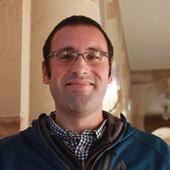
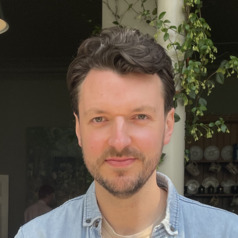
Ben Powis
Senior Lecturer in Sport, Bournemouth University
Ben Powis, PhD, is a Senior Lecturer in Sport at Bournemouth University. His research interests include the sociology of disability sport, the embodied experiences of visually impaired people in sport and physical activity, and investigating the significance of sporting sensorial experiences.
Less

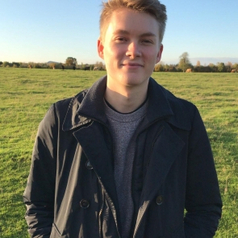
Ben Rider-Stokes
Post Doctoral Researcher in Achondrite Meteorites, The Open University
I am currently a Postdoctoral Research Associate in the School of Physical Sciences at The Open University. My research focuses on understanding the formation and evolution of the planets, asteroids, and moons in the Solar System. I am specifically addressing the timing of impact mixing, magmatic differentiation, and volatile accretion of achondrites, meteorites that have come from asteroids that experienced thermal processes less than 20 million years after Solar System formation.
In the longer term, I hope to pursue an academic career that combines original research into planetary systems (principally using material science techniques) with teaching and mentoring of future planetary scientists.
Less
Ben Thomson
Masters of Public Health student, Bloomberg School of Public Health, Johns Hopkins University
Dr. Ben Thomson (MD MSc MPH(c) FRCPC) is a nephrology and internal medicine physician practicing in the Toronto area. He commonly travels outside Canada to do humanitarian work, including to Gaza and Uganda. He runs a charity to enhance medical education in low and middle income countries, and is completing MPH at Johns Hopkins school of public health, specializing in Humanitarian Health
Less
Ben Tscharke
Research fellow, Analytical Chemistry, The University of Queensland
Dr Ben Tscharke is an early career researcher and analytical chemist with a keen interest in quantifying analytes in environmental samples. Ben is a Senior Research Fellow at the University of Queensland research institute, Queensland Alliance for Environmental Health Sciences (QAEHS). His key focus at QAEHS involves the wastewater based epidemiological approach to determine community consumption and exposure to a range of illicit drugs, pharmaceuticals and personal care products. He leads the Australian Criminal Intelligence Commission's National Wastewater Drug Monitoring program at UQ, for which UQ collaborates with the University of South Australia.
Less
Ben Zdencanovic
Postdoctoral Associate in History and Policy, University of California, Los Angeles
Less
Ben Zunica
Lecturer in Mathematics Education, University of Sydney
I received my PhD in 2022 and am currently a lecturer in Education, specialising in Initial Teacher Education for Mathematics. I was a secondary educator for 19 years, until mid 2022, prior to my appointment at the University of Sydney, teaching Mathematics and Computing. I have published and presented in both professional and academic settings. In addition, I have been consulted by NESA for a number of projects, writing Stage 6 curriculum, as a member of a Technical Advisory Group, as a member of a HSC examination committee and as a senior marker for the HSC.
Less
Ben Lee Taylor
Postdoctoral Fellow in Research on Teaching and Learning, McMaster University
My doctoral research and dissertation examined early 20th century satiric art and literature. However, my experiences teaching during and after the COVID-19 pandemic led me to my current position as a postdoctoral fellow researching the impact of artificial intelligence on higher education. In this position at McMaster, I have designed and am conducting a study on the design of assessments for students in a pedagogical environment that is being increasingly disrupted by the availability and use of tools like ChatGPT. The mixed methods study will run through spring of 2024 and includes several components that aim to help instructors address AI in their courses and classrooms.
Less
Ben M Clift
Professor of Political Economy, University of Warwick
Ben recently won a highly prestigious Leverhulme Major Research Fellowship for a project entitled, ‘The Office for Budget Responsibility (OBR) and the Politics of UK Growth amidst Brexit, Uncertainty and Austerity’. This will run from October 1st 2018 to September 30th 2021. Ben's wider research interests lie in comparative and international political economy, and he has published widely on the IMF, French and comparative capitalisms, the politics of economic ideas, capital mobility and economic policy autonomy, the political economy of social democracy, and French and British politics in journals including The British Journal of Political Science, Journal of Common Market Studies, The Journal of European Public Policy, The Review of International Political Economy, New Political Economy, Party Politics, and Political Studies.
Less
Ben Thomas Gleeson
Doctoral Candidate, Australian National University
Doctoral candidate in Human Ecology at the Fenner School of Environment and Society, ANU. Previous research in Biological Anthropology and Ecological Agriculture.
Less
Benedetta Carnaghi
British Academy Newton International Fellow, Department of History, Durham University
I am a British Academy Newton International Fellow at Durham University, where I am researching a project entitled "Making Fun of the Fascists: Humor Against the Leader Cult in Italy, France, and Germany, 1922–1945." I started working on this project at University College Dublin, where I was an Irish Research Council Government of Ireland Postdoctoral Fellow. This book project is a study of how humor was used as an instrument of political resistance against dictators in Fascist Italy, Nazi Germany, and Vichy France. As a historian of modern Italy, France, and Germany, I explore the history of totalitarianism from below, examining the everyday experience of terror under authoritarian regimes.
I was previously a visiting lecturer at the John S. Knight Institute for Writing in the Disciplines at Cornell University in Ithaca, NY, USA. I earned my doctorate in History from Cornell (2021), winning the Messenger-Chalmers Prize for the Best Dissertation on Human Progress & the Evolution of Civilization and publishing in the Journal of Modern Italian Studies, S:I.M.O.N. Shoah: Intervention. Methods. Documentation, and The Space Between: Literature and Culture 1914-1945. I have two Masters of Arts in Contemporary History from the Paris 1 – Panthéon-Sorbonne University (2012 and 2013), an additional diploma from the excellence program of the École normale supérieure in Paris (2015), and a Bachelor of Arts in History from the University of Padua, Italy (2011).
Less
Benedetta Rossi
Professor of History, UCL
Benedetta Rossi works on twentieth and nineteenth century African history with a focus on slavery and other forms of unfreedom, abolition and abolitionism, labour, migration, planned development, and gender. She is currently working on a book project entitled Slavery and Abolition in Twentieth Century Africa, as well as on a number of collaborative writing and editorial projects on the global history of abolitionism. Between October 2020 and September 2025, she holds an Advanced Grant of the European Research Council on African Abolitionism: The Rise and Transformations of Anti-Slavery in Africa (AFRAB, grant no. 885418).
Less
Benedict Burbridge
Head of Art History at University of Sussex, University of Sussex
Professor Ben Burbridge is a writer, curator, academic and Head of Art History at University of Sussex. Recent books include Photography Reframed (with Annebella Pollen, 2018) and Photography After Capitalism (2020). Curatorial projects include the 2012 Brighton Photo Biennial, Agents of Change: Photography and the Politics of Space (various venues, 2012) and Revelations: Experiments in Photography (Science Museum, London, 2015). A former Editor of Photoworks magazine, he has written about contemporary art and photography for numerous publications including Photography and Culture, FOAM, and The Guardian, He is currently working on a book about British art, cultural memory and the UK rave scene.
Less
Benedict Morrison
Senior lecturer in Film, Television, Literature, and Queer Studies, University of Exeter
Less

Benedicta Quaye
Benedicta is a lecturer in Clinical Anatomy at the Lancaster Medical school. Prior to joining Lancaster, she was a Part time lecturer in Anatomy at the Justus Liebig University (Germany) where she graduated with two PhDs in Human biology and Neuroscience. Her research interest is in cardiovascular biology, Medical education and metabolism.
Less
Bénédicte L. Tremblay
Nutritionniste et stagiaire postdoctorale, Université du Québec à Chicoutimi (UQAC)
Je suis diététistes-nutritionniste, membre de l'Ordre des diététistes-nutritionniste du Québec. J'ai réalisé une maîtrise et un doctorat en nutrition à l'Université Laval avec une spécialisation en nutrigénomique et génomique nutritionnelle. Je suis actuellement stagiaire postdoctorale à l'Université du Québec à Chicoutimi en sciences fondamentales avec un projet sur la génomique des allergies alimentaires et de l'asthme.
Less


- Market Data




