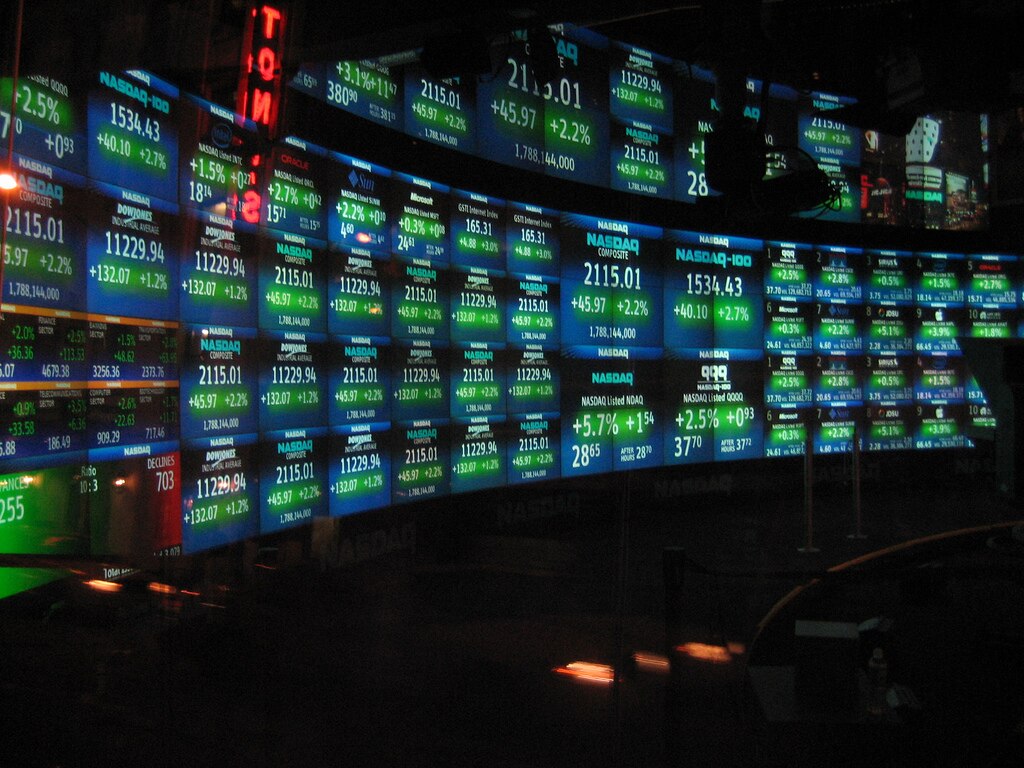
Global financial markets extended their losses for a third straight session on Friday as a deepening Wall Street selloff rattled investor confidence across equities, cryptocurrencies, and precious metals. Rising concerns over artificial intelligence profitability, labor market weakness, and aggressive unwinding of crowded trades have fueled sharp volatility worldwide.
Asian markets led the downturn, with MSCI’s Asia-Pacific index excluding Japan falling 1% for a second consecutive day. South Korea’s Kospi plunged 5%, triggering a temporary trading halt shortly after the open. U.S. equity futures pointed lower, with S&P 500 e-mini futures down 0.2% and Nasdaq futures sliding 0.4%, signaling continued pressure on technology stocks. The S&P 500 has now turned negative for the year as fears mount over slowing economic growth and potential job losses.
Investor anxiety intensified following data showing U.S. employer layoffs surged in January to the highest level for that month in 17 years, according to Challenger, Gray & Christmas. At the same time, concerns that new AI models could erode software company margins sparked a sharp selloff in the S&P 500 software and services index, which dropped 4.6% and has lost roughly $1 trillion in market value since late January in what traders have dubbed “software-mageddon.”
Commodities and digital assets also experienced extreme swings. Gold edged down 0.1% to $4,764.43, while silver saw a dramatic intraday plunge of up to 10% before recovering to trade 1.4% lower. Cryptocurrency markets rebounded after a $2 trillion wipeout, with bitcoin rising 3.7% to $65,446 and ether gaining 4.4%, reversing earlier steep losses.
In fixed income and currency markets, expectations of potential Federal Reserve rate cuts grew, with futures pricing a higher probability of easing at the March meeting. The U.S. dollar index remained flat, Treasury yields eased, and the yen strengthened ahead of Japan’s upcoming election. Oil prices also slipped, with Brent crude down 0.4%, reflecting broader risk-off sentiment across global markets.