

 Menu
Menu

 Search

- News

- Economy

- Central Banks
- Investing
- Research
- Roundups
- Digital Currency
- Insights
- Technical Analysis
- Technology
- Business
- Law
- Health
- Nature
- Fintech
- Science
- Topic
- Opinions
- ©Econometrics LLC . All Rights Reserved.

Stephanie Arnold
PhD Candidate, Università di Bologna
Stephanie Arnold is a PhD Fellow at UNU-CRIS within the Digital Governance cluster and a PhD researcher at the Department of Political and Social Sciences of the University of Bologna (Italy). Throughout 2022/2023 she was a visiting PhD researcher at the Centre for Digitalization, Democracy, and Innovation of the Brussels School of Governance (VUB). Her research examines the role of foreign players in the digital development of Sub-Saharan Africa.
Previously, she studied abroad at Leiden University and the China University for Political Science and Law in Beijing. She also completed numerous internships including at the Embassy of Italy in Tanzania and the NATO Office of Legal Affairs. In 2022, she was selected to join the Europaeum Scholars Programme, a two-year policy and leadership course for doctoral students coordinated by the University of Oxford.
She obtained a 5-year master’s degree in law from the University of Bologna with a master thesis on cross-border data transfers between China and the European Union. She is fluent in English, German, Italian, and Swahili.

Less 

Stephanie Balkwill
Associate Professor of Asian Languages and Cultures, University of California, Los Angeles
Less

Stephanie Brookes
Senior Lecturer, School of Media, Film and Journalism, Monash University
Dr Stephanie Brookes is senior lecturer in journalism in the School of Media, Film and Journalism at Monash University. She researches media, journalism and politics, focusing on election campaigns, political journalism and journalistic identity, and fact-checking. She has a particular interest in questions of identity and belonging in news media and political discourse.
She has published widely in journal articles and book chapters, including co-editing the May 2018 special edition of Media International Australia on press gallery and political journalism in Australia, and is the author of Politics, Media and Campaign Language: Australia's Identity Anxiety (Anthem Press, 2017).
Less

Stephanie Cleland
Assistant Professor, Faculty of Health Sciences, Simon Fraser University
Stephanie Cleland is an assistant professor in the Faculty of Health Sciences at Simon Fraser University and a research scientist at the Vancouver Coastal Health Research Institute. Her research focuses on evaluating the human health impacts of exposure to climate change-influenced environmental hazards, including wildfire smoke and extreme heat, using environmental epidemiology, exposure assessments, and health impact assessments. She holds a PhD and MSPH in Environmental Sciences and Engineering from the University of North Carolina-Chapel Hill. She conducted her dissertation research as an Oak Ridge Institute for Science and Education research fellow at the United States Environmental Protection Agency in the Center for Public Health and Environmental Assessment.
Less

Stephanie Cowdery
Research Fellow, Carer Hub: A Centre of Excellence in Cancer Carer Research, Translation and Impact, Deakin University
Dr. Stephanie Cowdery is a Postdoctoral Research Fellow at Deakin University’s Centre of Excellence in Cancer Care Research Translation and Impact. Previously, she was a Senior Research and Evaluation Officer in the Behavioral Science Division at Cancer Council Victoria, where she specialised in skin cancer prevention, early detection, population monitoring, and the evaluation of SunSmart Victoria programs and campaigns. Dr. Cowdery holds a PhD in Medicine from Deakin University's School of Medicine, focusing on cancer control research, as well as a postgraduate degree in Psychology and an undergraduate degree in Health Sciences. Her extensive experience spans multiple disciplines, including psychiatry, public health, epidemiology, and oncology.
Less

Stephanie Dennison
Reader in Brazilian Studies, University of Leeds
Stephanie Dennison, originally from Northern Ireland, via Rio de Janeiro, has been living in Yorkshire and working at the University of Leeds for the last 20 years. She is a Reader (Associate Professor) in Brazilian Studies and a founding member of the Centre for World Cinemas. She is co-author with Lisa Shaw of two books on Brazilian cinema and edited books on Latin American film and popular culture, she co-edited with Song Hwee Lim Remapping World Cinema and she is currently developing an international research network examining cinema as soft-power asset in BRICS nations.
Less

Stephanie Eccles
PhD Candidate, Department of Geography, Planning, and Environment, Concordia University
Stephanie Eccles is currently a Ph.D. candidate at Concordia University in the Department of Geography, Planning, and Environment. Stephanie is interested in the intersection of the climate crisis, animals, and society. Her dissertation focuses on the emerging biogas industry in North Carolina where she asks what does it mean to make agricultural waste essential in the 'Just Transition'? In addition, Stephanie is also researching farmed animals in disasters in the USA and Canadian contexts.
Less


Stephanie Hernandez
PhD Candidate, Literature and Music, University of Liverpool
Stephanie Hernandez is a PhD student of Literature and Music at the University of Liverpool. Using interdisciplinary approaches, she is researching the echoes of Romanticism in the popular music of the 1960s and 1970s, from The Doors to Patti Smith. Her research incorporates literary analysis, musicology, fashion history and concepts of performance.
She has delivered the presentations 'Beatle Wives and the Curation of the Beatles Legacy' (PCA/ACA, 2023) and 'Joni Mitchell's Blue and Mental Health' (Popular Music and Wellbeing, 2023). At the University of Liverpool, she has participated in the IASPM Conference (2022) and the Tay Day (Liverpool's Version) Conference (2024).
While completing her Bachelor’s and Master’s degrees in English Literature, Stephanie worked at both The Beatles Story, Liverpool and Handel & Hendrix in London, which fostered her interest in the cultural legacy of historically musical spaces.
Stephanie is also a music journalist who has written for Rolling Stone UK, Warner Music UK and others. Her academic publications include 'Yoko Ono's Avant Garde Humour', in The Beatles and Humour (2023), and 'Marketing: How Gamification Produced a Vinyl-Mania' in the Journal of Popular Music Studies (2021).
Less

Stephanie Jonsson
PhD candidate, Gender, Feminist and Women's Studies, York University, Canada
I am the executive director of the Ontario Digital Literacy and Access Network (ODLAN) and a PhD candidate in Gender, Feminist, and Women's Studies at York University. My research focused on the intersections of aging, queerness, and technology. More specifically, I examine the barriers 2SLGBTQ+ older adults experience with accessing online service provisions in Ontario during the global pandemic.
Less

Stephanie Killingsworth
Ph.D. Student in Geological Sciences, University of Florida
Stephanie Killingsworth is a graduate student in the Department of Geological Sciences and Florida Museum of Natural History at the University of Florida. Her research focuses on the Neogene Period and has included strontium dating and rare earth elements to calibrate Neogene fossil sites, as well as close examination of fossil horses to understand their evolutionary story.
Less

Stephanie Lusby
Research Fellow, La Trobe University
Stephanie Lusby is a researcher and development practitioner. Her research focuses on gender and social change in the Pacific.
Less
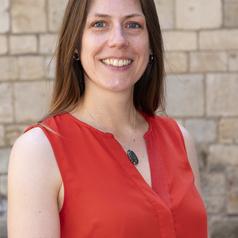
Stephanie Piper
Lecturer in Archaeology, University of York
Steph is a specialist in the Mesolithic of Northern Europe, with a particular focus on hunter-gatherer mobility, and using lithic raw materials to trace the movement of communities. Steph completed her BA in Archaeology (2010), MA in Archaeology with Prehistory (2011), and AHRC funded PhD (2017) at Durham University where she developed an ever-increasing love for the Mesolithic of Scotland, and prehistoric occupation of coasts and islands.
Post-PhD, Steph worked as a commercial archaeologist for Archaeological Services Durham University as both a field archaeologist and palaeoenvionmental specialist, before joining Newcastle University as a Lecturer in Prehistoric Archaeology (2018-2019).
Steph joined York in 2019 as Associate Lecturer in Archaeology and was promoted to Lecturer in 2023. She maintains research interests in early prehistoric Northwest Europe with a particular focus on Scotland, as well as broader hunter-gatherer interactions in relation to changing climate. Steph is a stone tool specialist and has recently conducted analysis of Mesolithic assemblages from the UK and Denmark, as well as later prehistoric lithic material in Lebanon and Saudi Arabia.
In 2023, Steph was part of an interdisciplinary team from the departments of Archaeology, Health Sciences, and Environment & Geography awarded a York Environment Sustainability Institute Discipline Hopping Fellowship for the project Craftwell. The Discipline Hopping programme was delivered via NERC funding, and the project aimed to investigate the connection between outdoor heritage crafting and mental health and wellbeing in the student population. Steph delivered the outdoor workshop component of the project, working with participants to create replicas of archaeological objects inspired by Stone Age beads or Anglo-Saxon pottery.
Less


Stephanie Reynolds
Lecturer in Law and Co-director Liverpool European Law Unit, University of Liverpool
Stephanie was appointed Lecturer in Law at the School of Law and Social Justice in September 2013. She is a graduate of L'Université Paris 1 Panthéon-Sorbonne and the University of Liverpool and completed her PhD studies at the latter institution in March 2015.
Stephanie's area of expertise falls primarily within EU law, specifically EU constitutional law, the law of the single market, Union citizenship and the EU legal framework relating to the protection of fundamental rights. Her doctoral thesis analyses the Court of Justice's approach to adjudicating tensions between the Treaty free movement provisions and fundamental rights. It argues that the Court's adjudicative methodology offers procedural prioritisation to free movement over fundamental rights and that this has concrete consequences for fundamental rights protection. The thesis runs a diagnostic analysis of the causes of this adjudicative imbalance concluding that it is the result of historical factors and significant constitutional evolutions. This uneven adjudicative architecture is then critiqued against fundamental rights theory and the Union's contemporary constitutional framework. Ultimately an alternative model of adjudication is proposed rooted in the concept of balancing.
Stephanie has also published in leading journals on the introduction of the 'genuine enjoyment test' to the EU citizenship legal landscape, and on the relationship between free movement and fundamental rights in the area of housing policy. In 2014, she was also appointed UK co-rapporteur at the XXVI FIDE Congress, hosted by the University of Copenhagen, on the topic of "Union Citizenship: Development, Impact and Challenges". As an active member of the Liverpool European Union Law Unit, Stephanie contributed extensively to the UK Government's UK/EU Balance of Competences Review. Developing this work, she is currently working with other members of LELU on a series of UK ESRC-funded events around the UK's renegotiation of its relationship with the European Union and the forthcoming referendum on UK membership of the EU. From September 2015, Stephanie became Director of the Liverpool European Law Unit.
Stephanie enjoys teaching on a wide range of engaging subjects including criminal law, EU law, and the School's innovative Law and Social Justice module.
Prior to joining the School, Stephanie worked in policy and communications at the Merseyside Brussels Office.
Less

Stephanie Rutherford
Associate Professor of Environmental Studies, Trent University
Stephanie Rutherford is an Associate Professor in the School of the Environment at Trent University. Her research inhabits the intersections among political ecology, environmental justice, animal studies, and the environmental humanities. She is the author of Villain, Vermin, Icon, Kin: Wolves and the Making of Canada (MQUP 2022) and Governing the Wild: Ecotours of Power (UMinn 2011). She was also a co-editor of Methodological Challenges in Nature-Culture and Environmental History Research and Historical Animal Geographies (both with Routledge). Her new research is a community-based partnership that maps environmental injustice in Peterborough, Ontario.
Less
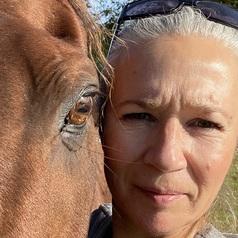
Stephanie Schreven
Senior Lecturer Management and Marketing, University of Dundee
Dr Schreven is a Senior Lecturer in Management and Marketing at the University of Dundee School of Business.
Stephanie is also co-director of the Institute for Interdisciplinary Social Science Research (ISSR) at the University of Dundee and recently became one of the Associate Editors for the journal Qualitative Research in Organizations and Management (QROM).
Before joining her colleagues at Dundee, Stephanie has held positions at the Adam Smith Business School, University of Glasgow, as well as the Judge Business School, University of Cambridge.
Stephanie started her academic career in the Netherlands, at the Radboud University, Nijmegen, in Mass Communiation, and via a second master’s, in Business Administration at Erasmus University, Rotterdam, she ended up in upstate New York, with a PhD in the Social Sciences from the Maxwell School of Citizenship & Public Affairs, Syracuse University, Syracuse, NY.
Stephanie's research areas span Management and Marketing, focusing on Equality, Diversity & Inclusion and Consumer Society respectively.
Less
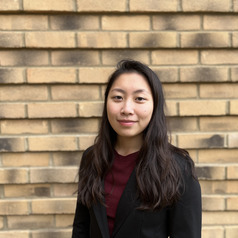
Stephanie Sheir
Research Associate, Trustworthy Autonomous Systems Hub, University of Bristol
Stephanie takes a broad interest in emerging biotechnologies, particularly in neuroscience and genomics. Previously, she worked as a Research Associate as part of the Trustworthy Autonomous Systems (TAS) Hub at the University of Bristol, conducting research on how different individuals reason about trust in AI.
A former specialist in AI ethics, she holds degrees from the University of Oxford and the London School of Economics (LSE), and now conducts research in psychiatric genetics at University College London (UCL).
Less
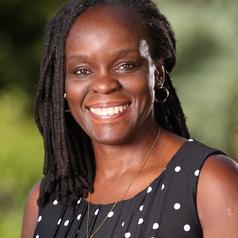
Stephanie Shonekan
Professor and Dean, College of Arts and Humanities, University of Maryland
Stephanie Shonekan is professor of ethnomusicology and dean of the College of Arts and Humanities at the University of Maryland. From 2003-2011, she was a faculty member at Columbia College Chicago and was also the director of the Black World Studies Program and the associate director of the Cultural Studies Program. From 2011-2018, she was a faculty member at the University of Missouri in the Black Studies Department and the School of Music. She became chair of the Black Studies department at the University of Missouri from 2015-2018. While at Mizzou, Dr. Shonekan created and ran various programs geared towards inclusion and diversity on campus. For example, she created a campuswide program called Citizenship@Mizzou, a mandatory program for all incoming students to the university. The program was also customized for faculty and staff. She also created The Huddle, a mentoring program for underrepresented faculty across the campus.
Dr. Shonekan moved to the University of Massachusetts in 2018 as professor and chair of the W.E.B. Du Bois Department of Afro-American Studies. She returned to Mizzou in 2020 as senior associate dean of the College of Arts and Science, before accepting the position at the University of Maryland.
Dr. Shonekan earned a doctorate in ethnomusicology and folklore with a minor in African American studies in 2003 from Indiana University. Her dual heritage combining West Africa with the West Indies allows her to straddle the Black world comfortably. She has published articles and book chapters on afrobeat, Fela Kuti, Nigerian and African American hip-hop, soul music and country music. Her publications explore the nexus where identity, history, culture and music meet. Her books include “The Life of Camilla Williams,” “African American Classical Singer and Opera Diva” (2011), “Soul, Country, and the USA: Race and Identity in American Music Culture” (2015), “Black Lives Matter & Music” (2018) and “Black Resistance in the Americas” (2018). She also wrote and produced an award-winning live action short film based on the mother of Fela Anikulapo Kuti, “Lioness of Lisabi.”
Less



Stephanie Talliss-Foster
PhD candidate, Birmingham City University
PhD Candidate in Psychology (Birmingham City University), Senior HE manager (specialising in Plain English policy writing, complaints, and regulations), author, kindness advocate.
Less

Stephanie Tully
Associate Professor of Marketing, USC Marshall School of Business, University of Southern California
Less
Stephanie Ward
Senior Research Fellow, Centre for Healthy Brain Ageing (CHeBA), UNSW Sydney
Dr Stephanie Ward is a geriatrician who is passionate about improving the quality of diagnosis and care for persons living with dementia. At CHeBA , she is a senior research fellow, and the clinical and initiative lead for the Australian Dementia Network (ADNeT) Clinical Quality Registry.
Dr Ward’s clinical practice inspires her engagement in a number of studies investigating mechanisms of, or prevention of cognitive impairment and dementia. One such recent area of interest is the role of intergenerational contact in healthy ageing. She was the expert geriatrician on the ABC series 'Old People’s Home for 4 Year Olds' and 'Old People's Home for Teenagers'.
Less
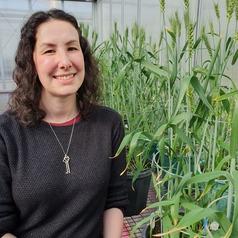
Stephanie Watts-Fawkes
Research Fellow, Waite Research Institute, University of Adelaide
I research the plant-fungal symbiosis known as arbuscular mycorrhizas, especially investigating how they can improve plant zinc and phosphorus nutrition on nutrient-depleted soils. I am particularly interested in the potential agricultural applications of arbuscular mycorrhizas, and use important crops as model species in my research.
I am an ARC DECRA and Future Making Fellow, based at The University of Adelaide's Waite Research Institute.
Less

Stephanie Wescott
Lecturer in Education, Monash University
Dr Stephanie Wescott is a lecturer in humanities and social sciences in the Faculty of Education’s School of Education, Culture and Society. Her research examines how education practice, policy and curriculum intersects with and is influenced by current socio-political conditions, and she is particularly interested in post-truth and its relationship to knowledge and expertise in education. She is currently researching misogynist radicalisation among boys in Australian schools.
Less

Stephanie A. Rivest
Researcher, Department of Biology, L’Université d’Ottawa/University of Ottawa
I'm an ecologist with a research background in species interactions, conservation biology, and insects!
Less

Stephanie J Melles
Associate Professor, Spatial Ecology, Toronto Metropolitan University
I am a spatial ecologist and Associate Professor in the Department of Chemistry and Biology at Toronto Metropolitan University. I’m fascinated by urban ecology and ecosystem diversity at the local level and across multiple scales. My work in spatial ecology began with research on birds in terrestrial systems, but then pivoted into aquatic systems. By drawing on my expertise in both areas, I can now tackle ecological questions using both lenses — an approach that often provides a wider, more comprehensive and unique understanding of the land-water connection. Our lab researches the impact of environmental stressors on species and on ecological functions. Specifically, we take a spatial analytical and geo-computational approach that lets us find patterns across multiple scales. We’re one of only a few labs to take a combined land-water lens to ecological problems. We draw on large datasets with spatio-temporal components (e.g. climate, socio-economic and environmental monitoring network data, land cover maps). From these, we build theoretical and empirical models of species distributions and compound environmental variables. Ultimately, our work aims to inform real-world strategies for responsible environmental stewardship.
Less

Stephanie Prince Ware
Senior Research Scientist, Public Health Agency of Canada and Adjunct professor, L’Université d’Ottawa/University of Ottawa
BSc Human Kinetics, University of Ottawa, 2003
MSc Epidemiology and Community Health, Queen's University, 2006
PhD Population Health, University of Ottawa, 2012
Less
Stephanie-Emmy Klarmann
Postdoctoral Research Fellow, University of Johannesburg
Dr Stephanie Klarmann is a Conservation Psychology researcher based in South Africa. Her work has focused primarily on envisioning a conservation psychology that is relevant in the South African context with a stronger focus on justice and diversity. Her research interests lie in capacity building, photographic storytelling and promoting diverse worldviews in conservation. She is also the Campaign Coordinator for Blood Lions NPC, a South African campaign working against the captive predator industry.
Less

Stephen Appiah Takyi
Dr. Stephen Appiah Takyi is a planning educator whose research interest is in the area of Development Policy, Urban Policy, Environmental Planning and Management, Environmental Impact Assessment, and Social Policy Planning.The complex interrelationship between economic, social and environmental goals makes it necessary to have scholars with strong academic background and research interest in economic, social and environmental policy discourse. Dr. Takyi’s approach to research acknowledges the complexity of societal problems in our world today. He therefore emphasizes on the need to approach complex societal problems from a multidisciplinary and interdisciplinary perspective. The academic background and stream of work of Dr. Takyi at the undergraduate level focused on Development Policy Planning with emphasis on economic planning. Dr. Takyi’s specialization at the master’s degree level was in the area of urban and regional planning whilst his doctoral research focused on environmental planning with the scope being in the area of parks planning and management.
In terms of work experience, Dr. Takyi taught Introduction to Planning and Environmental Impact Assessment at the UNBC School of Environmental Planning from 2012 to 2016. Within the same period, he was in charge of the editorial desk of the Journal of Architectural and Planning Research (JAPR), a scholarly blind refereed journal which has published for over 33 years. Stephen also worked as a Writing Tutor at the UNBC Academic Success Center. Additionally, Dr. Takyi has held a number of positions at the consultancy and administrative level. These include serving as an Assistant Planning Officer for the Ejisu-Juaben Municipal Assembly, Consultant for Padane and Fame Management Consult and Marketing and Communication Assistant for the Queen’s University Marketing and Communication Department. Through his work as a consultant, Stephen assisted in the preparation of development plans for local government areas in Ghana. He also assisted in the organization of capacity building programs for local government officials in the area of plan preparation and implementation. In the area of communication, Dr. Takyi worked as a Marketing and Communication Assistant at the Queen’s University Marketing and Communication Department from 2009 to 2011. This, coupled with his experience in public consultation has contributed immensely to my strong communication skills.
Less
Stephen Appiah Takyi
Dr. Stephen Appiah Takyi is a planning educator whose research interest is in the area of Development Policy, Urban Policy, Environmental Planning and Management, Environmental Impact Assessment, and Social Policy Planning.The complex interrelationship between economic, social and environmental goals makes it necessary to have scholars with strong academic background and research interest in economic, social and environmental policy discourse. Dr. Takyi’s approach to research acknowledges the complexity of societal problems in our world today. He therefore emphasizes on the need to approach complex societal problems from a multidisciplinary and interdisciplinary perspective. The academic background and stream of work of Dr. Takyi at the undergraduate level focused on Development Policy Planning with emphasis on economic planning. Dr. Takyi’s specialization at the master’s degree level was in the area of urban and regional planning whilst his doctoral research focused on environmental planning with the scope being in the area of parks planning and management.
In terms of work experience, Dr. Takyi taught Introduction to Planning and Environmental Impact Assessment at the UNBC School of Environmental Planning from 2012 to 2016. Within the same period, he was in charge of the editorial desk of the Journal of Architectural and Planning Research (JAPR), a scholarly blind refereed journal which has published for over 33 years. Stephen also worked as a Writing Tutor at the UNBC Academic Success Center. Additionally, Dr. Takyi has held a number of positions at the consultancy and administrative level. These include serving as an Assistant Planning Officer for the Ejisu-Juaben Municipal Assembly, Consultant for Padane and Fame Management Consult and Marketing and Communication Assistant for the Queen’s University Marketing and Communication Department. Through his work as a consultant, Stephen assisted in the preparation of development plans for local government areas in Ghana. He also assisted in the organization of capacity building programs for local government officials in the area of plan preparation and implementation. In the area of communication, Dr. Takyi worked as a Marketing and Communication Assistant at the Queen’s University Marketing and Communication Department from 2009 to 2011. This, coupled with his experience in public consultation has contributed immensely to my strong communication skills.
Less

Stephen Avery
Professor of Radiation Oncology, University of Pennsylvania
Stephen Avery, Ph.D. is a Professor of Radiation Oncology at Penn Medicine and director for the Global Health Catalyst. Dr. Avery is Director of the Masters and Post-Graduate Certificate programs in Medical Physics located in the School of Arts & Sciences at the University of Pennsylvania. His research focuses on quality assurance and safety in proton therapy treatment delivery, treatment planning techniques and dosimetry of irradiators used in radiation biology research. Dr Avery actively supports diversity and inclusion initiatives within radiation oncology and develops strategies with middle to low-income countries to address the future of cancer treatment and research.
Less

Stephen Badham
Professor of Psychology, Nottingham Trent University
Stephen’s PhD was based on investigating age differences in associative memory: Older adults can perform well at remembering individual pieces of information but struggle more relative to young adults when combining information (e.g., associating a name to a face). More recently his research has developed to investigate how older adults can use their knowledge and experience to reduce age deficits in memory. Stephen is open to collaborative opportunities and PhD applications related to cognitive ageing and memory.
Less


- Market Data




