

 Menu
Menu

 Search

- News

- Economy

- Central Banks
- Investing
- Research
- Roundups
- Digital Currency
- Insights
- Technical Analysis
- Technology
- Business
- Law
- Health
- Nature
- Fintech
- Science
- Topic
- Opinions
- ©Econometrics LLC . All Rights Reserved.
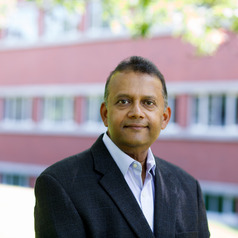
Sudhir Nair
Associate Professor of Business, University of Victoria
Prior to pursuing his PhD, Sudhir spent 15 years working in large corporations e.g., Citibank as well as with entrepreneurial entities that he founded or co-founded. Sudhir’s research interests coalesce around international strategy. He is particularly interested in the reasons and consequences for individuals or businesses crossing organizational or geographic boundaries.
Sudhir sees the idea of boundaries (both organizational and international) and the role they play of particular interest in a simultaneously globalizing and de-globalizing world that is also progressively becoming more specialized. The “when, why and how” firms seek to cross boundaries, thus becomes critical to understand how it impacts organizations and then to find ways to help these entities navigate these challenging issues. More recently, he has been researching the newcomer (immigrant and refugee) space in Canada from an interdisciplinary perspective.

Less 
Sue Barrell
Chair of Australian National University's Institute for Space and Council Member, University of Technology Sydney
Less

Sue Bookey-Bassett
Assistant Professor, Daphne Cockwell School of Nursing, Toronto Metropolitan University
Dr. Sue Bookey-Bassett is a Registered Nurse and Assistant Professor in the Daphne Cockwell School of Nursing at Toronto Metropolitan University. She is also co-lead of the Better Work Better Care Coalition. In addition to her academic role, she has held numerous nursing leadership roles in healthcare organizations, nursing and health professional associations provicinally and internationally. Dr. Bookey-Bassett's program of research focuses on 2 key areas: 1) health workforce capacity building (leadership, teamwork, integrated care); and 2) healthy work environments for nurses (workload). She teaches courses in the undergraduate and graduate programs at Toronto Metropolitan University focusing on professional practice, interprofessional education, leadership, and integrated care. She is passionate about creating better healthcare work environments enabling healthcare professionals to provide safe quality care delivery.
Less
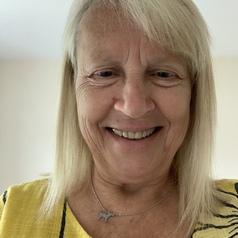
Sue Grayston
Professor of Soil Microbial Ecology, University of British Columbia
BSc (Hons) Microbiology (Sheffield,UK) 1982
PhD Microbial Ecology (Sheffield, UK) 1988
Postdoctoral Fellow, University of Saskatchewan 1988-90
Senior Researcher, MicroBioRhizogen Corp., Saskatoon 1990-93
Principle Scientific Officer, Macaulay Land Use Research Institute, Aberdeen, Scotland 1993-2003
Canada Research Chair in Soil Microbial Ecology, UBC, Canada 2003-13
Professor of Soil Microbial Ecology, Faculty of Forestry and Faculty of Land & Food Systems, UBC 2008-present
110 peer-reviewed publications
Less
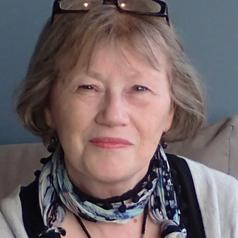
Sue Hand
Professor emeritus, UNSW Sydney
Professor Sue Hand is a vertebrate palaeontologist researching the history of Australian mammals, continuing climate and environmental change in Australia, New Zealand and Oceania, implications of that change for forest and island faunas, and the biodiversity, global relationships and evolutionary ecology of bats.
Her research interests are largely in the area of palaeontology, phylogenetics and biogeography, and specifically taxonomy, systematics, morphometrics, phylogenetics, biocorrelation, biogeography, palaeogeography, evolutionary biology and palaeoecology. Her area of special interest is fossil and modern bats, a major component of Australasia's living and fossil faunas, representing a quarter of Australian mammal species.
In these research areas, she has supervised/co-supervised 45 Honours, 3 Masters and 25 PhD students.
A key focus of the UNSW palaeontology group is the study of the fossil-rich Cenozoic faunas of the Riversleigh World Heritage Area in northwestern Queensland.
She has served on the Australian Research Council's Biological and Biotech Science Committee for ERA 2018, and ARC College of Experts 2019-2021
Less

Sue Kossew
Emeritus Professor of Literary Studies at School of Languages, Literatures, Cultures and Linguistics, Faculty of Arts, Monash University
I have lived in Zambia, South Africa, the UK and Australia and have degrees from the Universities of Cape Town, East Anglia and New South Wales. My PhD (UNSW) was a postcolonial reading of the works of J.M. Coetzee and André Brink. I have held academic and leadership positions at UNSW and Monash Universities; and have been Distinguished Visiting Chair of Australian Studies at the University of Copenhagen (2009) and R. Marika Chair of Australian Studies at the University of Cologne (2013).
My books include Pen and Power: A Post-colonial Reading of J. M. Coetzee and André Brink (1996), Writing Woman, Writing Place: Australian and South African Fiction (2004), Lighting Dark Places: Essays on Kate Grenville (ed. 2010) and Strong Opinions: J. M. Coetzee and the Authority of Contemporary Fiction (co-ed. 2011). Recent publications are Rethinking the Victim: Gender and Violence in Contemporary Australian Women’s Writing with Anne Brewster (Routledge, 2019) and Reading Coetzee’s Women (co-ed, Palgrave, 2019).
I have published numerous book chapters and journal articles on J. M. Coetzee, and on postcolonial, Australian and South African literatures. I was awarded an ARC Discovery Grant entitled "Rethinking the Victim: Gendered Violence in Contemporary Australian Women's Writing" in 2014 with Assoc. Prof. Anne Brewster with whom I am currently researching contemporary Australian women's writing on war.
Less

Sue Olney
UoM-BSL Principal Research Fellow, School of Social and Political Sciences, The University of Melbourne
Associate Professor Sue Olney is the UoM-BSL Principal Research Fellow in the School of Social and Political Sciences at the University of Melbourne, and a Visiting Fellow in the Public Service Research Group in the School of Business at UNSW Canberra. Her research examines the impact of market-based reform of public services on marginalised citizens, with a focus on disability services, employment and the welfare-to-work service system.
Sue has worked in universities, government and in the not-for-profit sector, and been involved in a range of cross-government, cross-sector and interdisciplinary research projects, government and community sector initiatives, committees and working groups to promote access and equity in employment, education, training and disability services in Australia and internationally. She is on the editorial board of the Australian Journal of Public Administration and is the Director of the social policy discussion platform Power to Persuade.
Less

Sue Onslow
Senior Lecturer, Institute of Commonwealth Studies, School of Advanced Study
Dr Sue Onslow is Senior Lecturer at the Institute of Commonwealth Studies in the School of Advanced Studies, University of London. She is a leading British oral historian and is currently working on the AHRC-funded oral history of the modern Commonwealth. She is on the Editorial Board of the Cold War History journal. She is also a member of Chatham House, a member of the Advisory Board for the Marjan Project for Conflict and Wildlife Conservation (King's College) and on the board of the Young People in International Affairs at Monash SA University, South Africa. She has published extensively on post-war British foreign policy, South Africa, Rhodesia/Zimbabwe and the Cold War in the region. She is preparing a monograph on South Africa and the Rhodesian UDI period, to be published in 2012; and an oral history of the Rhodesian security forces in the Rhodesian bush war.
Less

Sue Watt
Associate Professor in Psychology, University of New England
I am a specialist in social psychology and have studied prejudice towards several groups in Australia and overseas, focusing on the psychological underpinnings of these attitudes. In a related area, I conduct research on the topic of immigration. I am interested in the processes involved in adjusting to a new society, and have examined acculturation from the points of view of the immigrant and the receiving society, including receiving community responses to immigrants who adopt different acculturation strategies. My most recent research investigates Australians’ attitudes to refugee settlement in regional locations, and their shifting attitudes over time as refugees become embedded in the local community.
Less

Sugandha Srivastav
British Academy Postdoctoral Fellow, Environmental Economics, University of Oxford
Dr Sugandha Srivastav is a British Academy Postdoctoral Fellow and lecturer in Environmental Economics at the Smith School of Enterprise and the Environment.
Her research focuses on designing effective climate policy in low and middle-income countries. She also explores incentives for clean innovation & finance, and the political economy of energy transitions.
Sugandha is an affiliate of the Economics Department, an Early Career Research Fellow at Saïd Business School and a researcher for the Climate Compatible Growth Programme, where she leads the workstream on Economic Policy in low- and middle-income countries. Sugandha was awarded the Distinguished CESifo affiliate award for her work on bringing early-stage green technologies to market.
Sugandha has worked as an environmental and energy economist at Vivid Economics and ICRIER advising governments, private firms, and international organisations on a broad range of issues related to climate, energy, innovation, and natural resource management. She holds a DPhil in Environmental Economics from Oxford, and an MSc in Economics from LSE.
Sugandha’s research interests include the:
economics of clean innovation
environmental & energy economics
public economics
political economy of energy transitions
Less


Sujani Rathnayake
I am an M. Sc graduate from the Department of Integrative Biology of the University of Guelph. During my M.Sc I engaged in projects related to molecular and chemical fingerprinting-based authentication of food matrices, namely, sushi, maple syrup, and fish species sold in retail stores in North America.
Less

Sule Nur Kutlu
Assistant Professor, Haskayne School of Business, University of Calgary
Sule Nur Kutlu is an assistant professor in the Business Technology Management Area of Haskayne School of Business, University of Calgary. She received her Ph.D. from the Department of Operations and Information Management of the School of Business, University of Connecticut. Her research focuses on economics of information systems and data privacy. Her current research interests include third-party information sharing and data protection regulations on online platforms.
Less

Suleena Duhaime
Lecturer, Faculty of Medicine, L’Université d’Ottawa/University of Ottawa
Dr. Suleena Duhaime is a surgeon at Montfort Hospital in Ottawa and a lecturer in the Department of Surgery at University of Ottawa’s Faculty of Medicine.
Less

Suleman Lazarus, PhD
Visiting Fellow, London School of Economics and Political Science
Dr. Suleman Lazarus holds a PhD in Cybercrime and Criminology.
He is an Associate Editor for the Association for Computing Machinery (ACM) journal "Digital Threats: Research and Practice."
Dr. Lazarus is a Visiting Fellow at the Mannheim Centre for Criminology at the London School of Economics and Political Science (LSE) and a Fellow at the Centre of Excellence on Ageing (CEA) at the University of Surrey. He is also an Honorary Lecturer at the University of Portsmouth.
Dr. Lazarus created the “Tripartite Cybercrime Framework (TCF),” categorizing cybercrimes into socioeconomic, psychosocial, and geopolitical motivational groups.
He has authored numerous peer-reviewed articles in journals such as "Telematics and Informatics," “Deviant Behavior,” and "Cyberpsychology, Behavior, and Social Networking." Dr. Lazarus's research focuses on cyber criminals and society.
Less
Sulemana Bawa
PhD Candidate in Conservation Biology, University of Oxford
With an extensive knowledge and interest in the application of Local Ecological Knowledge in natural resources management, Sulemana’s DPhil seeks to understand the relevance and contribution of indigenous knowledge systems to contemporary Nature-based Solutions, and the application of acoustic and remote sensing technology to the measurement of ecosystem recovery. He will employ camera traps and soundscape measurements to identify patterns in species recovery and biodiversity shifts across different nature recovery interventions while investigating the strengths and limitations of bioacoustic monitoring vs. traditional survey methods at spatial and temporal scales. Sulemana Bawa has a background in conservation biology with substantial research experience in ornithology, herpetology and freshwater ecology. Prior to his studies at Oxford, he has led rewilding initiatives and developed community-based biomonitoring approaches for collaborative resource management in Ghana.
Less
Sumon Bhaumik
Sumon Bhaumik received his undergraduate education at Presidency College, Calcutta, and got his masters and doctoral degrees in Economics from the University of Southern California. Since then, he has worked both within and outside of academics in Bulgaria, Germany, India and the United Kingdom. He joined the University of Sheffield in 2014.
His research interests are wide ranging, and include corporate governance and firm performance, banks and credit markets, and impact of economic (including financial sector) reforms. He has published widely, including in high profile journals such as Strategic Management Journal, Journal of International Business Studies, Journal of Development Economics, Journal of Banking and Finance, Journal of Corporate Finance, and Journal of Comparative Economics. In the past decade, he has also worked on a number of projects funded by ESRC, DfID, NESTA, UKTI and UKIERI.
Less

Sune Svanberg
Emeritus Professor of Physics, Lund University
After a post-doc year at Columbia University, New York and initial work on atomic laser spectroscopy, I worked on laser-based spectroscopy at Chalmers up till 1980, when I became professor and head of the Atomic Physics Division at Lund Institute of Technology (technical faculty at Lund University) up till 2008. In Lund I carried out a programme of laser spectroscopy, including basic atomic physics and applications to energy, environmental and medical research. Basic studies included studies of radiative properties of atoms and ions as well as superintense laser/matter interactions (high harmonics generation, X-ray laser pumping and broadband X-ray generation). Applications include laser radar sounding of pollutants in the atmosphere and hydrosphere, laser diagnostics of combustion processes, and laser-based detection and treatment of cancer and cardio-vascular disease. I also proposed and helped establish a High Power Laser Facility, including a multi-terawatt 10 Hz laser.
In 1995, I was appointed director of the newly established Lund Laser Centre, which also gained the EC status of a European Large Scale Facility. I remained its director till 2010, and continued as Senior Professor at the centre.
I am a member of the Royal Academy of Sciences (and during 10 years a member of its
Nobel Committee for Physics; two years as chairman), and the Royal Academy of Engineering
Sciences.
Less
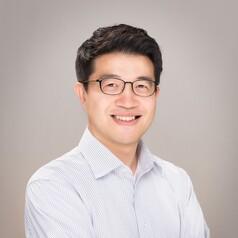
Sunghoon Kim
Associate professor, University of Sydney Business School, University of Sydney
Sunghoon Kim is an Associate Professor in the Discipline of Work and Organisational Studies at the University of Sydney Business School. He is the program director for the Master of Human Resource Management and Industrial Relations, The University of Sydney. He received his PhD from Cornell University and his MBA and BBA from Seoul National University. Before joining Sydney University, he was an Associate Professor at UNSW Business School. He also taught at Cornell University and Peking University.
Sunghoon is an established scholar in the field of strategic human resource management and comparative employment relations. He has served as an Associate Editor of Human Resource Management (FT 50 journal), Asia Pacific Journal of Human Resources, and Human Resource Development Quarterly. He served as the Program Committee Chair of AOM HR Division’s 2nd International Conference in Sydney (2016).
His research has been published in international journals such as Human Resource Management, Industrial and Labor Relations Review, Journal of International Business Studies, Organization Studies, International Journal of Human Resource Management, Management and Organization Review, and Asia Pacific Journal of Human Resources. Sunghoon co-edited Routledge Handbook of Human Resource Management in Asia, and China’s Changing Workplace beyond the Transition(Routledge). He is a contributor to the Google funded APRU project entitled “Transformation of Work in Asia-Pacific in the 21st Century”.
Sunghoon, is passionate in teaching the subjects of human resource management, including reward and performance management, strategic human resource management, international and comparative human resource management..
Less
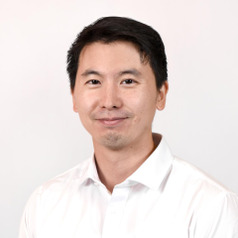
Sungik Yang
Assistant Professor of History, Arizona State University
Sungik Yang is currently Assistant Professor of History at the School of Historical, Philosophical and Religious Studies (SHPRS) at Arizona State University. He received his PhD in History and East Asian Languages (HEAL) at Harvard University.
Less
Sungkavi Selvakumaran
PhD Candidate, Swinburne University, and Lecturer in Public Health, Torrens University Australia
Less
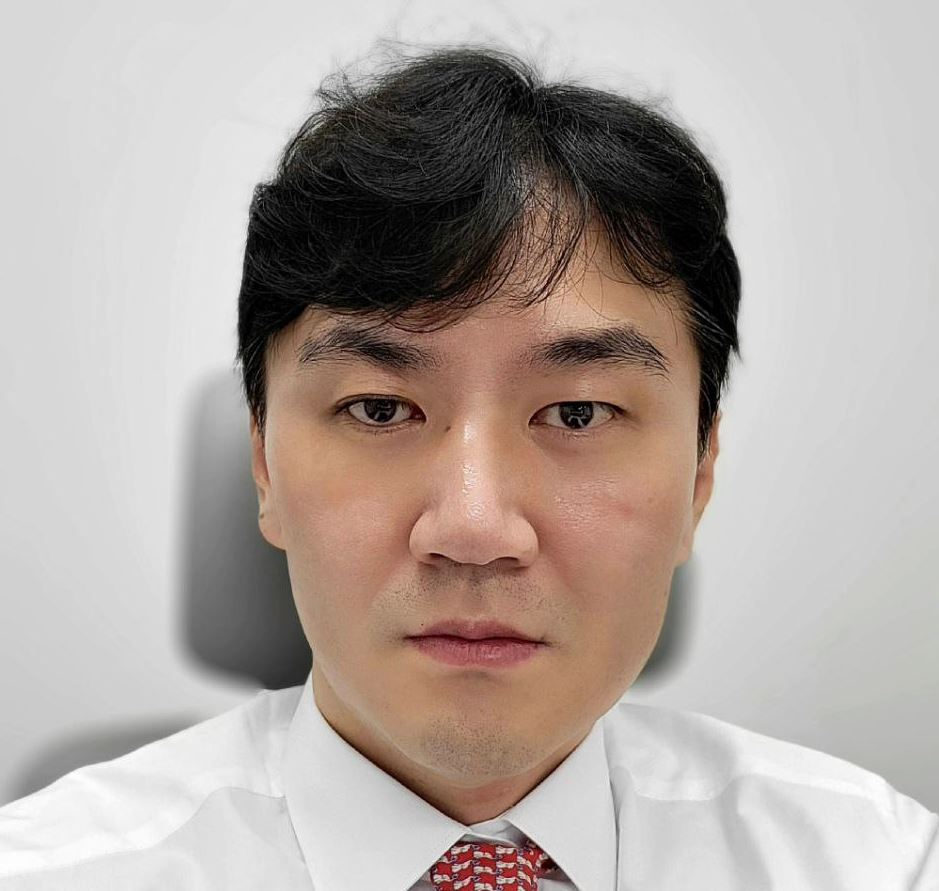
Sungmin Kwon
As the founder and CEO of PUBLISH Inc., I am passionate about creating a blockchain-based platform for news media businesses that empowers them to secure their editorial and financial independence. PUBLISH leverages tokenization, gamification, and information authentication/verification to incentivize quality journalism and foster trust and transparency in the media industry.
Less
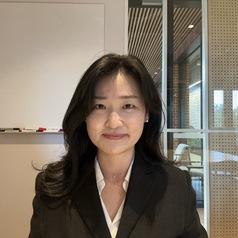
Sungshin (Luna) Bae
PhD student, Gender Equality Policy Special Public Officer at the Supreme Prosecutors’ Office in South Korea, Monash University
Sungshin (Luna) Bae is currently pursuing a PhD in Criminology at Monash University, where her research focuses on technology-facilitated abuse and intimate partner violence, supervised by Bridget Harris. She serves as a Gender Equality Policy Special Public Officer at the Supreme Prosecutors' Office in South Korea and has over a decade of experience working on gender equality policies across various government departments. Her primary focus has been on enhancing gender awareness in criminal proceedings and implementing support policies for victim-survivors of gender-based violence. During her tenure with the Seoul Metropolitan Government, she introduced measures to support victim-survivors of gender-based violence.
Less
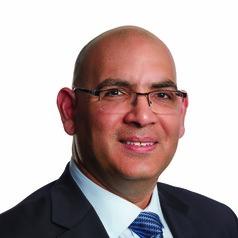
Sunil Bhar
Professor of Clinical Psychology, Swinburne University of Technology
Sunil Bhar is Professor of Clinical Psychology at Swinburne University of Technology. He is Director of the Swinburne Wellbeing Clinic for Older Adults, a free counselling service for aged care residents. He is a clinical psychologist and has won more than $8M in grants as chief investigator focused on mental health programs for older adults. His research and contribution to practice has been recognised through several awards. In 2014, he was awarded the Alastair Heron Prize for excellence in ageing research and practice by the Australian Psychology Society. In 2015, he was awarded a citation for outstanding contribution to student learning in geropsychology by the Office of Learning and Teaching. In 2018, he won the Swinburne Dean’s award for research, and in 2019, he won Swinburne’s research impact award. Alongside his research and teaching activities, Professor Bhar has maintained a clinical practice for 30 years.
Less
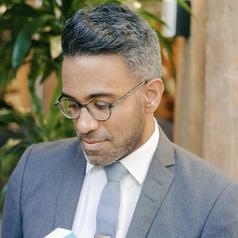
Sunil Gurmukh
Visiting Lecturer, Faculty of Law, Western University
Sunil Gurmukh is a human rights lawyer and Visiting Lecturer at Western Law, where he is leading the Hidden Racial Profiling Project and teaching courses on hate speech in Canada and racial profiling in policing.
He has worked on significant human rights cases at the Human Rights Tribunal of Ontario and all levels of court, including the Supreme Court of Canada. He has a B.Comm. from Queen's University (2005) and an LL.B. from Western University (2008). He articled at Hicks Morley Hamilton Stewart Storie LLP and was called to the bar in 2009.
Sunil is currently on leave from his role of Counsel at the Ontario Human Rights Commission (OHRC). Prior to joining the OHRC in 2011, he worked at the African Canadian Legal Clinic as a Staff Lawyer.
He has been recognized for his human rights work as a winner of the 2016 Precedent Setter Award and 2017 Hennessy V.S.O.P. Privilège Award and member of Bay Street Bull’s 2017 Power 50 Guide. In 2019, he was named as one of country's top 25 most influential lawyers by Canadian Lawyer Magazine. He also won Western’s Young Alumni Award in 2021.
Less
Sunny Kareem
Graduate Teaching Assistant, Business School, University of Auckland, Waipapa Taumata Rau
With over 30 years of combined experience in industry and academia and a PhD in Operations and Supply Chain Management, I bring a unique blend of theoretical knowledge and practical expertise. My research in supply chain, sustainability tension management, disruption management, i.e., VUCA and digital transformation, through the application of Blockchain technology for operations and sustainability management, is complemented by my extensive consulting experience across Third-party logistics (3PL), manufacturing, and healthcare sectors. Backed by international business experience, I am committed to integrating holistic sustainability into business operations by implementing strategic policies, developing digital solutions, and conducting innovative research.
🔬 As an early-career researcher, I focus on managing sustainability tensions, resilience, and digital transformation for global sustainable supply chains amid multi-crises VUCA challenges, i.e., COVID-19 and geopolitical shifts. I provide pragmatic solutions for international businesses and their supply chains striving for sustainability.
🎓 In addition to my research, I currently supervise eight final-year Master of Business Informatics students on their applied projects, guiding them through critical issues in global business operations, supply chains, informatics innovation, and digital technologies. This role allows me to influence the next generation of leaders directly, ensuring their research aligns with academic rigour and practical industry standards.
🎓 My practical approach has led me to significant achievements in the 3PL, FMCG, and Ready-made Garments manufacturing sectors. I've harmonised efficiency with sustainability, achieving operational effectiveness and setting new benchmarks for sustainable practices. As a consultant, I specialise in catalysing change, enhancing operational agility, and ensuring sustainability compliance.
🎓 Educating the next generation of leaders, I bring sustainability and digital business transformation perspectives to their doorstep. My teaching style blends real-world case studies with academic theory, preparing students to excel in an era where efficiency, ethics, and environmental stewardship intersect.
🎯 I am driven by the vision to instigate change that yields economically viable, resilient, digitally connected global organisations dedicated to sustainability. I am eager to collaborate with like-minded professionals and organisations on initiatives that push the boundaries in international business and supply chains.
Less
Suntosh R Pillay
Clinical Psychologist, University of KwaZulu-Natal
Suntosh is a clinical psychologist in the public sector in Durban and is affiliated to the Nelson R. Mandela School of Medicine, at the University of KwaZulu-Natal. He is also a researcher and workshop facilitator with the African LGBTI+ Human Rights Project, responsible publishing the Practice Guidelines for Psychology Professionals Working with Sexually and Gender Diverse People.
Suntosh is on the editorial boards of both the South African Journal of Psychology (SAJP) and Psychology in Society (PINS). His scholar-activism focuses on critical and decolonial approaches to mental health, race, sexuality, and gender. In 2015, he was named by the Mail and Guardian as one of the top 200 young people in healthcare in South Africa.
Less
Suraiya Kamaruzzaman
Dosen Fakultas Teknik / Kepala Pusat Riset Perubahan Iklim USK, Universitas Syiah Kuala
Less

Suraj Yengde
Postdoc, Harvard Kennedy School | Associate, Department of African and African American Studies, Harvard University
Dr. Suraj Yengde is an award-winning scholar and activist from India. He is an author of bestseller Caste Matters. The book went to reprint within a week of it's publication date. Caste Matters was recently featured in the prestigious "Best Non-fiction Books of the Decade" list by The Hindu.
Suraj is an inaugural postdoctoral fellow at the Initiative for Institutional Anti-racism and Accountability, Shorenstein Center on Media, Politics and Public Policy at the Harvard Kennedy School.
Suraj is India’s first Dalit Ph.D. holder from an African university (University of the Witwatersrand, Johannesburg) in the nation's history.
Suraj Yengde's interest lay in theories of subordinate subaltern movements and the Global South migration. His on-going project theorizes the diaspora movement activism, in particular, Dalit diaspora in the North America. He is also co-editing a book on B R Ambedkar's 125 years.
Additionally, he regularly writes on caste and inequality in India. He served on the University of the Witwatersrand Senate and as an executive member of various student body committees.
Less
Suresh Neethirajan
University Research Chair in Digital Livestock Farming, Dalhousie University
Dr. Suresh Neethirajan stands out as a preeminent figure in the field of digital livestock farming, recognized for his groundbreaking work and extensive expertise. His academic foundation, which combines engineering with animal science, has propelled him to the forefront of integrating cutting-edge technologies into livestock management. This integration aims to elevate efficiency, animal welfare, and the sustainability of agricultural practices. Dr. Neethirajan's work is particularly notable for its embrace of a wide array of technologies, such as sensors and data analytics, which are crucial in shifting traditional farming towards smart, precision-oriented practices.
A key area of Dr. Neethirajan's contributions is his development of sensor-based technologies for continuous monitoring of animal health. This innovation plays a vital role in early disease detection, facilitating prompt intervention and minimizing the spread of illnesses among livestock. In the context of climate change, Dr. Neethirajan's work in creating metaverse digital twins for livestock is particularly groundbreaking. These virtual representations allow for a comprehensive and nuanced understanding of livestock environments, behaviors, and needs, leading to more informed decision-making processes in farming. His efforts in automated monitoring systems are directly aligned with advancing animal welfare and promoting sustainable farming practices. These endeavors underscore the significant role technology plays in not only transforming agriculture but also in addressing broader environmental challenges and ethical considerations in farming.
Less


- Market Data




