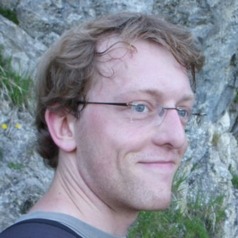
Postdoctoral Research Associate in Computer Science, Princeton University I am interested in computer networks and security, and why the two don't get along very well. I enjoy being part of all phases of a research project—from sketching ideas on a whiteboard, to implementation, and finally deployment and maintenance. To this end, I have worked in the three research areas listed below. I keep maintaining code I have developed in these research projects, so they are open-ended in some sense. Keeping bad actors out of the Tor network As communities grow in size, it becomes increasingly hard to keep out bad actors, and Tor is no exception because the network is run by volunteers. In 2013, I started developing exitmap, a fast and flexible scanner for Tor exit relays. If you have a background in functional programming, think about it as a map() interface for Tor exit relays. It allows you to run arbitrary, TCP-based tests over each exit relay. One of the main tasks of exitmap is to expose and block malicious and misbehaving exit relays. I recently broadened my scope to Sybil relays, sets of Tor relays that are under the control of a single entity. I am developing sybilhunter which is meant to assist in finding and analysing Sybils. Censorship analysis Early on in my Ph.D. studies, I became interested in the Great Firewall of China (GFW). I was first exposed to the GFW in 2011, when trying to understand how it blocks the Tor network. I have since revisited the topic several times, to understand how the GFW fails over space and time, and how its active probing component is designed. As part of my work on the Tor network, I also helped characterise—and circumvent—a censorship system in Ethiopia. Traffic obfuscation Motivated by my work on censorship systems, I became interested in traffic obfuscation, i.e., shaping network traffic in a way that it is hard to classify and block. I started by developing a small tool for server-side circumvention. It was designed to prevent the GFW from recognising Tor handshakes on the wire. The tool transparently rewrites the window size in a SYN-ACK segment, forcing the client to split its initial payload across two segment instead of one. Back in 2012, the GFW would not reassemble TCP streams, rendering it unable to spot circumvention traffic “protected” by this tool. I then went on and developed ScrambleSuit, a polymorphic traffic obfuscation protocol. ScrambleSuit can protect against the GFW's active probing attacks by relying on a “password” that is shared between client and server. ScrambleSuit has since been superseded by the faster and more elegant obfs4, which is no longer maintained by me.
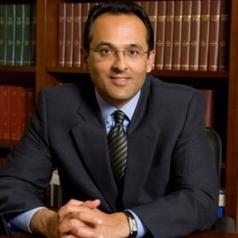
Chief of Medicine, University of Michigan Sanjay Saint, MD, MPH, is the George Dock Professor of Internal Medicine at the University of Michigan, the Director of the VA/University of Michigan Patient Safety Enhancement Program and the Chief of Medicine at the Ann Arbor VA Medical Center. His research focuses on preventing healthcare-associated infection, implementation science, and medical decision-making. He has authored over 275 peer-reviewed papers with nearly 100 appearing in the New England Journal of Medicine, JAMA, Lancet or the Annals of Internal Medicine. He is a Special Correspondent to the New England Journal of Medicine, an editorial board member of the Annals of Internal Medicine, and an elected member of the American Society for Clinical Investigation (ASCI). He received the Mark Wolcott Award for Clinical Excellence as the Department of Veterans Affairs National Physician of the Year. He is also the lead author of a book recently published by Oxford University Press entitled: “Preventing Hospital Infections: Real-World Problems, Realistic Solutions.” He received his Medical Doctorate from UCLA, completed a medical residency and chief residency at the University of California at San Francisco (UCSF), and obtained a Masters in Public Health (as a Robert Wood Johnson Clinical Scholar) from the University of Washington in Seattle. He has been a visiting professor at over 60 universities and hospitals in the United States, Europe, and Japan, and has active research studies underway with investigators in Switzerland, Italy, Japan, Australia, and Thailand.
Lecturer, Department of Social Inquiry, La Trobe University Sara is a cultural sociologist. Her research interests include work, identity, disenchantment and authenticity. Her forthcoming book is about the significance of work in the lives of contemporary Australians, with a focus on vocation and the work ethic. Sara is co-convenor of the TASA Cultural Sociology Thematic Group. She also undertakes research in higher education pedagogy.
Doctoral Candidate in Sociology, Harvard University Jonathan J. B. Mijs is a PhD candidate in sociology at Harvard University. He is interested in stratification, morality, and the balance of structure/agency in shaping life outcomes. His dissertation is an investigation into how (young) citizens learn about social inequality, and how they come to explain setbacks and success in their own life and that of others. http://www.jonathanmijs.com
Honorary Fellow of the University of Melbourne and Senior Curator (Astronomy), Museum Victoria I am an extragalactic astronomer, Honorary Fellow of the University of Melbourne, and am currently working in the field of science communication at Melbourne Planetarium. I have been the Curator (Astronomy) at Melbourne Planetarium, Scienceworks since 1999, drawing on my background in research astronomy to create more than a dozen planetarium productions. The most recent of these are now screened in over fifty planetariums across sixteen countries world-wide. I am proud to be the Australian Representative of the European Southern Observatory’s (ESO) Science Outreach Network. This sees me working with Astronomy Australia Limited (AAL) to promote ESO’s extensive research accomplishments throughout Australia. I am also involved in projects to bring research astronomy data into the planetarium to both engage the public and to turn the planetarium into a tool for research astronomers wanting to know more from their data.
Lecturer, Research School of Management, Australian National University Andrew Hughes is a lecturer in marketing at the Australian National University in Canberra. Prior to his academic career, Andrew worked in marketing management and strategy for some of Australia’s biggest organisations in the financial, industrial and services marketing sectors. His main areas of research include television advertising, branding, sports marketing, political and non-profit marketing, and marketing strategy. He has published numerous papers in political marketing, advertising and branding, and presented his work at conferences in Australia and overseas.