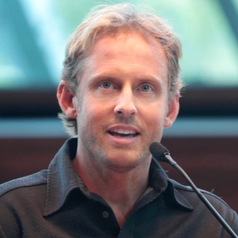
Anthony James is an educator, facilitator, advisor, writer, speaker and musician. He teaches a range of sustainability related courses including post-graduate studies at Swinburne University, and short courses at the Understandascope. Anthony publishes analysis and music on both the physical and metaphysical aspects of sustainability. He has worked within a range of industries (including education, media, music, health, construction, retail and fashion) in both the public and private sectors, particularly in Australia and Central America. His qualifications include a Master of International and Community Development from Deakin University, a Graduate Certificate in Sustainability from Swinburne University of Technology, and a Bachelor of Business Systems from Monash University.
Lecturer, Media and Politics, School of Social and Political Sciences; Honorary Research Fellow, Centre for Advancing Journalism, University of Melbourne Dr Andrea Carson completed a PhD on the future of investigative journalism and Australian broadsheet newspapers. She has a Masters in International Politics (UoM) and was a journalist who started her journalism career in newspapers (The Age) before working in radio (ABC 774, RRR), online and television (7.30 Report). She holds a BA in politics and English literature.
Dee Goddard is a PhD student in Comparative Politics at the University of Kent, investigating the representation of women in ministerial positions across Europe. Dee is collecting an original dataset of the women appointed to ministerial posts across Europe since 1945, and seeks to develop an understanding when and why women are appointed to the cabinet. She is also an active member of the Global Europe Centre and Comparative Politics Workshop at Kent.
Michael Keating was born in 1950, graduated from the University of Oxford in Philosophy, Politics and Economics in 1971, gained his PhD at Glasgow College of Technology (now Glasgow Caledonian University) in 1975,and received the qualification of Incorporated Linguist (Institute of Linguists) in 1981. He has a doctorate honoris causa from the Facultés Universitaires Catholiques de Mons (Belgium). He is a Fellow of the Royal Society of Edinburgh, a Fellow of the British Academy and an Academician of the Academy of Social Sciences. He has worked at the University of Essex (1975-6), North Staffordshire Polytechnic (1976-9) and the University of Strathclyde (1979-88). From 1988 until 1999 he was Professor of Political Science at the University of Western Ontario. From 2000 until 2010 he was Professor of Political and Social Sciences at the European University Institute, Florence and was head of department between 2004 and 2007. He has held visiting positions at the Institut d'Etudes Politques de Paris; University of Santiago de Compostela; University of the Basque Country; Virginia Polytechnic Institute and State University; the Norwegian Nobel Institute; Nuffield College, Oxford; University of Grenoble; Autonomous University of Barcelona. He is presently part-time professor at the University of Edinburgh. From 2010 until 2013 he was Professorial Fellow and in 2013-14 he is Senior Fellow on the Future of the UK and Scotland programme.. Michael Keating speaks English, French, Spanish and Italian.
Jeffrey R. Powell did his undergraduate work at the University of Notre Dame where he started working on the mosquito Aedes aegypti under the direction of George B. Craig. In 1969 he went to graduate school at The Rockefeller University where he began empirical population genetics studies of Drosophila under the mentorship of Theodosius Dobzhansky. He obtained his Ph. D. in 1972 from the University of California, Davis, where he moved with Dobzhansky in 1971. He began as an Assistant Professor at Yale in 1972 and has been on the faculty since. He has spent sabbatical leaves at the University of California (Riverside), University of Rome, California Institute of Technology, and Cambridge University. He continues to work on Drosophila and mosquitoes, while initiating in 1991 a research program on genetics of Galápagos tortoises that has taken on a life of its own. His major interests are basic issues of evolutionary genetics and molecular evolution largely using Drosophila as a model organism and application of genetic technologies and concepts to mosquitoes to aid in control of diseases they transmit. He has mentored 23 Ph. D. students to completion, 24 postdoctorals, and >40 undergraduates, as well as hosted six sabbatical visitors.
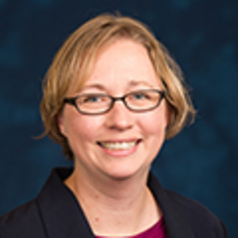
Emily Toth Martin is an Assistant Professor of Epidemiology at the University of Michigan School of Public Health. She currently teaches courses in molecular epidemiology and her laboratory researches the molecular detection of infectious diseases.