

 Menu
Menu

 Search

- News

- Economy

- Central Banks
- Investing
- Research
- Roundups
- Digital Currency
- Insights
- Technical Analysis
- Technology
- Business
- Law
- Health
- Nature
- Fintech
- Science
- Topic
- Opinions
- ©Econometrics LLC . All Rights Reserved.
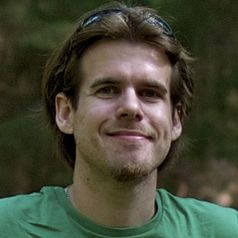
Steven Maltby
My current research focus is aimed at characterizing changes in the bone marrow during disease and infection. During a virus infection, an immune response is rapidly induced. This immune response is required to kill the virus and infected cells. However, the immune response often also causes a lot of the damage and pathology that is observed.
I also work with the NHMRC-funded Centre of Excellence in Severe Asthma. In this role I have a strong focus on communications and translation of research findings into the clinic and education medical professionals.
I completed my PhD studies with Dr Kelly McNagny at The Biomedical Research Centre, University of British Columbia in Vancouver, BC, Canada (2010). My research focused on the role of CD34 (and the related molecule podocalyxin) in pre-clinical disease models.

Less 
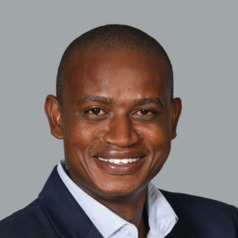
Steven Mathetsa
Senior Lecturer at the African Energy Leadership Centre, Wits Business School, University of the Witwatersrand
Dr Steven Mathetsa is a senior lecturer at the African Energy Leadership Centre, Wits Business School. He is a professionally registered scientist with over 18 years’ experience in the fields of sustainable development, environmental management, climate change, water, and energy resources management. Prior to joining the AELC, he worked for private and public entities such as Eskom, Transnet and Anglo Coal.
Dr Mathetsa has a BSc in natural and environmental sciences (UJ), BSc Honours and MSc in environmental management (UNISA), Postgraduate Diploma in energy leadership and PhD in environmental studies (Wits University). His research interest lies within the water-energy-food (WEF) nexus within the discourse of climate change and how the supply of these key resources can be sustained through formulation of integrated policies and systems thinking approaches.
Less
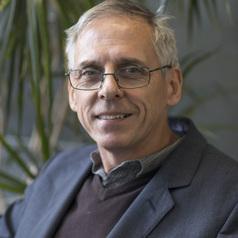
Steven Mithen
Professor of Early Prehistory, University of Reading
Steven Mithen has a BA (hons) in Prehistory & Archaeology from Sheffield University, an MSc in Biological Computation from York University, and a PhD in Archaeology from Cambridge University.
Between 1987 and 1992, he was a Research Fellow at Trinity Hall and then Lecturer in Archaeology at Cambridge. After moving to the University of Reading, he was promoted to Senior Lecturer (1996), Reader (1998) and then Professor of Early Prehistory (2000). In August 2002, he was appointed as the first Head of the School of Human & Environmental Sciences, formed by the Departments of Archaeology, Geography, Soil Science and the Postgraduate Institute of Sedimentology, a post he held until August 2008 when he became Dean of the Faculty of Science.
In 2010, he was appointed a Pro Vice Chancellor for Internationalisation, a position he held for four years during which he developed a series of research and teaching partnerships for Reading, notably the Reading-NUIST Academy in China. In 2014 he was appointed Pro Vice Chancellor for Research, during which he undertook a major reshaping or research leadership, management and organisation at the University. Between 2014 and 2018, Steven also held the post of Deputy Vice Chancellor. In 2018 Steven completed his management roles at the University and returned to the Department of Archaeology as Professor Early Prehistory. He was elected as a Fellow of the British Academy in 2004.
Less

Steven Neuberg
Foundation Professor of Psychology, Arizona State University
Steven Neuberg is a Foundation Professor in the Department of Psychology at Arizona State University. He received his bachelor's from Cornell University, a master's and doctorate from Carnegie Mellon University, and had a NATO Fellowship year at the University of Waterloo, Canada. Neuberg integrates social-cognitive and evolutionary approaches in his research exploring the origins, nature, and nuances of prejudices and stereotypes, and the ways that fundamental motivations shape cognition and social behavior. He is the director of the Evolution, Ecology, and Social Behavior Lab and co-director of the Kenrick-Neuberg Social Cognition Laboratory. He also founded the ASU Global Group Relations Project, a multidisciplinary and global study of factors, including religion, which shape intergroup conflict. His research has been published in outlets such as Proceedings of the National Academy of Sciences, Psychological Review, Advances in Experimental Social Psychology, Journal of Personality and Social Psychology, Psychological Science, Handbook of Social Psychology, and Perspectives on Psychological Science, and has been supported by the National Science Foundation, National Institute of Health, and Army Research Institute. His research has received the Gordon Allport Intergroup Relations Prize and the Daniel M. Wegner Theoretical Innovation Prize, and he is a fellow of multiple scientific societies, including the American Association for the Advancement of Science. He is the recipient of several ASU teaching honors, including the Outstanding Doctoral Mentor Award and the CLAS Outstanding Teaching Award, recently served as Chair of the Department of Psychology, and directs the Department’s Psych for Life® enterprise.
Less

Steven Rawle
Professor of Film, York St John University
Steven Rawle is a Professor of Film at York St John University. He is the author of Transnational Cinema: An Introduction (Palgrave, 2018), Performance in the Cinema of Hal Hartley (Cambria, 2011), and Transnational Kaijū: Exploitation, Globalisation and Cult Monster Movies (Edinburgh University Press, 2022). He also co-edited Partners in Suspense: Critical Essays on Bernard Herrmann and Alfred Hitchcock (Manchester University Press, 2016), Monstrosity and Global Crisis in Transnational Film, Media and Literature (Cambridge Scholars Press, in press), and co-authored Basics Filmmaking: The Language of Film (Bloomsbury, 2015). His writing has appeared in Film Criticism, The Journal of Japanese & Korean Cinema, Asian Cinema, East Asian Journal of Popular Culture and The Journal of Fandom Studies. As a co-investigator of the Cinema and Social Justice Filmmaking project, he executive produced the award-winning film Cost of Living (2022).
Less
Steven Rynne
Associate Professor, Sports Coaching; Affiliate, UQ Poche Centre for Indigenous Health, The University of Queensland
Dr. Steven Rynne is an Associate Professor and Program Convenor for Sports Coaching with the School of Human Movement and Nutrition Sciences at The University of Queensland, Australia. Steven has worked and conducted research with a variety of peak domestic and international sporting bodies in the areas of high performance coach learning and Indigenous sport. Steven teaches undergraduate and graduate students, is a registered HPE teacher, and coaches track cyclists.
Less

Steven Sandage
Professor of the Psychology of Religion and Theology, Boston University
In 2013, after 16 years at Bethel Seminary, Steve accepted the Danielsen Chair position at Boston University School of Theology and the Danielsen Institute, where he also serves as Research Director and Senior Staff Psychologist. He holds a joint appointment at BU in the Department of Psychological and Brain Sciences.
His books include To Forgive is Human, The Faces of Forgiveness, Transforming Spirituality, The Skillful Soul of the Psychotherapist, Forgiveness and Spirituality: A Relational Approach, Relational Integration of Psychology, Christian Theology: Theory, Research, and Practice, and Relational Spirituality in Psychotherapy: Healing Suffering and Promoting Growth. He does research in areas that include positive psychology, psychology of religion, intercultural competence and social justice, psychotherapy processes and outcome, psychopathology, and clinical training. His research has been funded by the Lilly Endowment, the Fetzer Institute, and the John Templeton Foundation. He received the Narramore Award for excellence in the integration of psychology ant theology from the Christian Association of Psychological Studies. He is on the editorial boards of the Journal of Clinical Psychology; Psychotherapy; and the Journal of Spiritual Formation and Soul Care. Sandage also practices as a Licensed Psychologist with clinical specializations that include couple and family therapy, multicultural therapy, and spiritually-integrative therapy. The American Psychological Association (APA) produced a clinical demonstration of Sandage doing couples therapy. He also provides diversity training and consultation to educators, mental healthcare practitioners, religious leaders, and business leaders.
Less
Steven Siems
Professor in Cloud Microphysics, Monash University
I've been an academic at Monash for 28 years, holding a joint appointment between the School of Earth, Atmosphere and Environment and the School of Mathematics.
I am a Chief Investigator in the ARC SRI research centre Securing Antarctica's Environmental Future (SAEF) leading a project on precipitation processes over Antartica and the Southern Ocean.
I serve as the Co-Chair of the Expert Team on Weather Modification for the World Weather Research Pogram.
I am the editor for the Journal for Southern Hemisphere Earth System Science.
I currently serve on the ARC College of Experts.
Less

Steven Tufts
Associate Professor, Faculty of Environmental and Urban Change, York University, Canada
Steven Tufts is an Associate Professor and labour geographer in the Faculty of Environmental and Urban Change at York University. His research and teaching interests are related to the geographies of workers, workplaces, and organized labour. Past and current research projects include: labour union strategic research and union renewal; the role unions plan in urban economic development; immigrant workers in urban labour markets; labour market adjustment in tourism related sectors; the impact of climate change on workers; and the intersection between organized labour and populism.
Less
Steven Wagner
Senior Lecturer in International Security, Brunel University London
I am an historian of intelligence, security, empire and the modern Middle East. Before coming to Brunel, I was a SSHRC postdoctoral fellow in the Department of History and Classical Studies at McGill University, Montreal. I received my DPhil from the University of Oxford, and my BA and MA from the University of Calgary. Since 2007, I have been looking at records declassified records in the UK, USA, and Israel which shed new light on the story of the Palestine Mandate, but also on the previously unknown role of intelligence in countering terrorism & insurgency, and in shaping British policy.
Less
Steven Weber
Steven Weber works at the intersection of technology markets, intellectual property regimes, and international politics. His research, teaching, and advisory work focus on the political economy of knowledge intensive industries, with special attention to health care, information technology, software, and global political economy issues relating to competitiveness. He is also a frequent contributor to scholarly and public debates on international politics and US foreign policy. One of the world’s most expert practitioners of scenario planning,Weber has worked with over a hundred companies and government organizations to develop this discipline as a strategy planning tool.
Steve went to medical school at Stanford then did his Ph.D. in the political science department also at Stanford. He served as special consultant to the president of the European Bank for Reconstruction and Development and has held academic fellowships with the Council on Foreign Relations and the Center for Advanced Study in the Behavioral Sciences, and was Director of the Institute of International Studies at UC Berkeley from 2003 to 2009.
His books include The Success of Open Source and most recently The End of Arrogance: America in the Global Competition of Ideas (with Bruce Jentleson) and Deviant Globalization: Black Market Economy in the 21st Century (with Jesse Goldhammer and Nils Gilman). He is currently working on a new book, Beyond the Globally Integrated Enterprise, that explains how economic geography is evolving and the consequences for multinational organizations in the post financial crisis world.
Steve is the faculty director for the Berkeley Center for Long Term Cybersecurity (CLTC).
Less
Steven Wilhelm
Professor of Microbiology, University of Tennessee
Dr. Steven W. Wilhelm is the Kenneth and Blaire Mossman Professor of the Department of Microbiology at the University of Tennessee. In 2016 he became a fellow of the American Academy of Microbiology as well as a Sustaining Fellow of ASLO. In 2021 he was elected a Fellow of AAAS. In 2021, he was awarded (along with Curtis Suttle) the John R Martin award from ASLO for their contribution describing the Viral Shunt. His research group studies synergies between microbial communities and biogeochemical cycles in lakes and oceans. Lab members use biomolecular tools - DNA and RNA sequencing, metabolomics, and PCR-based quantitative analyses - to study viruses, bacteria, cyanobacteria and algae.
Less
Steven Wright
Head of Subject - Fashion Marketing and Photography, University of South Wales
Less

Steven C. Roach
Professor of Internatiional Relations, University of South Florida
Steven C. Roach is professor of international relations in the School of Interdisciplinary Global Studies at the University of South Florida. A Fulbright scholar and honorary professor at the Universidad Autónoma de Madrid, Spain (2020-21), he has published widely on politics and international affairs. In 2022 he was the recipient of the Theodore and Venette Askounes-Ashford Distinguished Scholar Award, Global Excellence Award, and Outstanding Faculty Award, and in 2019, was appointed country expert of USAID’s Democracy, Human Rights, and Governance (DRG) work team in South Sudan. The work team’s assessment report was presented to the US State Department and Congress and now serves as the basis of USAID’s five-year strategic mission in the country. At the University of South Florida, he served as SIGS director of graduate programs (2018-21), where he restructured and significantly increased recruitment to the PhD program. He currently teaches a variety of subjects, including international relations theory, human rights, global governance, African politics, and the foundations of political inquiry.
Professor Roach’s research is broad in scope, focusing on the politics of international law, critical international relations, global ethics, East African politics (South Sudan), European politics, human rights, and global governance. Among his recent books are South Sudan’s Fateful Struggle: Building Peace in a State of War (Oxford University Press, 2023), International Relations: The Key Concepts. Fourth Edition (Routledge, 2023), Moral Responsibility in Twenty-First Century Warfare: Just War Theory and the Ethical Challenges of Autonomous Weapons Systems (eds) (SUNY Press, 2020; 2021 CHOICE Outstanding Academic Title), Handbook of Critical International Relations (ed.) (Edward Elgar, 2020), Decency and Difference: Humanity and the Global Challenge of Identity Politics (University of Michigan Press, 2019), The Challenge of Governance in South Sudan: Corruption, Peacekeeping and Foreign Intervention (eds.) (Routledge, 2019), Critical Theory of International Politics: Complementarity, Justice, and Governance (Routledge, 2010), and Governance, Order, and the International Criminal Court: Between Realpolitik and a Cosmopolitan Court (ed.)(Oxford University Press, 2009). He has also published articles in several leading journals, including International Affairs, Political Studies, Politics, Millennium, International Studies Review, Cambridge Review of International Affairs, Globalizations, International Studies Perspectives, Global Governance, the International Journal of Human Rights, and Journal of Human Rights, and contributed commissioned articles to edited volumes on international law and international relations theory. His books have been translated into Arabic, Chinese, Farsi, Portuguese, and Turkish.
Currently, he is the editor of the SUNY Press book series, “Ethics and the Challenges of Contemporary Warfare” and serves on the editorial board of four academic journals, Politics and Governance, Globalizations, Human Rights and Human Welfare, and The Journal of African Conflicts and Peace Studies. He is also a member of the advisory board of Human Dignity and Humiliation Studies, and the Brill book series “Critical Emotions Studies”. In addition, he has written various op-ed essays that have appeared in Foreign Affairs, African Arguments, openDemocracy, Journal of International Affairs, and the Cairo Review of Global Affairs. He is presently working on two books: Nile Basin Politics: Cooperative Peace, Hegemony, and the New Riparian Reality(ed.)(under contract) and The Lost Crusade: Eclipsing the Freedom of Movement. His planned book project is an extensive book on American Decency.
Less
Steven James Jackson
Professor and Co-Director, New Zealand Centre for Sport Policy & Politics, University of Otago
Steve Jackson is a Professor specialising in the socio-cultural analysis of sport at the University of Otago, New Zealand. He is a graduate of the University of Western Ontario and the University of Illinois, Urbana-Champaign. In addition to his post at Otago Steve has served as a Visiting Professor at Charles University (Prague, Czech Republic), the University of Jyvaskyla (Finland), the University of British Columbia and Wilfred Laurier University (Canada), Federal University of Parana (Brazil), Waseda University (Japan), Shanghai University (China), the National Taiwan Normal University and was recently appointed as a Visiting Professor at the University of Johannesburg (South Africa). Steve has been honoured with a New Zealand Ministry of Education Tertiary Teaching Award for Sustained Excellence. Professionally, he is a past-President of the International Sociology of Sport Association (ISSA) and Research Committee 27 of the International Sociology Association (ISA), 2008-2015.
Less
Steven L. Tuck
Professor of Classics, Miami University
Professor Steven L. Tuck is Professor of Classics at Miami University. After earning his B.A. in History and Classics at Indiana University, he received his Ph.D. in Classical Art and Archaeology from the University of Michigan. He held the postdoctoral Arthur and Joyce Gordon Fellowship in Latin epigraphy at The Ohio State University.
An esteemed teacher, Professor Tuck received the 2013 E. Phillips Knox Teaching Award, Miami University’s highest honor for innovative and effective undergraduate teaching. In addition, the Archaeological Institute of America, North America’s oldest and largest organization devoted to archaeology, presented him with its Excellence in Undergraduate Teaching Award in 2014. He also has been named a Distinguished Scholar and an Altman Faculty Scholar at Miami University.
Professor Tuck has conducted archaeological fieldwork and research in Italy, Greece, England, and Egypt. He has directed more than a dozen study tours in Italy, concentrated on the city of Rome and the area around the Bay of Naples, including Pompeii, Herculaneum, and the Island of Capri. He has given more than 50 public lectures, including as a national lecturer for the Archaeological Institute of America.
Professor Tuck is the author of numerous articles featured in international journals on such topics as the lives of sailors in the Roman navy, the schedule of gladiatorial games at Pompeii, the decorative program of the amphitheater at Capua, the professional organizations of spectacle performers, Roman sculpture, and triumphal imagery across the ancient Roman world. He is the author of "A History of Roman Art," a lavishly illustrated introduction to the topic.
Professor Tuck has taught two previous Great Courses: Pompeii: Daily Life in an Ancient Roman City and Experiencing Rome: A Visual Exploration of Antiquity’s Greatest Empire.
Less
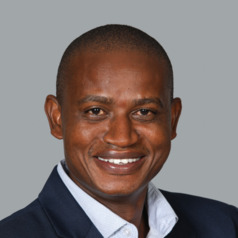
Steven Matome Mathetsa
Senior Lecturer at the African Energy Leadership Centre, Wits Business School, University of the Witwatersrand
Dr Steven Mathetsa is a senior lecturer at the African Energy Leadership Centre, Wits Business School. He is a professionally registered scientist with over 18 years’ experience in the fields of sustainable development, environmental management, climate change, water, and energy resources management. Prior to joining the AELC, he worked for private and public entities such as Eskom, Transnet and Anglo Coal.
Dr Mathetsa has a BSc in natural and environmental sciences (UJ), BSc Honours and MSc in environmental management (UNISA), Postgraduate Diploma in energy leadership and PhD in environmental studies (Wits University). His research interest lies within the water-energy-food (WEF) nexus within the discourse of climate change and how the supply of these key resources can be sustained through formulation of integrated policies and systems thinking approaches.
Less
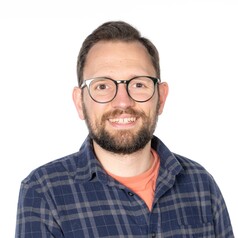
Steven R. Hall
Lecturer in Pharmacology, Lancaster University
Steven (Steve) Hall is a Lecturer in Pharmacology at Lancaster University in the UK and a snakebite researcher with a focus on the discovery and development of synergistic small molecule drug combinations as novel treatments of snakebite-induced tissue necrosis.
Less
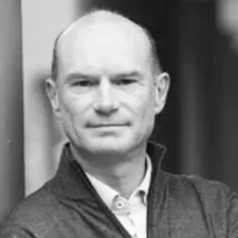
Steven R. Smith
Visiting Research Fellow, Centre for the Understanding of Sustainable Prosperity (CUSP), University of Surrey
Steve’s research interests intersect the moral, psychosocial, economic and political dimensions of the transition to sustainable prosperity. In addition to his research at the University of Surrey, he is part of the State of Tipping Points working group based at the Global Systems Institute, University of Exeter. This working group is producing the first State of Tipping Points Report to be launched at the COP 28 Conference, December 2023. Linked to this, Steve is on the editorial team of a special issue of Earth System Dynamics journal.
Steve’s PhD at the University of Surrey, supervised by Ian Christie, Alex Penn and Birgitta Gatersleben, addressed knowledge gaps in the field of climate politics and policy advocacy in the UK. He developed a typology and method for mapping the UK ‘ecosystem’ of actors, qualitatively analysed 100 expert views on the transition to net zero carbon, and argued for a more radical, science- and equity-based ‘rapid transition’ to net zero by 2035 at the latest.
Steve has authored a variety of peer-reviewed papers, book chapters, policy papers, articles and blogs. He was expert reviewer to the UN IPCC’s Second-Order Draft of Working Group III Sixth Assessment Report (AR6-WG3), and to the Swiss National Science Foundation.
Less
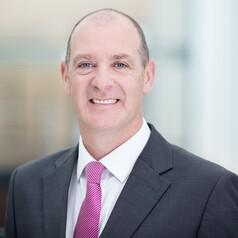
Steven W. Kerrigan
Professor of Precision Therapeutics, School of Pharmacy and Biomolecular Sciences, RCSI University of Medicine and Health Sciences
Prof. Steve Kerrigan is Deputy Head of the School of Pharmacy (Research), Professor of Precision Therapeutics, Head of the Cardiovascular Infection Research Group which is part of the Irish Centre of Vascular Biology and Co-founder/Chief Scientific Officer at Inthelia Therapeutics (RCSI Spin-out Company).
Prof. Steve Kerrigan is an honours graduate in B.Sc Pharmacology from King's College University of London, UK and obtained an M.Sc in Immunopharmacology from the University of Strathclyde, Glasgow, Scotland. He received a PhD in Cardiovascular Infection specifically investigating platelet-bacterial interactions from RCSI in 2001. Following this he carried out postdoctoral research in the University of California, San Francisco, USA. Prof. Kerrigan was appointed lecturer in Pharmacology in the School of Pharmacy in 2008, promoted to Senior Lecturer in 2013, Associated Professor in 2017 and Full Professor in 2021.
Since his faculty appointment, he has published over 90 articles in leading peer-reviewed international journals and filed 11 patent/disclosures and supervised 21 doctoral candidates to completion as primary supervisor. He has a current h-index of 37. Accolades include a Health Research Board Training Fellowship, Science Foundation Ireland Career Development Award and Enterprise Ireland Commercialization Fund. He has presented over 60 invited talks at national and international universities, conferences and symposia including International Society for Thrombosis and Haemostasis, Platelets International Symposium, American Society for Microbiology and the European Shock Society. He has served as an invited reviewer for more than 40 scientific journals and served as a grant reviewer for various international funding bodies. Prof. Kerrigan is a member of more than 10 international societies and was elected to Chartered status (CBiol) and Fellowship of the Society of Biology (FSB) which are the highest grades of membership of the professional body. Prof. Kerrigan was previously co-chair of the International Society for Thrombosis and Haemostasis Scientific Standardization Committee in Biorheology, committee member in the European Sepsis Alliance research working group and is currently a member of the Royal Irish Academy (RIA) Life and Medical Sciences Multidisciplinary Committee.
Prof. Kerrigan has received several awards for his groundbreaking research discoveries that are now progressing to trials. These accolades include the 2023 Science Foundation Ireland Innovation Award and the 2024 Future Health Summit Innovation Award.
Less
Stevens Azima
Research Professional, Université Laval
I hold a PhD in agricultural economics. My areas of interest include food systems, agricultural policies, agricultural markets, behavioural economics, and new institutional economics.
Less


Stewart Lansley
Stewart Lansley is a visiting fellow at the Townsend Centre for International Poverty Research, The University of Bristol, and has written on inequality, wealth and poverty for academic and specialist journals as well as several newspapers.
He is the author of a number of books including The Sharing Economy, (Policy Press, 2016); Breadline Britain, The Return of Mass Poverty (Oneworld, 2015 - with Joanna Mack ) ; The Cost of Inequality (2011); Rich Britain (2006) and Poor Britain (with Joanna Mack, 1985). His previous academic posts include the National Institute of Economic and Social Research and the Universities of Brunel and Reading. He is also a former executive producer in the current affairs department of the BBC.
Less
Stian Reimers
Dr Reimers studied natural sciences at Cambridge, where he also completed a PhD in experimental psychology. He holds other degrees from Imperial College London (MSc Science Communication) and Birkbeck (BA English Literature).
Prior to coming to City University London, he held postdoctoral positions at Warwick and UCL, most recently, a fellowship from the ESRC Centre for Economic Learning and Social Evolution.
Dr Reimers is interested in high-level cognition, in particular judgement and decision making. One particular interest is in the psychology of time - how humans and other animals represent and make decisions involving time, in particular how and why people's discounting of delayed rewards varies across individuals and contexts.
Research interests:
Other judgement and decision making interests include forecasting - how individuals and organisations can improve the predictions they make about future trends - and game theory - in particular, individual and contextual differences in strategies used for ultimatum, prisoner's dilemma and co-ordination games.
He also works on applying experimental psychology to policy issues, particularly the notion of what constitutes a 'fair' taxation structure. Further afield, Dr Reimers does work on executive control, cognitive ageing, sex differences and cerebral lateralisation.
He has wider interests in psychology, working regularly with the BBC and independent production companies on brain-science-related TV shows, and helping set up fun - yet valid - web-based psychology tests for the BBC website among other places. He also undertakes consultancy projects, examining consumer behaviour and the effects of interventions for major retailers and government departments.
Dr Reimers also has interests in using new technology in psychological research, extending from web-based research through running experiments on mobile phones, to work using Wii input devices - Balance Boards, accelerometers and the like - for recording behavioural data.
Less
Stijn Glorie
Associate Professor of Geology, University of Adelaide
I completed my PhD in 2012 on the thermal history of Central Asia. I started at The University of Adelaide as a lecturer in Earth Sciences in 2013 and was promoted to Senior lecturer in 2017 and Associate professor in 2021. I am currently funded by the Australian Research Council as a Future Fellow (2022-2025), working on the tectonic history of the Australian-Antarctic margin. I also lead the development of novel radiometric dating methods that now allow us to constrain the timing of a large range of minerals and their tectonic settings. I have published >120 peer-reviewed international journal articles, with many in high-impact journals. My full biography and publication record can be accessed here: https://researchers.adelaide.edu.au/profile/stijn.glorie.
Less

Storm William D Gourley
PhD Candidate, Chemical Engineering, McMaster University
I am a PhD candidate at McMaster University under the supervision of Dr. Drew Higgins, focused on developing next-generation beyond lithium battery materials for grid-scale energy storage.
Less
Stuart Ainsworth
Senior Lecture and UKRI Future Leader Fellow, University of Liverpool
I am a Senior Lecturer and UKRI Future Leader Fellow based in the department of Infection Biology and Microbiomes within the Institute of Infection, Veterinary and Ecological Sciences, University of Liverpool. Before moving to the University of Liverpool, i was lucky enough to spend 7 years at the Centre for Snakebite Research and Interventions at the Liverpool School of Tropical Medicine, first as a postdoc and then as a lecturer.
My research interests are in development of therapies for snakebite envenoming, including traditional antivenoms, next generation antivenom and small molecule therapies. I'm particularly interested in replacing venom in antivenom manufacture with rationally designed synthetic antigens.
Less
Stuart Cooke
Associate Professor, Creative Writing and Literary Studies, Griffith University
Less
Stuart Gietel-Basten
Stuart Basten studied history and demography at the University of Cambridge (BA 2002; MPhil 2004; PhD 2008). During this time, he held short-term positions in Poland, Slovakia, Italy and the United States. Following postdoctoral positions in demography at St. John’s College , Oxford and the International Institute of Applied Systems Analysis, Austria, he was awarded a ‘Future Research Leaders’ grant by the UK Economic and Social Research Council in 2012. In 2013, he was appointed University Lecturer in Social Policy and a research fellow of Green Templeton College.
He is also an Associate Member of Nuffield College; non-stipendiary lecturer in demography at St. John’s College; Research Fellow at the Risk Society and Policy Research Centre, National University of Taiwan, an Associate Research Fellow at the European Research Centre on Contemporary Taiwan, Eberhard Karls Universität Tübingen and honorary professor of sociology at the Beijing Administrative College.
He is a Fellow of the Royal Geographic Society, the Royal Society of the Arts and the Higher Education Academy.
He is currently chair of the Asian Population Association Scientific Committee, convenor for fertility of the European Population Conference, strand organiser for fertiltiy and reproductive health for the British Society for Population Studies and editor of the series Studies in European Population published by Springer under the auspices of the European Association for Population Studies.
Along with Professor Francesco Billari, he co-founded and is the editor of openpop.org, one of the world's leading collaborative blogs on population issues.
Less
Stuart Macdonald
Professor of Law, Swansea University
Stuart Macdonald is Professor of Law at Swansea University. He completed his BA at the University of Cambridge (2000) and his PhD at the University of Southampton (2005). He is Co-Director of the Cyber Threats Research Centre (CYTREC) and Coordinator of the VOX-Pol Network. Stuart’s research focuses on terrorist’s use of the internet. Most recently, he has examined jihadist narratives, the strategies used to disseminate terrorist propaganda online, and regulatory responses. He has received research funding from the British Academy, Welsh Government, US Government, NATO and the EU, among others. He is the lead organiser of the biennial Terrorism and Social Media (TASM) conference, a member of Europol’s Advisory Network on terrorism and propaganda and a Senior Fellow at Hedayah. In 2016/17 he was also the holder of a Fulbright Cyber Security Award.
Less


- Market Data




