


 Norway Opens Corruption Probe Into Former PM and Nobel Committee Chair Thorbjoern Jagland Over Epstein Links
  Federal Judge Restores Funding for Gateway Rail Tunnel Project
  Elon Musk’s Empire: SpaceX, Tesla, and xAI Merger Talks Spark Investor Debate
  Netanyahu to Meet Trump in Washington as Iran Nuclear Talks Intensify
  Trump Says “Very Good Talks” Underway on Russia-Ukraine War as Peace Efforts Continue
  BTC Flat at $89,300 Despite $1.02B ETF Exodus — Buy the Dip Toward $107K?
  Trump Backs Nexstar–Tegna Merger Amid Shifting U.S. Media Landscape
  Japan Election 2026: Sanae Takaichi Poised for Landslide Win Despite Record Snowfall
  Trump Allows Commercial Fishing in Protected New England Waters
  Nighttime Shelling Causes Serious Damage in Russia’s Belgorod Region Near Ukraine Border
  U.S. to Begin Paying UN Dues as Financial Crisis Spurs Push for Reforms
  TrumpRx.gov Highlights GLP-1 Drug Discounts but Offers Limited Savings for Most Americans


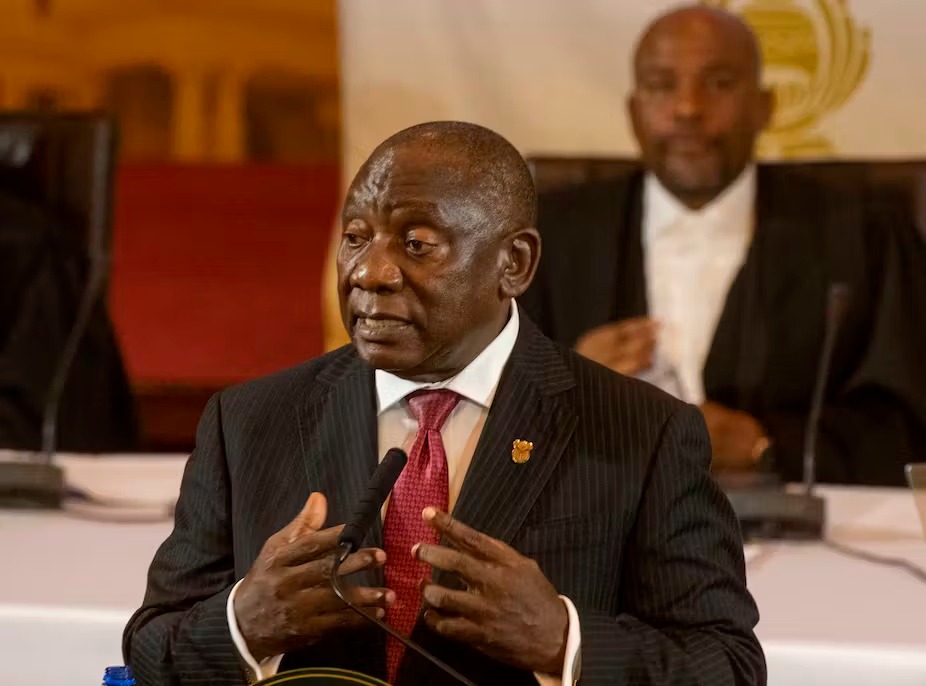

Governments of national unity built on power-sharing arrangements are common in Africa and elsewhere in the world. Now South Africa also has a unity government, following the 2024 general election in which no party won a majority.
These governments foster stability through collaboration in grand coalitions. The premise is that in divided societies, stability can be achieved by elites working together in a power-sharing pact.
Whether political parties call them coalitions or governments of national unity, these are generally expedient solutions designed to mitigate political conflict or instability.
South Africa is not immune to the threat of political instability and conflict. The remnants of past divisions persist. They find expression in the ongoing patterns of racialised poverty and inequality. To mitigate inequality challenges requires political stability for policy innovation in critical areas such as education, health and the economy.
The African National Congress (ANC)‘s choice of a government of unity suggests that it seeks to create political buy-in for cooperation in government.
As a political scientist who researches South African politics and dynamics, I believe the country’s political environment presents unique challenges to the success of a power-sharing government.
For the new power-sharing arrangement to work, elites – political actors who have the power to either divide or unite society – must do four things:
-
embrace politics of collaboration built on trust
-
move away from antagonistic posturing towards more cooperation
-
prioritise consensus-building over confrontation, even when they disagree
-
exercise political maturity, by avoiding divisive political rhetoric and language that demonises others.
South Africa’s unity government
The ANC lost its majority but still won 40% of the votes in the May election, more than any other party. It has chosen to form a unity government, joined by the Democratic Alliance (previously the official opposition), the Inkatha Freedom Party, the Patriotic Alliance and Good.
At its first sitting, the country’s seventh parliament elected the president, speaker and deputy speaker. This was after parties carved out last-minute details on an agreement.
The ANC retained the positions of president (Cyril Ramaphosa) and speaker (Thoko Didiza). The Democratic Alliance’s Annelie Lotriet was voted deputy speaker.
It is workable?
Unity governments are often seen as unsustainable. This can be due to factors around political culture, most notably elite political culture. These are the values, beliefs and attitudes that shape political elite behaviour within political institutions.
Political elites can influence political institutions. Their values can have a significant impact on policy, institutional culture and legitimacy. It is here that a new approach to politics is needed. It must be based on recognising the need for stability and building an elite culture of accountability and collaboration. These two areas share an inherent tension.
A disconnect between elite values and behaviour within public institutions can lead to a breakdown in societal trust. It can also affect the legitimacy of democratic institutions. In turn this can lead to a collapse of confidence in the government, causing political and governance instability. South Africa has some experience with this. Most notable is the Nkandla scandal during Jacob Zuma’s term as president.
What’s needed
Negotiating South Africa’s seventh parliament has essentially been an elite pact. The voting public was not privy to the terms of the agreement. Political elites crafted the way forward for the seventh parliament.
To work, power sharing requires mutual accommodation in addition to finding common ground at the leadership level. Parties may agree on how the unity government should work. But it’s also important for them to encourage their members at lower levels to practise mutual accommodation. They too must be willing to compromise and work together – be it at a provincial, local government or ward level.
Political leaders may reach strategic ideological compromises so that they can achieve shared objectives. What cannot be negotiated is the way in which clientelist politics and patronage intersect in this context. This is particularly true at lower political and administrative levels.
For example, parliament, through the inaction of political elites, became a complacent institution during state capture. Its complacency highlighted the disconnect between political elites and the public interest. This worsened governance challenges and the public’s distrust of state institutions.
Elites will therefore have to manage power dynamics between parties that are part of the unity government and those that are not. In addition, they must manage concessions and adjustments within and between parties to advance collective goals.
Failure to manage intra-party and inter-party dynamics can create political instability. This has been evident in power-sharing arrangements at local government level in the country.
Managing these dynamics will be extremely important when it comes to parliament, most notably its oversight function. This is especially so in the wake of Chief Justice Raymond Zondo’s reflections in which he cast doubt about the ability of the previous parliament to prevent a recurrence of state capture and mass corruption. He chaired the commission of inquiry into state capture, corruption and fraud.
Thus political parties will need to renegotiate their own habits and behaviour. Particularly those parties with a propensity for political polarisation, undermining collaboration.













