


 South Korea Warns Ukraine Over North Korean POW Dispute
  Tsai Ing-wen to Visit US for Stanford Security Conference
  Flydubai FZ1073 Co-Pilot Accused of Terror Attack
  Judge Orders Trump to Restore White House Access for CNN, MS NOW and Politico
  Flavio Bolsonaro, Lula Head to Brazil Presidential Runoff
  Xi Rest Breaks Cut Trump Summit Schedule, WSJ Reports
  Merz to Meet ECB Frontrunners Knot and De Cos
  Trump Says Iran War Could End Soon After Midterms
  ICE Agent Arrested in Minneapolis Over Venezuelan Man Shooting
  Bosnia Election Puts EU Bid and Foreign Influence in Focus
  US Appeals Court Upholds Anthropic AI Supply Chain Ban
  Judge Blocks Trump Election Conditions on Counterterrorism Grants
  Merz Pledges €1 Billion in Ukraine Aid During Kyiv Visit
  California Woman Arrested Over Alleged Spying on Taiwan President’s Son
  Ukraine Faces $56 Billion Budget Gap as War Costs Soar
  Russia Strikes Kyiv Bridge as Ukraine Infrastructure Attacks Escalate
  US Backs Musk in Fight Against EU’s €120 Million X Fine


 Add as a preferred source on Google
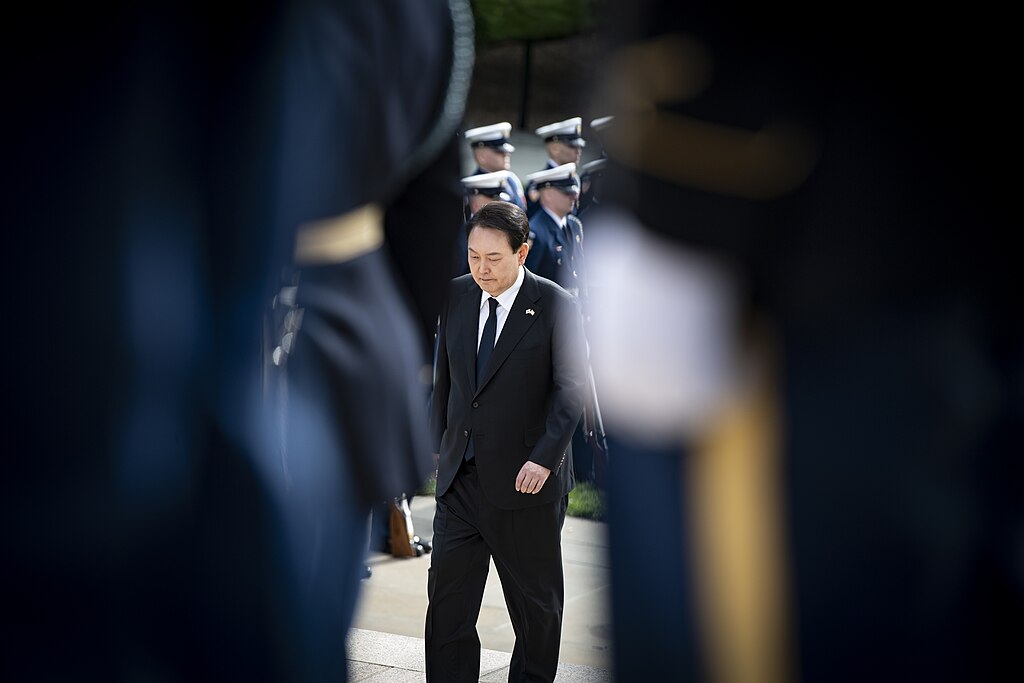
Former South Korean President Yoon Suk Yeol was sentenced to 30 years in prison on Friday after a Seoul court found him guilty in a high-profile case linked to his controversial 2024 martial law declaration. According to Yonhap News Agency, the court ruled that Yoon played a central role in a scheme involving military drones allegedly sent into North Korean airspace to create a justification for imposing martial law.
The case has become one of the most significant political scandals in South Korea’s recent history. Prosecutors argued that Yoon authorized military drones to fly over Pyongyang as part of an effort to heighten tensions with North Korea and manufacture a national security crisis. Investigators claimed the operation was designed to provide a pretext for declaring martial law, a move that ultimately failed and triggered widespread political backlash.
The court determined that the former president’s actions represented a serious abuse of power and posed a threat to South Korea’s democratic institutions. The ruling follows months of legal proceedings, during which prosecutors presented evidence and testimony linking Yoon to the alleged operation.
The verdict marks a dramatic fall for the former leader, who once held the nation’s highest office. Political analysts say the case is likely to have lasting implications for South Korean politics, civil-military relations, and public trust in government institutions. The sentence also highlights the judiciary’s willingness to hold senior political figures accountable for actions deemed harmful to the country’s constitutional order.
Yoon has denied wrongdoing throughout the investigation and trial. His legal team is expected to challenge the ruling through the appeals process. The case continues to attract significant domestic and international attention, given its connection to national security issues, North Korea relations, and concerns about democratic governance in South Korea.
The sentencing is expected to remain a major topic of discussion as the country assesses the political and legal consequences of one of its most controversial presidential scandals.







