


 Japan’s Prime Minister Sanae Takaichi Secures Historic Election Win, Shaking Markets and Regional Politics
  Trump Signs Executive Order Threatening 25% Tariffs on Countries Trading With Iran
  Trump’s Inflation Claims Clash With Voters’ Cost-of-Living Reality
  Taiwan Says Moving 40% of Semiconductor Production to the U.S. Is Impossible
  Trump Says “Very Good Talks” Underway on Russia-Ukraine War as Peace Efforts Continue
  Trump Administration Appeals Court Order to Release Hudson Tunnel Project Funding
  Antonio José Seguro Poised for Landslide Win in Portugal Presidential Runoff
  India–U.S. Interim Trade Pact Cuts Auto Tariffs but Leaves Tesla Out
  Sydney Braces for Pro-Palestine Protests During Israeli President Isaac Herzog’s Visit
  Trump Backs Nexstar–Tegna Merger Amid Shifting U.S. Media Landscape
  Israel Approves West Bank Measures Expanding Settler Land Access
  U.S. Lawmakers to Review Unredacted Jeffrey Epstein DOJ Files Starting Monday
  Anutin’s Bhumjaithai Party Wins Thai Election, Signals Shift Toward Political Stability
  Trump Lifts 25% Tariff on Indian Goods in Strategic U.S.–India Trade and Energy Deal
  Jack Lang Resigns as Head of Arab World Institute Amid Epstein Controversy
  China Warns US Arms Sales to Taiwan Could Disrupt Trump’s Planned Visit
  Bosnian Serb Presidential Rerun Confirms Victory for Dodik Ally Amid Allegations of Irregularities


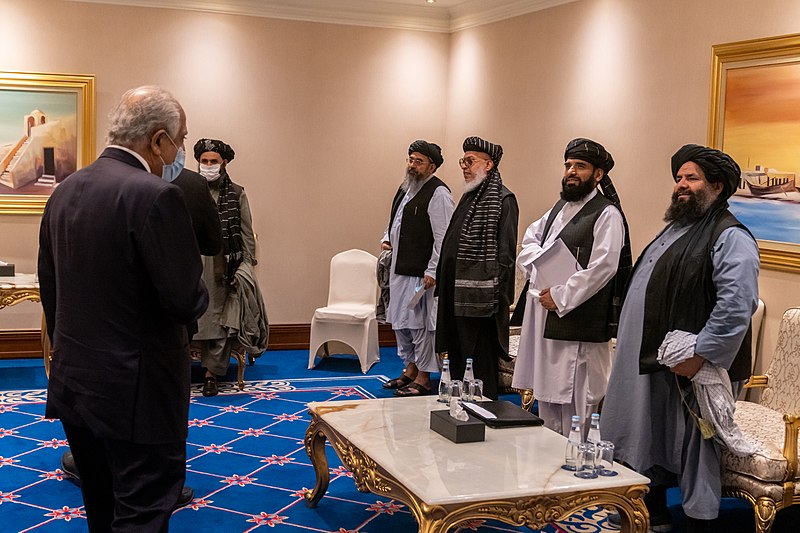
One of the concerns the international community has with the new Taliban-backed Afghan government is its treatment of women and girls. It appears that the insurgent group has no signs of changing in that aspect as it recently ordered local tv channels to stop airing shows featuring female artists.
Over the weekend, the Taliban’s Ministry for the Promotion of Virtue and Prevention of Vice ordered Afghanistan’s television channels to stop airing soap operas or shows that featured women and said that female journalists must wear hijabs in accordance with the group’s interpretation of Sharia Islamic law. This is part of the group’s new set of guidelines in another sign that the Taliban is further restricting women’s rights.
The guidelines also said that films and dramas shown in Afghanistan should not show female artists. The new policy also prevents Afghan television stations from showing men deemed to be indecently exposed or not covered from chest to knees. The ministry explained that the guidelines were to prevent the propagation of “immorality” and airing videos that do not align with Sharia and Afghan principles, asking representatives of tv networks in Kabul to adhere to the guidelines during broadcast hours.
The policy will also prohibit airing satirical shows that “insult” or undermine the dignity of individuals.
Since taking over Afghanistan again in August, the Taliban have pledged to govern in a more moderate manner, unlike the hardline conservative approach they took during their regime from 1996 to 2001. The insurgent group pledged to protect women’s rights but in accordance with Sharia Islamic law. Afghan girls are still banned in most provinces from returning to secondary school.
In the past few months that the insurgent group has been in power, Afghanistan is now on the verge of an economic and humanitarian crisis due to international banks freezing the country’s financial reserves and food shortages. The United Nations Monday pushed to take immediate action regarding Afghanistan’s banks, according to Reuters.
The organization warned that a spike in Afghans that are unable to pay off their loans, lower deposits, and a cash liquidity problem could lead to Afghanistan’s financial system collapsing within a span of months.













