


 Trump Administration to Launch Autism Initiatives Targeting Acetaminophen Use and New Treatment Options
  Trump Signs Executive Order to Boost AI Research in Childhood Cancer
  NASA Partners with Katalyst to Save Swift Observatory with Innovative Docking Mission
  Neuren Pharmaceuticals Surges on U.S. Patent Win for Rare Disorder Drug
  Neuralink Expands Brain Implant Trials with 12 Global Patients
  FDA Adds Fatal Risk Warning to J&J and Legend Biotech’s Carvykti Cancer Therapy
  Is space worth the cost? Accounting experts say its value can’t be found in spreadsheets
  CDC Vaccine Review Sparks Controversy Over Thimerosal Study Citation
  Astronomers have discovered another puzzling interstellar object − this third one is big, bright and fast
  Tabletop particle accelerator could transform medicine and materials science
  Lost in space: MethaneSat failed just as NZ was to take over mission control – here’s what we need to know now


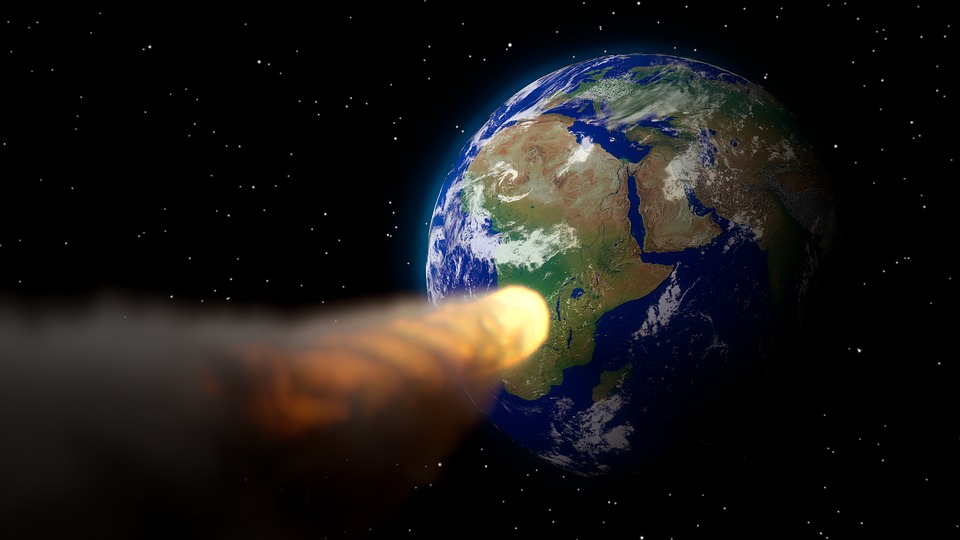
The Bennu asteroid is one of the space rocks that are being kept watch by United States space agency NASA. One expert in particular claims that the Bennu space rock may potentially hit Earth.
NASA has always kept tabs on the very large asteroid referred to as Bennu, and Express reports that one reason why the agency is keeping an especially close eye on this large space rock is because of the fear that it may strike the planet in a matter of centuries. According to SETI astronomer Michael Busch, Bennu may actually hit Earth between the year 2175 and 2200. However, Busch says that this will depend on the Yarkovsky effect, or when an asteroid or comet suddenly changes its orbit due to a nudge from heat from either itself or from other celestial beings including the Sun.
If this change in orbit is strong enough, then Bennu is headed for a collision with Earth which will result in disastrous consequences. Dr. Busch said that the probability for Bennu striking the planet is one in 27,000, but he noted that the Osiris-Rex spacecraft - which will be returning to Earth with samples of the Bennu asteroid - may help in lowering the probability.
NASA has also revealed that the planet that will most likely be hit by Bennu is Venus. As of now, the agency is currently returning the samples of the asteroid that the spacecraft contained. More good news as the spacecraft has already mapped out the asteroid.
Meanwhile, astronomers and locals alike were surprised when they saw a bright fireball in the skies over the city of London, Ontario recently. Footage of the fireball was shared on Twitter by Dr. Peter Brown, a planetary astronomer from the University of Western Ontario. In the footage, a bright light could be seen coming towards Earth but fizzling out shortly afterward. The fireball would most likely be a meteor or a very small asteroid that burned up upon entry into the atmosphere.
According to the International Meteor Organization, the fireball is an unusually bright meteor. They explained that because of their velocity in striking the Earth’s atmosphere, fragments that measure over a millimeter tend to produce a bright flash as they streak through the sky.













