


 Instagram Outage Disrupts Thousands of U.S. Users
  Asian Markets Surge as Japan Election, Fed Rate Cut Bets, and Tech Rally Lift Global Sentiment
  Baidu Approves $5 Billion Share Buyback and Plans First-Ever Dividend in 2026
  South Africa Eyes ECB Repo Lines as Inflation Eases and Rate Cuts Loom
  Thailand Inflation Remains Negative for 10th Straight Month in January
  Gold and Silver Prices Rebound After Volatile Week Triggered by Fed Nomination
  TSMC Eyes 3nm Chip Production in Japan with $17 Billion Kumamoto Investment
  Nvidia CEO Jensen Huang Says AI Investment Boom Is Just Beginning as NVDA Shares Surge
  OpenAI Expands Enterprise AI Strategy With Major Hiring Push Ahead of New Business Offering
  Gold Prices Slide Below $5,000 as Strong Dollar and Central Bank Outlook Weigh on Metals
  RBI Holds Repo Rate at 5.25% as India’s Growth Outlook Strengthens After U.S. Trade Deal
  Bank of Japan Signals Readiness for Near-Term Rate Hike as Inflation Nears Target
  Missouri Judge Dismisses Lawsuit Challenging Starbucks’ Diversity and Inclusion Policies
  Alphabet’s Massive AI Spending Surge Signals Confidence in Google’s Growth Engine
  Trump’s Inflation Claims Clash With Voters’ Cost-of-Living Reality
  Hims & Hers Halts Compounded Semaglutide Pill After FDA Warning
  Trump Lifts 25% Tariff on Indian Goods in Strategic U.S.–India Trade and Energy Deal


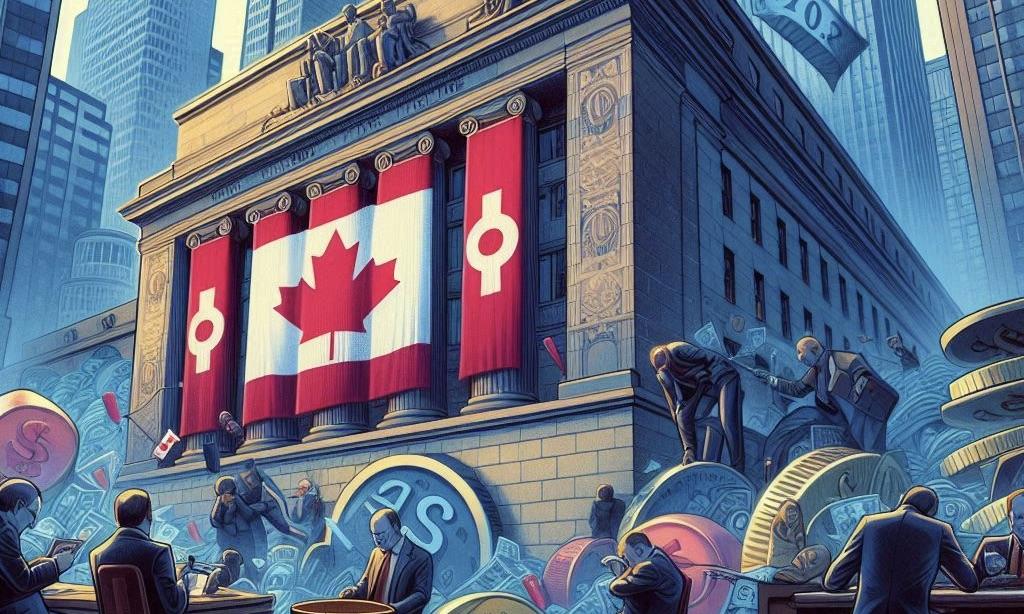
Bank of Canada Governor Tiff Macklem suggested that interest rate cuts could accelerate due to concerns over the economy and labor market. After maintaining high rates for a year, the bank has reduced rates by 75 basis points since June, with further cuts possible.
Bank of Canada Expresses Caution Over Economic Risks as Inflation Eases and Rate Cuts Continue
The Financial Times they were reported on September 15 that Bank of Canada Governor Tiff Macklem indicated that the tempo of interest rate cuts could be increased.
In an interview with the newspaper, Macklem disclosed that rate-setters are apprehensive about the potential impact of lower crude prices on the economy and Canada's labor market.
“As you get closer to the target, your risk management calculus changes,” Macklem told the newspaper. “You become more concerned about the downside risks. And the labor market is pointing to some downside risks.”
Following a year of maintaining its key policy rate at 5%, which was a record high for over two decades, the Bank of Canada has reduced it by a quarter point three times in succession since June, resulting in a reduction of 75 basis points to 4.25% earlier this month.
In July, the overall inflation rate in Canada reached 2.5%, the lowest level in 40 months, per Reuters.
Macklem stated last week that the bank anticipated a growth strengthening, but there were some potential adverse risks.
"Trade disruptions may mean larger deviations of inflation from the 2% target," he said in a speech to the Canada-UK Chamber of Commerce in London.
Bank of Canada Faces Pressure to Cut Rates Further as Growth Slows and Unemployment Rises
Last week, economists predicted that the Bank of Canada's forecast for Canadian gross domestic product in the third quarter will be significantly exceeded, potentially falling below half of the estimate. This is because growth has slowed, and joblessness continues to increase.
In July, the Bank of Canada (BoC) predicted that Canada's annualized GDP would expand by 2.8% in the third quarter. This expansion was driven by an increase in household expenditure, a decrease in borrowing costs, and a rise in exports.
In recent weeks, consumer spending has been constrained, and the difficulty of finding employment for Canada's increasing number of immigrants has contributed to economists' lower expectations for growth.
According to a half-dozen economists interviewed by Reuters, the central bank may be compelled to implement more substantial interest rate cuts than anticipated to prevent the economy from entering a recession in the upcoming quarters, particularly if growth projections decline significantly.
"I think it's looking less likely that the Bank of Canada's Q3 projections are actually going to take hold," said Andrew DiCapua, a senior economist at the Canadian Chamber of Commerce.
DiCapua predicted that Canada's gross domestic product would expand by approximately 1% to 1.5% annually during the third quarter ending September 30. He also indicated that it was more probable that the bank would implement more substantial reductions.
Economists have been compelled to revise their models in response to a series of unfavorable economic indicators from Statistics Canada regarding the labor force and GDP.
In June, Statscan reported that economic growth was stagnant and is anticipated to remain unchanged in July. The labor force survey conducted last week revealed that unemployment reached a seven-year high of 6.6% in August, excluding the pandemic period. The decrease in the number of hours worked by employees in August also impacted income levels.
"We have seen months and months for now that essentially the labor market has flattened out, no growth," said Pedro Antunes, chief economist at Conference Board of Canada, an independent think tank.
"That's suggesting a fragile growth for Q3," he said, adding that the bank's forecast could fall short by half or more.
Household expenditures in Canada, which account for 57% of the country's GDP, experienced a 0.2% decline in the second quarter due to the impact of higher interest rates on consumer purchases. The high costs of mortgages and rent increases have reduced disposable revenues.
Unemployment rates were also inflated by population growth, which exceeded economic expansion. Due to its sluggishness, the economy could not accommodate a substantial influx of immigrants. This dynamic has resulted in a five-quarter streak of declining per capita GDP, which has pressured growth.













