


 SpaceX Pivots Toward Moon City as Musk Reframes Long-Term Space Vision
  NASA and Roscosmos Chiefs Meet in Florida to Discuss Moon and ISS Cooperation
  Blue Origin New Glenn Rocket Explodes During Launch Pad Test, Delaying Space Ambitions
  Trump and Merck KGaA Partner to Slash IVF Drug Costs and Expand Fertility Coverage
  China vs. NASA: The New Moon Race and What's at Stake by 2030
  Blue Origin’s New Glenn Achieves Breakthrough Success With First NASA Mission
  Is space worth the cost? Accounting experts say its value can’t be found in spreadsheets
  SpaceX Delays Starship V3 Launch Ahead of Potential Record IPO
  Trump Administration to Launch Autism Initiatives Targeting Acetaminophen Use and New Treatment Options
  Tabletop particle accelerator could transform medicine and materials science
  FDA Pilot Program Eases Rules for Nicotine Pouch Makers
  Trump Signs Executive Order to Boost AI Research in Childhood Cancer
  SpaceX’s Starship Completes 11th Test Flight, Paving Way for Moon and Mars Missions


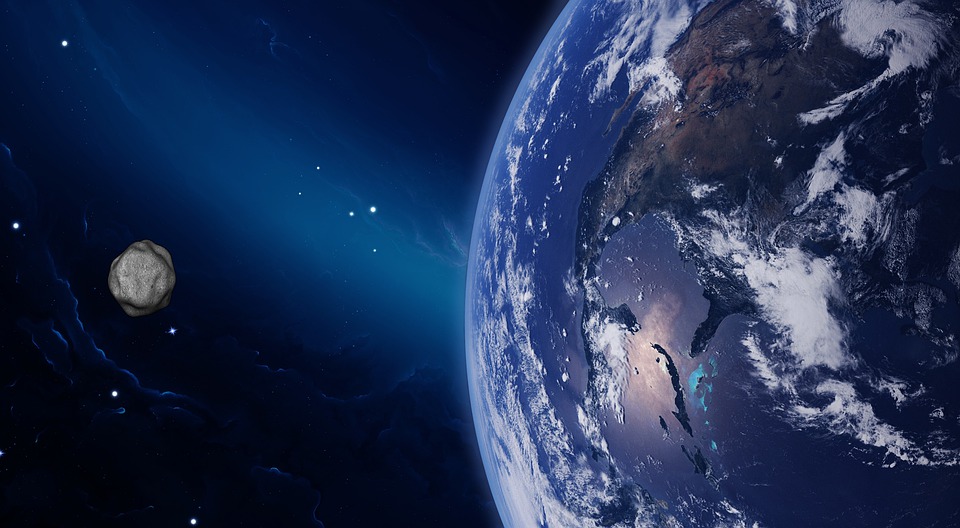
Over time, many asteroids have been spotted by NASA to be coming in close, but nothing has happened all the way. However, an expert says that the Earth may very well be in danger of an asteroid hit anytime soon.
Express reports that Queens University Belfast professor Alan Fitzsimmons predicts that an asteroid may soon be well on its way to our planet, and it will definitely get past the atmosphere. As to when it may happen remains to be seen as scientists have not yet predicted the estimated time of arrival for the giant space rock. Fitzsimmons went on to say that everyone on Earth has to be even more prepared for the possibility.
“We will get a serious impact sometime... It may not be in our lifetime, but mother nature controls when that will happen... We will need to do something about it, we’ll need to move that asteroid so it misses us and doesn’t hit us” He stated.
But Fitzsimmons is not the only one set on this prediction as even the scientists at the Catalina Sky Survey have also agreed on the inevitable possibility of an asteroid colliding with the Earth sometime in future. They have also agreed on the belief that asteroids might end up turning the planet into something uninhabitable in the future. So, in order to better prepare the proper defenses, Fitzsimmons called together a group of amateur scientists to support the Hera initiative which was brought forth by the European Space Agency as its contribution to the NASA Asteroid Redirection Test.
The test will determine how we can change the trajectory of an asteroid before it hits Earth.
Fitzsimmons explained that even though they can make as many calculations and plans on paper, but when it comes to actually apply the calculations, the results may vary from the predicted outcome.
The goal of NASA’s DART is to collide a spaceship into the asteroid’s binary system and therefore redirect it. Meanwhile, ESA will chat, scan, and analyze the surface of a much smaller asteroid. Fitzsimmons says that even amateur astronomers can lend a hand in the Hera mission. “Asteroid research is one area of astronomy where amateur observations can continue to make an essential contribution.”







