


 Netanyahu to Meet Trump in Washington as Iran Nuclear Talks Intensify
  China Warns US Arms Sales to Taiwan Could Disrupt Trump’s Planned Visit
  Anutin’s Bhumjaithai Party Wins Thai Election, Signals Shift Toward Political Stability
  Sydney Braces for Pro-Palestine Protests During Israeli President Isaac Herzog’s Visit
  Bangladesh Election 2026: A Turning Point After Years of Political Suppression
  Ghislaine Maxwell to Invoke Fifth Amendment at House Oversight Committee Deposition
  Federal Judge Restores Funding for Gateway Rail Tunnel Project
  Trump Congratulates Japan’s First Female Prime Minister Sanae Takaichi After Historic Election Victory
  US Pushes Ukraine-Russia Peace Talks Before Summer Amid Escalating Attacks
  China Overturns Death Sentence of Canadian Robert Schellenberg, Signaling Thaw in Canada-China Relations
  Trump Says “Very Good Talks” Underway on Russia-Ukraine War as Peace Efforts Continue
  U.S. Lawmakers to Review Unredacted Jeffrey Epstein DOJ Files Starting Monday
  Japan’s Prime Minister Sanae Takaichi Secures Historic Election Win, Shaking Markets and Regional Politics
  Nicaragua Ends Visa-Free Entry for Cubans, Disrupting Key Migration Route to the U.S.
  Trump Backs Nexstar–Tegna Merger Amid Shifting U.S. Media Landscape
  India–U.S. Interim Trade Pact Cuts Auto Tariffs but Leaves Tesla Out


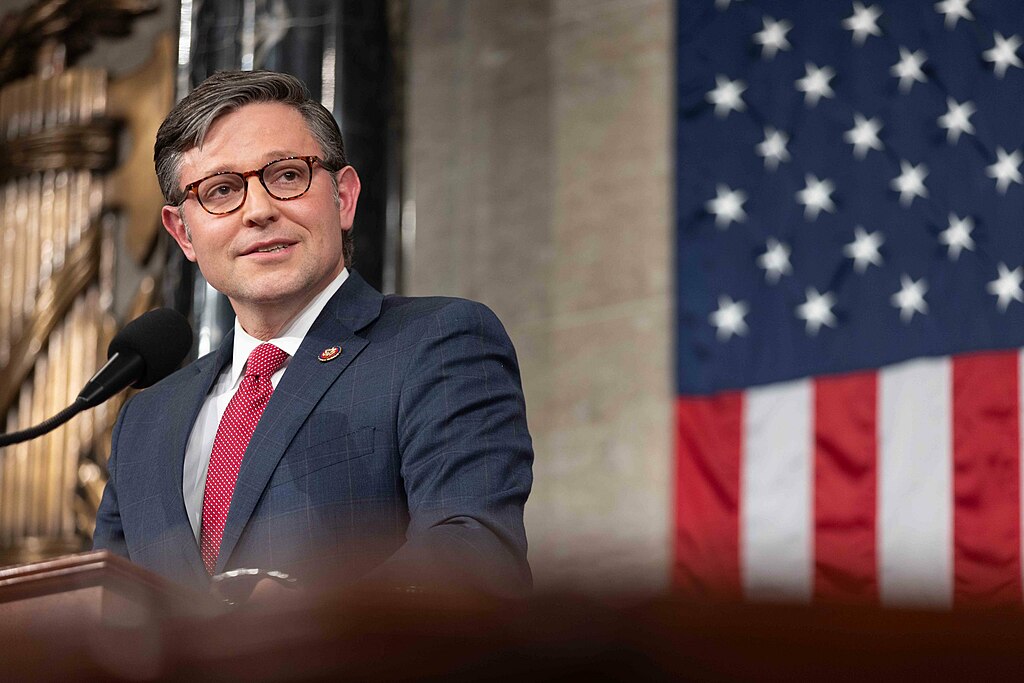
House Speaker Mike Johnson announced new restroom regulations at the Capitol on Monday, confirming that biological men will be prohibited from using women’s restrooms within the government facility. The move, which aligns with Johnson’s previous stances on gender-related policies, has already sparked heated discourse across political and social platforms.
The policy, effective immediately, was implemented in response to what Johnson described as concerns over privacy and safety. According to insiders, the rule will be enforced throughout Capitol grounds, including offices, public areas, and staff facilities. Violators could face disciplinary action, although the specifics of enforcement remain unclear.
Johnson’s decision comes as debates over gender identity continue to dominate legislative conversations nationwide. The ruling has drawn praise from conservative lawmakers and constituents who believe it safeguards traditional norms, while LGBTQ+ advocates and progressive leaders have condemned the move as discriminatory and unnecessary.
A Polarizing Policy
For proponents of the policy, the prohibition is seen as a step toward protecting women’s privacy. Representative Lauren Boebert (R-Colo.) supported the measure, citing constituent concerns about women’s rights and comfort in public spaces. “Women deserve privacy in restrooms, especially in one of the most high-profile buildings in the country,” she said in a statement.
Opposition to the decision, however, has been swift and vocal. Democratic lawmakers and LGBTQ+ organizations have called the policy an attack on transgender individuals, accusing Johnson of using his authority to advance a regressive social agenda. “This is nothing more than an attempt to marginalize transgender Americans and create unnecessary division,” argued Representative Pramila Jayapal (D-Wash.), co-chair of the Congressional Progressive Caucus.
Legal Ramifications
While Johnson’s directive is limited to the Capitol, critics warn it could set a precedent for similar policies in federal buildings nationwide. Legal experts have also raised questions about potential violations of Title VII of the Civil Rights Act and other anti-discrimination laws. ACLU representatives hinted at possible legal challenges, emphasizing the potential impacts on transgender employees and visitors to the Capitol.
“This policy undermines the rights of transgender individuals and could open the door to lawsuits,” said Sarah Lipton-Lubet, executive director of the LGBTQ+ advocacy group Take on Wall Street.
Public Reaction
The public response has been equally divided. Social media platforms exploded with hashtags both in support of and against the measure, with trending topics such as #ProtectPrivacy and #TransRightsUnderAttack. Advocacy groups on both sides have organized rallies, including one planned for next week outside the Capitol.
Many Americans view this decision as emblematic of broader cultural battles. A recent poll indicated that opinions on such restroom policies remain sharply divided, with 46% supporting gender-specific restrooms and 44% advocating for inclusive facilities.
Looking Ahead
Whether the new policy withstands legal scrutiny or public backlash remains to be seen. For now, the Capitol’s restrooms have become an unlikely battleground in the nation’s ongoing debates over gender identity and civil rights.













