


 Toyota’s Surprise CEO Change Signals Strategic Shift Amid Global Auto Turmoil
  SpaceX Pushes for Early Stock Index Inclusion Ahead of Potential Record-Breaking IPO
  Washington Post Publisher Will Lewis Steps Down After Layoffs
  Sony Q3 Profit Jumps on Gaming and Image Sensors, Full-Year Outlook Raised
  FDA Targets Hims & Hers Over $49 Weight-Loss Pill, Raising Legal and Safety Concerns
  Indian Refiners Scale Back Russian Oil Imports as U.S.-India Trade Deal Advances
  American Airlines CEO to Meet Pilots Union Amid Storm Response and Financial Concerns
  Baidu Approves $5 Billion Share Buyback and Plans First-Ever Dividend in 2026
  Kroger Set to Name Former Walmart Executive Greg Foran as Next CEO
  CK Hutchison Launches Arbitration After Panama Court Revokes Canal Port Licences
  Once Upon a Farm Raises Nearly $198 Million in IPO, Valued at Over $724 Million
  Missouri Judge Dismisses Lawsuit Challenging Starbucks’ Diversity and Inclusion Policies
  Samsung Electronics Shares Jump on HBM4 Mass Production Report
  Weight-Loss Drug Ads Take Over the Super Bowl as Pharma Embraces Direct-to-Consumer Marketing
  DBS Expects Slight Dip in 2026 Net Profit After Q4 Earnings Miss on Lower Interest Margins
  Anta Sports Expands Global Footprint With Strategic Puma Stake


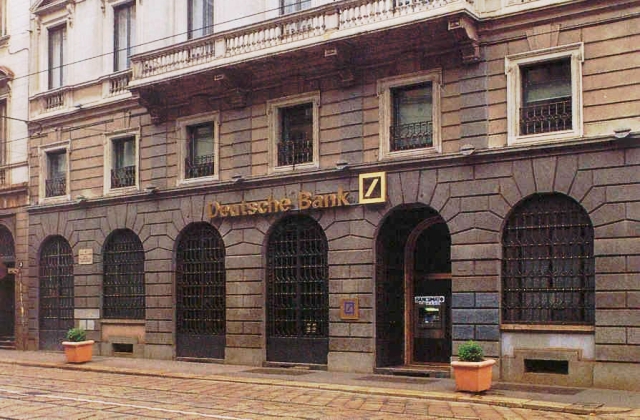
Deutsche Bank has been named as one of the four banks that Taiwan penalized for speculation. The past weekend, Taiwan’s central bank announced that it banned the German multinational investment bank and financial services company.
Why Taiwan penalized Deutsche Bank
Taipei Times reported that the investment bank was forbidden from trading Taiwan dollar deliverable and non-deliverable forwards. It was also suspended for two years from trading forex derivatives, and this resulted from the country’s latest crackdown on speculation.
Based on the report, the other three banks that were slapped with punishment are ING Bank, Citibank Taiwan Ltd, and Australia & New Zealand Banking Group. These were allegedly assisting at least eight grain traders to speculate in NT Taiwan dollar-deliverable forwards, which is against the forex policy.
The Central Bank of the Republic of China publicly revealed the penalty via its website. It said that it already canceled Deutsche Bank’s Taipei branch’s license to trade NT dollar deliverable and non-deliverable forwards.
Moreover, the branch was also forbidden from forex transactions, and it can only apply for a license again after two years. On the other hand, both Australia & New Zealand Banking Group Ltd and ING Bank NV were only suspended by the central bank for nine months. The penalties are effective immediately after the announcement.
Taiwan’s dollar rates
The currency speculation is said to be amount to $11 billion since 2019. This was carried out with assistance from the said bank branches and six foreign lender subsidiaries. Its wrongdoing was undetected for some time because it was done under the pretense of routine currency transactions.
Deutsche Bank and the others violated Taiwan’s NT dollar regulations, so the penalty was imposed. It was added that two of the lenders involved have immediately stopped the wrong practice prior to the start of the central bank’s investigation, and they settled the case in November 2020. But the four mentioned banks suffered from strict consequences.
Meanwhile, Reuters noted the Taiwan dollar is at its highest rates in the last 23 years. The rate against the U.S. dollar soared as the region’s trade developed, leading to economic booms. Countries worldwide have been demanding tech products and supplies, so the NT dollar is getting stronger. Most recently, the global chip shortage was also solved by Taiwan’s TSMC that promised to produce more chips to end the scarcity in supply and help companies to open again.













