


 Japan Economy Poised for Q4 2025 Growth as Investment and Consumption Hold Firm
  SpaceX Prioritizes Moon Mission Before Mars as Starship Development Accelerates
  South Africa Eyes ECB Repo Lines as Inflation Eases and Rate Cuts Loom
  U.S. Stock Futures Rise as Markets Brace for Jobs and Inflation Data
  DBS Expects Slight Dip in 2026 Net Profit After Q4 Earnings Miss on Lower Interest Margins
  Samsung Electronics Shares Jump on HBM4 Mass Production Report
  OpenAI Expands Enterprise AI Strategy With Major Hiring Push Ahead of New Business Offering
  Weight-Loss Drug Ads Take Over the Super Bowl as Pharma Embraces Direct-to-Consumer Marketing
  Trump Lifts 25% Tariff on Indian Goods in Strategic U.S.–India Trade and Energy Deal
  Dollar Near Two-Week High as Stock Rout, AI Concerns and Global Events Drive Market Volatility
  Taiwan Says Moving 40% of Semiconductor Production to the U.S. Is Impossible
  Asian Currencies Stay Rangebound as Yen Firms on Intervention Talk
  Uber Ordered to Pay $8.5 Million in Bellwether Sexual Assault Lawsuit
  SoftBank Shares Slide After Arm Earnings Miss Fuels Tech Stock Sell-Off
  Australian Pension Funds Boost Currency Hedging as Aussie Dollar Strengthens
  Washington Post Publisher Will Lewis Steps Down After Layoffs
  Nvidia CEO Jensen Huang Says AI Investment Boom Is Just Beginning as NVDA Shares Surge


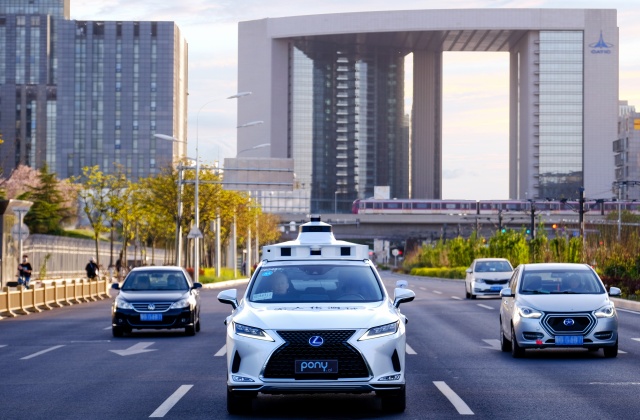
People in China will get to ride a taxi that has no driver, and this is the first time in the country. Baidu and Pony.ai, an autonomous driving start-up, shared on Thursday, April 28, that they have been granted permission to provide robotaxi ride-hailing services to the public.
According to CNN Business, the issued permit does not require a driver to sit in the driver's seat. The robotaxi services were officially launched in Beijing yesterday and allowed the public to call the taxis through Baidu and Pony.ai’s apps. However, the service is only available during the day at this time.
Also, it was reported that Baidu and Pony.ai’s robotaxis will be restricted to a designated area of 23 square miles, and while the vehicles are autonomous, the taxis are required to have an operator in the front passenger seat so he can take over in case of emergencies. The rides in the robotaxi in China are free for now since this is still considered a trial.
The companies’ self-driving technology is a big achievement and sets the stage for driverless cars in the future. Baidu owns the largest driverless car fleet in China, and under the robotaxi program, 10 vehicles will be deployed on the streets, and 30 more will be added later.
“Pony.ai’s approval to operate driverless robotaxis in Beijing is a critical milestone in the transition from testing driverless autonomous vehicles within Pony.ai to offering driverless robotaxi rides to public passengers,” Pony.ai’s chief executive officer and co-founder, James Peng, said in a press release.
Tiancheng Lou, Pony.ai’s co-founder and chief technology officer, further said that since launching the driverless trial, Pony.ai has just shown the technical quality of its system by successfully handling different extreme and difficult scenarios.
“We did this by conducting multiple technical validations and iterations of driverless scenarios, and by improving system redundancy design, remote assistance platform development, and fleet operation management,” Lou said.
Meanwhile, to secure the permit for the robotaxi in China, Pony.ai also passed rigorous and strict safety test qualifications that include navigation of left-turns without a driver in the vehicle. The car was also tested in snow and heavy rain conditions, and more.













