


 Trump Slams Super Bowl Halftime Show Featuring Bad Bunny
  India–U.S. Interim Trade Pact Cuts Auto Tariffs but Leaves Tesla Out
  China Warns US Arms Sales to Taiwan Could Disrupt Trump’s Planned Visit
  Bangladesh Election 2026: A Turning Point After Years of Political Suppression
  Trump Signs Executive Order Threatening 25% Tariffs on Countries Trading With Iran
  U.S. Lawmakers to Review Unredacted Jeffrey Epstein DOJ Files Starting Monday
  Bosnian Serb Presidential Rerun Confirms Victory for Dodik Ally Amid Allegations of Irregularities
  China Overturns Death Sentence of Canadian Robert Schellenberg, Signaling Thaw in Canada-China Relations
  Trump Lifts 25% Tariff on Indian Goods in Strategic U.S.–India Trade and Energy Deal
  Japan Election 2026: Sanae Takaichi Poised for Landslide Win Despite Record Snowfall
  Anutin’s Bhumjaithai Party Wins Thai Election, Signals Shift Toward Political Stability
  Nicaragua Ends Visa-Free Entry for Cubans, Disrupting Key Migration Route to the U.S.
  US Pushes Ukraine-Russia Peace Talks Before Summer Amid Escalating Attacks
  Sydney Braces for Pro-Palestine Protests During Israeli President Isaac Herzog’s Visit
  Antonio José Seguro Poised for Landslide Win in Portugal Presidential Runoff
  Japan’s Prime Minister Sanae Takaichi Secures Historic Election Win, Shaking Markets and Regional Politics
  Ghislaine Maxwell to Invoke Fifth Amendment at House Oversight Committee Deposition


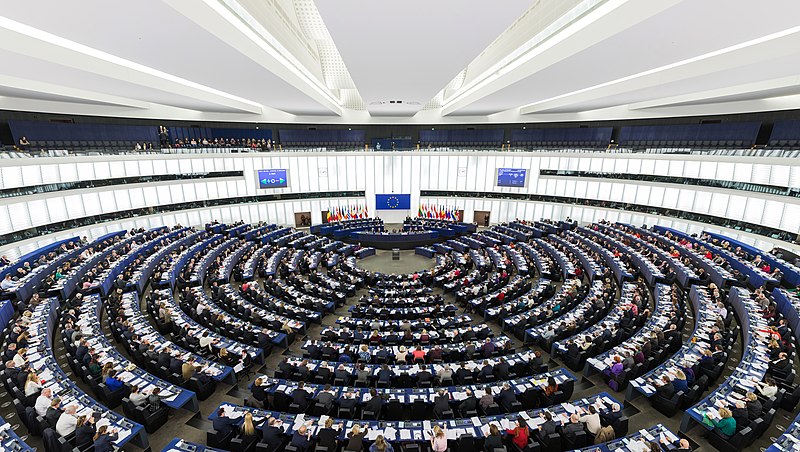
This week, the European Parliament approved the legislation involving renovating buildings to save energy. The bill aims to ease the increasing energy bills and help reduce dependence on Russian energy products much faster.
The EU Parliament on Tuesday voted in favor of the legislation that would help save energy by renovating buildings that make up 40 percent of the European Union’s energy use and use fossil fuels. The new bill would require facilities to be upgraded to use methods such as insulation or better heating systems. The legislation was approved by 343 lawmakers out of the 637 that were present.
The new rules would require all EU buildings with a G energy performance certificate which represents the worst-performing 15 percent per EU country, along with buildings that have an F energy performance certificate, to renovate within the decade.
“Soaring energy prices have put the focus on energy efficiency and energy saving measures. Improving the performance of Europe’s buildings will reduce bills and dependence on energy imports,” said the EU parliament’s lead lawmaker on the legislation Ciaran Cuffe.
EU countries will be required to renovate non-residential buildings to an E grade by 2027 and to a D grade by 2030. Residential buildings will follow later deadlines of an E grade in 2030 and a D grade by 2033. After the approval of the parliament, the final legislation is up for negotiation with countries in the bloc.
However, some EU countries like Italy have shown resistance and are looking for a delay as well as exemptions that Rome says could not be afforded by the Italian government and homeowners. Italian energy minister Gilberto Pichetto said Rome would negotiate for a law that recognizes Italy’s objectives, describing the legislation as “unsatisfactory for Italy.”
On Wednesday, the EU’s financial services chief Mairead McGuinness told the EU Parliament that the US Silicon Valley Bank has a limited presence in the bloc. However, McGuinness said the collapse of the bank is a reason why lightly regulated foreign lenders must adhere to stricter rules in the EU.
“Silicon Valley Bank has a very limited presence in the European Union and we are in touch with the relevant supervisory authorities,” said McGuinness. “The direct impact of these bank failures on the EU seems to be limited.”













