


 Israel-Lebanon Talks Resume in Rome as Ceasefire and Troop Withdrawal Remain Elusive
  Trump Recommends Darline Graham for Interim South Carolina Senate Seat
  Republican Senator Lindsey Graham Dies at 71, Leaving South Carolina Senate Seat Vacant
  Brazil Court Bars Flavio Bolsonaro From Visiting Jair Bolsonaro Ahead of Election
  UK Sanctions 24 Russian-Linked Targets Over Cyberattacks and Election Interference
  Trump Administration Bars U.S. Travelers From Congo Flights Amid Ebola Outbreak
  Trump to Deliver National Address on Declassified 2020 Election Intelligence
  Reuters/Ipsos Poll: Most Americans Expect U.S.-Iran War to Be Prolonged
  Iraq PM Visits Washington as U.S. Oil, Gas Deals Take Center Stage
  Venezuela Appoints Felix Plasencia to Lead Foreign Relations and Trade
  UN Says Hamas Disrupted Gaza Aid Distribution, Group Denies Allegations
  US-Iran Strikes Escalate as Strait of Hormuz Crisis Pushes Oil Prices Higher
  EU to Propose New Rules Limiting Children's Access to Social Media
  HHS Watchdog Reports $5.56 Billion in Healthcare Fraud Recoveries as Enforcement Actions Decline
  Israel Sets October 27 Election as Netanyahu Faces Tough Political Test
  Trump to Deliver National Address on 2020 Election Intelligence, Voting Machine Security
  Western Allies Push for More Air Defenses for Ukraine at Paris Summit


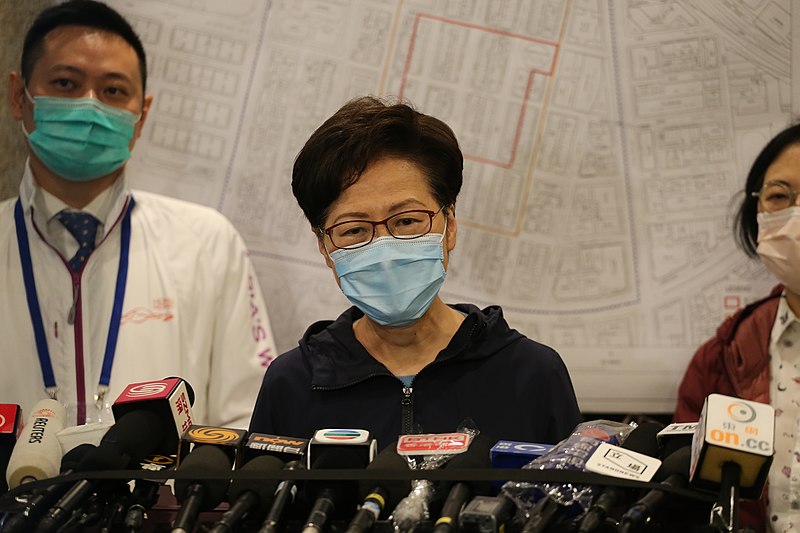
This week, Hong Kong’s Chief Executive Carrie Lam announced that the former British colony would draft its own national security law. The law would be in accordance with its own mini-constitution.
Lam announced Wednesday to the new “patriots only” legislature that Hong Kong is to draft its own national security law. This follows the national security law that Beijing imposed in 2020 in the wake of mass protests. The law, according to human rights watchdog Amnesty International, dismantled the freedoms of Hong Kong citizens that China pledged to respect when the territory was returned to China.
The new law, as Lam confirmed, will meet with Article 23 of Hong Kong’s mini-constitution, which states that the city will pass its own national security laws. While the offenses that would be included were not disclosed, treason, secession, sedition, subversion, and theft of state secrets are included in Article 23. The article also includes prohibiting foreign political organizations from carrying out political activities in Hong Kong or local political organizations having connections to overseas political groups.
Beijing said that it was forced to introduce the national security law because Hong Kong was unable to implement its own. An attempt made back in 2003 was dropped following widespread protests due to concerns that the former British colony’s freedoms would be at risk.
This was the first session of the new Beijing-backed “patriots only” legislature that did not include any political opposition. The recent special elections were met with international condemnation, with several international alliances such as the Five Eyes alliance, the G7, and the EU criticizing China’s overhaul of Hong Kong’s elections.
The Five Eyes alliance released a statement criticizing the recent elections, saying the new rules “eliminated any meaningful opposition.”
“Meanwhile, many of the city’s opposition politicians – most notably the majority of the NSL 47 – remain in prison pending trial with others in exile overseas,” said the statement, referring to the opposition politicians that have been jailed under Beijing’s imposition of its national security law in Hong Kong.
Speaking with the Telegraph, Hong Kong’s final British governor Lord Patten also criticized the recent elections, questioning the point of having an election when authorities are detaining pro-democracy activists and those who refuse to follow the orders of the Chinese Communist Party. Patten also suggested that Beijing’s crackdown on Hong Kong’s election rules was done out of fear, as pro-democracy figures are known to do well.







