


 Israel Approves West Bank Measures Expanding Settler Land Access
  Nicaragua Ends Visa-Free Entry for Cubans, Disrupting Key Migration Route to the U.S.
  Trump Administration Appeals Court Order to Release Hudson Tunnel Project Funding
  Federal Judge Restores Funding for Gateway Rail Tunnel Project
  Trump Signs Executive Order Threatening 25% Tariffs on Countries Trading With Iran
  US Pushes Ukraine-Russia Peace Talks Before Summer Amid Escalating Attacks
  Pentagon Ends Military Education Programs With Harvard University
  Trump Allows Commercial Fishing in Protected New England Waters
  Jack Lang Resigns as Head of Arab World Institute Amid Epstein Controversy
  Bosnian Serb Presidential Rerun Confirms Victory for Dodik Ally Amid Allegations of Irregularities
  Netanyahu to Meet Trump in Washington as Iran Nuclear Talks Intensify
  Ohio Man Indicted for Alleged Threat Against Vice President JD Vance, Faces Additional Federal Charges
  Trump Lifts 25% Tariff on Indian Goods in Strategic U.S.–India Trade and Energy Deal
  Sydney Braces for Pro-Palestine Protests During Israeli President Isaac Herzog’s Visit
  Trump Says “Very Good Talks” Underway on Russia-Ukraine War as Peace Efforts Continue
  India–U.S. Interim Trade Pact Cuts Auto Tariffs but Leaves Tesla Out


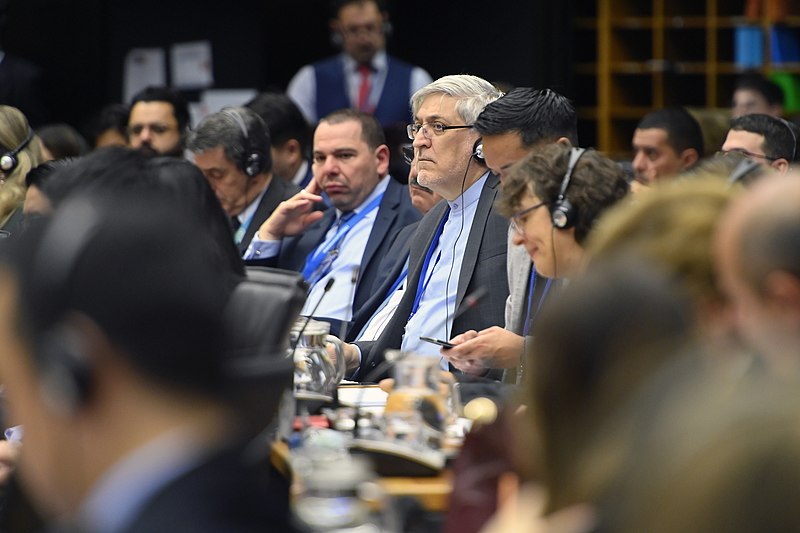
The war in Ukraine and the recent protests have stalled the long-running negotiations between Iran and other world powers to restore the 2015 nuclear agreement. The foreign policy chiefs of Tehran and the European Union have recently indicated that talks to restore the agreement will continue despite strained relations.
Iran’s foreign minister Hossein Amirabdollahian and the EU’s foreign policy chief Josep Borrell met on the sidelines of the second meeting of the Baghdad Conference for Cooperation and Partnership in Jordan on Tuesday. Both representatives have signaled that work to restore the nuclear deal will continue despite strained relations between Iran and the bloc.
Iran’s top nuclear negotiator Ali Bagheri Kani and the bloc’s coordinator, Enrique Mora, were also present during the meeting. Following the meeting, Borrell said that it was important that talks on the nuclear deal, formally known as the Joint Comprehensive Plan of Action, continue even as relations between Iran and the EU are “deteriorating.”
“Stressed need to stop military support to Russia and internal repression in Iran,” tweeted Borrell. “Agreed we must keep communication open and restore JCPOA on basis of Vienna negotiations.”
The Iranian foreign ministry said following the meeting that Amirabdollahian told Borrell that Tehran is ready to finalize the nuclear talks on a draft that followed months of “difficult and intensive negotiations.” This is likely referring to the draft the EU proposed back in August.
Talks to restore the JCPOA hit a deadlock in early September when Western officials said Iran had demands that went beyond the deal. Tehran has denied the claims. Progress appeared even more unlikely following the ongoing protests, as well as the sanctions imposed by the EU and the United States on Iran over allegations that it was supplying Russia with drones to use in its war in Ukraine.
Iran has also issued retaliatory sanctions on the US and the nuclear deal’s other co-signatories, such as the United Kingdom, France, and Germany, blaming them for the unrest. The latest sanctions Iran issued in response were also over the assassination of top Iranian commander Qassem Soleimani, as well as over involvement in “manufacturing” chemical weapons that were used by Saddam Hussein during the Iran-Iraq war in the 1980s.













