


 Trump Signs “America First Arms Transfer Strategy” to Prioritize U.S. Weapons Sales
  Trump Says “Very Good Talks” Underway on Russia-Ukraine War as Peace Efforts Continue
  Japan Election 2026: Sanae Takaichi Poised for Landslide Win Despite Record Snowfall
  Netanyahu to Meet Trump in Washington as Iran Nuclear Talks Intensify
  Nicaragua Ends Visa-Free Entry for Cubans, Disrupting Key Migration Route to the U.S.
  U.S. Lawmakers to Review Unredacted Jeffrey Epstein DOJ Files Starting Monday
  Trump Administration Appeals Court Order to Release Hudson Tunnel Project Funding
  Trump Backs Nexstar–Tegna Merger Amid Shifting U.S. Media Landscape
  U.S.-India Trade Framework Signals Major Shift in Tariffs, Energy, and Supply Chains
  U.S. to Begin Paying UN Dues as Financial Crisis Spurs Push for Reforms
  Antonio José Seguro Poised for Landslide Win in Portugal Presidential Runoff
  Trump Lifts 25% Tariff on Indian Goods in Strategic U.S.–India Trade and Energy Deal
  New York Legalizes Medical Aid in Dying for Terminally Ill Patients
  US Pushes Ukraine-Russia Peace Talks Before Summer Amid Escalating Attacks
  Anutin’s Bhumjaithai Party Wins Thai Election, Signals Shift Toward Political Stability
  Jack Lang Resigns as Head of Arab World Institute Amid Epstein Controversy
  Israel Approves West Bank Measures Expanding Settler Land Access


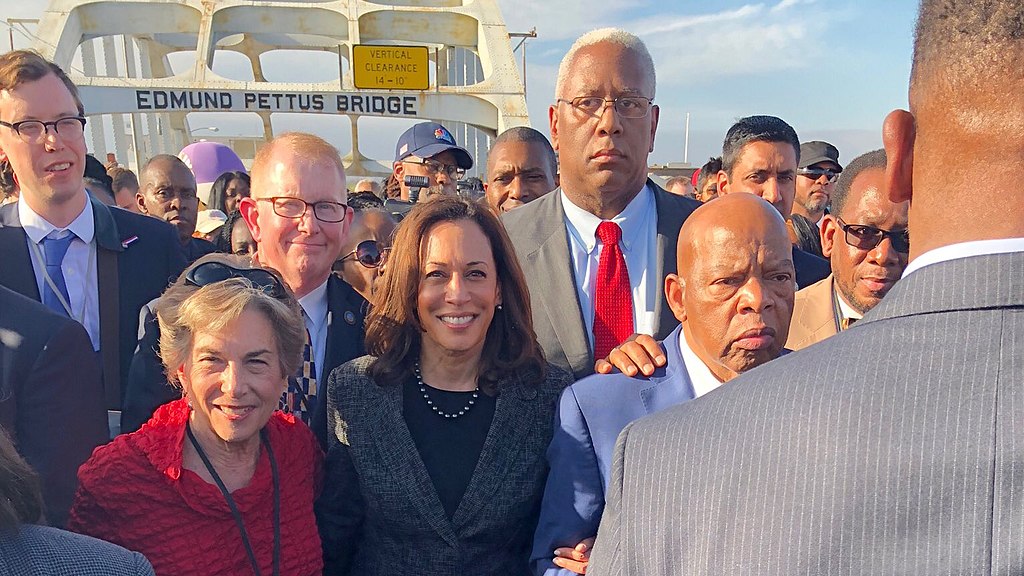
In a moment that quickly sparked criticism, Vice President Kamala Harris admitted that grocery prices are "too expensive" during a recent public appearance, only to follow up by citing inflation data that painted a less-than-reassuring picture. Harris attempted to calm voter concerns by referencing inflation figures released earlier that day, which showed a year-over-year inflation rate of 2.4%, higher than expected and leaving many Americans wondering if relief is anywhere in sight.
Harris, while speaking at a public event focused on the economy, addressed the ongoing issue of high food prices, acknowledging the financial strain many families are facing. “We know grocery prices are too expensive right now,” she said, highlighting the difficulties that everyday Americans are experiencing at the checkout line. However, it was her attempt to spin inflation data that raised eyebrows and quickly became the most controversial part of her remarks.
The inflation data Harris referenced showed a “hotter than expected” inflation rate of 2.4% year-over-year, indicating that prices continue to rise at a pace that exceeds initial predictions. Despite this, Harris tried to reassure the public that the administration’s efforts to curb inflation were working, saying, “The latest numbers show progress, and we are confident that inflation will continue to ease.”
However, many were quick to point out that Harris’s optimism seemed disconnected from the reality that many Americans are facing. Critics argue that the inflation data she cited paints a concerning picture, particularly for families already struggling with rising grocery costs, rent, and energy bills. “How can she say grocery prices are a problem and then act like 2.4% inflation is a good thing?” one critic tweeted. “This is a disaster.”
Economists have noted that while inflation has slowed compared to the highs seen in previous years, a 2.4% increase is still a significant burden for households already grappling with financial difficulties. The fact that inflation came in higher than expected adds to concerns about whether the Federal Reserve and the Biden administration can successfully bring inflation under control without causing further economic damage.
The most controversial part of Harris’s remarks lies in the perceived disconnect between her acknowledgment of high prices and her attempt to frame the inflation data as a sign of progress. Many see it as a misstep that highlights the challenges the administration faces in addressing economic pain points while trying to present a positive outlook.
Supporters of Harris, however, have defended her comments, arguing that inflation is a complex issue and that the administration has made strides in controlling price increases, especially after the severe inflation spikes during the pandemic recovery. “It’s not going to be solved overnight, but we’re moving in the right direction,” one supporter noted.
Still, for many Americans, the rising costs of basic necessities remain a top concern, and Harris’s remarks did little to ease their worries. As grocery prices continue to climb and inflation remains higher than anticipated, the vice president’s attempt to reassure voters may have backfired, leaving some to question whether the administration truly understands the economic pressures families are facing.
With inflation and rising costs likely to be major issues in the upcoming election, Harris’s comments are sure to fuel further debate about the effectiveness of the administration’s economic policies. For now, her acknowledgment of high grocery prices, followed by an attempt to spin less-than-encouraging inflation data, has left many wondering what comes next.













