


 New York Legalizes Medical Aid in Dying for Terminally Ill Patients
  TrumpRx Website Launches to Offer Discounted Prescription Drugs for Cash-Paying Americans
  Nicaragua Ends Visa-Free Entry for Cubans, Disrupting Key Migration Route to the U.S.
  Trump’s Inflation Claims Clash With Voters’ Cost-of-Living Reality
  Iran–U.S. Nuclear Talks in Oman Face Major Hurdles Amid Rising Regional Tensions
  U.S.-India Trade Framework Signals Major Shift in Tariffs, Energy, and Supply Chains
  Trump Lifts 25% Tariff on Indian Goods in Strategic U.S.–India Trade and Energy Deal
  Japan Election 2026: Sanae Takaichi Poised for Landslide Win Despite Record Snowfall
  China Warns US Arms Sales to Taiwan Could Disrupt Trump’s Planned Visit
  Trump Allows Commercial Fishing in Protected New England Waters
  Netanyahu to Meet Trump in Washington as Iran Nuclear Talks Intensify
  U.S. to Begin Paying UN Dues as Financial Crisis Spurs Push for Reforms
  Bosnian Serb Presidential Rerun Confirms Victory for Dodik Ally Amid Allegations of Irregularities
  Ohio Man Indicted for Alleged Threat Against Vice President JD Vance, Faces Additional Federal Charges
  Pentagon Ends Military Education Programs With Harvard University
  Antonio José Seguro Poised for Landslide Win in Portugal Presidential Runoff
  Trump Says “Very Good Talks” Underway on Russia-Ukraine War as Peace Efforts Continue


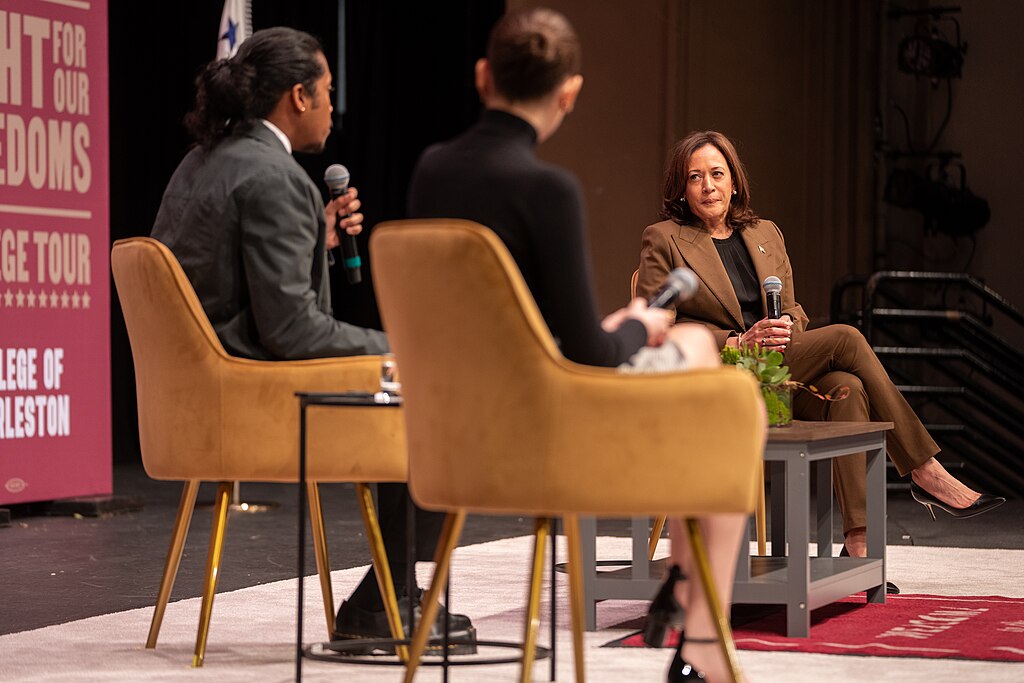
Vice President Kamala Harris’s decision to deliver a post-election speech at Howard University, her alma mater and a historically Black institution, has stirred controversy and debate across the political spectrum. Scheduled for 4 p.m. today, the speech is expected to address the election results and possibly signal the end of her presidential bid. However, critics argue that the choice of venue underscores what they see as divisive politics.
In the wake of Harris’s loss to Donald Trump, some political commentators and online critics accuse her of intentionally choosing Howard University as a symbolic gesture that excludes a broader American audience. “Why deliver a concession speech from an all-Black college?” questioned one critic. “This choice reinforces the idea that she wasn’t interested in being a president for all Americans, only a select group.”
Howard University: A Meaningful or Divisive Choice?
Harris’s connection to Howard University runs deep. She graduated from the prestigious institution in 1986, and has often credited her experience there with shaping her political philosophy and commitment to public service. For Harris and her supporters, Howard is a symbol of resilience, empowerment, and the Black American experience—a natural choice for a reflective speech.
However, some opponents view the selection as polarizing. They argue that, given the current divisive climate, choosing a venue that highlights her identity rather than reaching out to a wider audience sends a message of exclusion. “This is another example of her playing identity politics,” said a conservative analyst. “Instead of uniting the country, she’s drawing a line between communities.”
Supporters, on the other hand, see the choice as a powerful tribute to the institution that helped shape Harris’s career. “Howard University is a cornerstone of Kamala’s life,” said one political ally. “Delivering her speech there is a way to honor her roots while addressing the nation.”
Critics Claim Harris 'Didn’t Want to Represent All Americans'
The backlash surrounding Harris’s decision isn’t limited to the choice of venue. Her critics claim that this move reflects a broader pattern, accusing her of focusing on identity-based issues throughout her campaign rather than presenting herself as a leader for all Americans. Some online commentators went as far as to suggest that this was a factor in her defeat.
“This is why she lost,” said one social media user. “She never wanted to represent everyone—she was always more concerned with dividing us than bringing us together.” Others echoed this sentiment, arguing that her decision to focus on Howard University sends a signal that she prioritizes her base over a broader audience.
Despite the criticism, Harris’s supporters argue that the speech location is a reflection of her values, not an indication of division. For many, her presence at Howard is a celebration of diversity, resilience, and community, values that Harris believes can uplift the entire nation. “The backlash is overblown,” said a supporter. “Kamala is being true to herself and honoring a place that shaped her.”
As the Vice President prepares to address the nation, all eyes will be on her remarks. Will she address the criticism? Will she use this platform to unify, or will her opponents see this as further proof of division? Either way, her speech at Howard University is likely to be a moment of reflection that will shape her political legacy, leaving the nation divided on what her choice ultimately means.













