


 Broadcom Stock Jumps After Strong Earnings Beat and Bullish AI Revenue Outlook
  SoftBank Seeks Up to $40 Billion Loan to Fund Major Investment in OpenAI
  Australia Targets AI Platforms With Strict Age Verification Rules
  The Pentagon strongarmed AI firms before Iran strikes – in dark news for the future of ‘ethical AI’
  California Court Rejects xAI Bid to Block AI Data Transparency Law
  Iran Crisis Could Threaten AI Data Center Expansion and Global Chip Demand, South Korea Warns
  Nvidia to Launch New AI Inference Processor to Boost OpenAI Performance
  Facebook Outage Disrupts Thousands of Users Across the United States
  Nvidia CEO Jensen Huang Says $100B OpenAI Investment Unlikely as AI Demand Surges
  Pentagon Labels Anthropic AI a Supply-Chain Risk, Restricting Use in U.S. Military Projects
  Federal Judge Blocks Virginia Social Media Age Verification Law Over First Amendment Concerns
  Samsung Electronics Stock Poised for $1 Trillion Valuation Amid AI and Memory Boom
  AI is already creeping into election campaigns. NZ’s rules aren’t ready
  US Lawmakers Raise Security Concerns Over Intel Testing ACM Research Chipmaking Tools
  OpenAI Explores New Code-Hosting Platform to Reduce Dependence on GitHub
  U.S. Deploys Tomahawks, B-2 Bombers, F-35 Jets and AI Tools in Operation Epic Fury Against Iran
  Defense Contractors Move to Drop Anthropic AI After Trump Administration Ban


National Aeronautics and Space Administration (NASA) is steadily making progress to accomplish its mission to send astronauts to deep space destinations with the completion of a crucial milestone for the Orion spacecraft currently in production, the agency said in a press release. It has completed a rigorous technical and programmatic review, confirming continued support of the program and establishing NASA’s commitment to the program’s technical, cost, and schedule baseline.
“Our work to send humans out into the solar system is progressing,” said NASA Administrator Charles Bolden. “Orion is a key piece of the flexible architecture that will enable humanity to set foot on the Red Planet, and we are committed to building the spacecraft and other elements necessary to make this a reality.”
A successful test of an unmanned Orion capsule was conducted last December, which provided important data to help improve the design of Orion for next test flights, Exploration Missions 1 and 2 (EM-1 and EM-2).
Previously, a test flight of Orion with humans aboard had been scheduled for 2021, but now they identified a number of hardware and software problems that could disrupt the set timeline, reports BBC.
A review of the progress made so far and assessment of future challenges has prompted the authorities to change the deadline to a “no later than April 2023”.
Bill Gerstenmaier, agency's senior executive responsible for human spaceflight matters, said, "I think we're being somewhat conservative. My teams will tell you they're trying to work every risk that's out there. Every risk that the Standard Review Board has identified - we think we can handle those risks.
"But if you look at the complexities of what we're doing building this spacecraft, there will be some unknowns that show up, and to protect for those we went with the later date, the 2023."
The agency is working to a development cost baseline of $6.77 billion from October 2015 through the first crewed mission (EM-2), now with 2023 as the target.
“As we take these steps to develop the capabilities we need to send astronauts deep into space, we’re also aligning how we manage our human exploration systems development programs to ensure we are prepared for unforeseen future hurdles,” said Robert Lightfoot, NASA associate administrator. “We’re committing to this funding and readiness level to stay on the journey we’ve outlined to get to Mars.”

- News

- Economy

- Central Banks
- Investing
- Research
- Roundups
- Digital Currency
- Insights
- Technical Analysis
- Technology
- Business
- Law
- Health
- Nature
- Fintech
- Science
- Topic
- Opinions
- ©Econometrics LLC . All Rights Reserved.
NASA delays first crewed flight until 2023
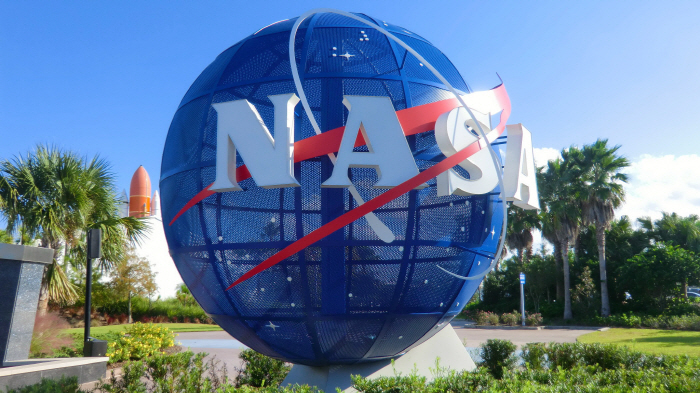
NASA Kennedy Space Center, Cape Canaveral (Florida) (Reinhard Link_Flikr)
Thursday, September 17, 2015 6:36 AM UTC
Editor's Picks









- Market Data
Most Popular




