


 Asian Stocks Slip as Tech Rout Deepens, Japan Steadies Ahead of Election
  Bank of Japan Signals Readiness for Near-Term Rate Hike as Inflation Nears Target
  Asian Currencies Stay Rangebound as Yen Firms on Intervention Talk
  Japan Economy Poised for Q4 2025 Growth as Investment and Consumption Hold Firm
  Global Markets Slide as AI, Crypto, and Precious Metals Face Heightened Volatility
  Indian Refiners Scale Back Russian Oil Imports as U.S.-India Trade Deal Advances
  UK Starting Salaries See Strongest Growth in 18 Months as Hiring Sentiment Improves
  Gold and Silver Prices Climb in Asian Trade as Markets Eye Key U.S. Economic Data
  Vietnam’s Trade Surplus With US Jumps as Exports Surge and China Imports Hit Record
  Yen Slides as Japan Election Boosts Fiscal Stimulus Expectations
  India–U.S. Interim Trade Pact Cuts Auto Tariffs but Leaves Tesla Out


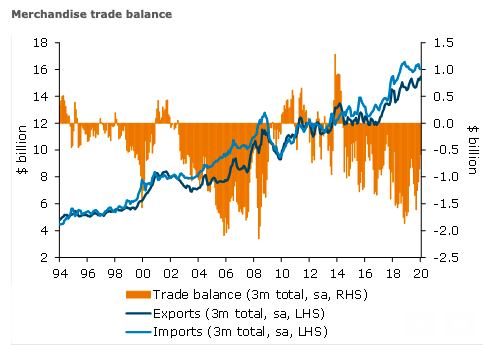
New Zealand’s unadjusted trade balance saw a deficit of $340 million, which was stronger than expected. Exports fell seasonally, but not by as much as expected. The majority of the supply chain disruptions due to COVID-19 didn’t occur until February, ANZ Research reported.
The annual deficit narrowed to $3.87bn. Imports in January weakened only slightly to $5.07bn after December data was revised up to $5.12bn.
Export values came in at $4.7bn (up 8.8% y/y). Meat returns were up 30.5% y/y. On a seasonally adjusted basis meat export volumes lifted 4.5% m/m, dairy was up 0.6% m/m but forestry export volumes were down 15% m/m.
But strength in pricing saw the value of forestry exported lift 18% m/m while meat returns eased slightly. The latter was expected as the prices being offered by Chinese importers eased back just prior to Christmas.
January was a particularly strong month for imports of petroleum products with import values up 20.7% m/m. That said, petrol was down 1.6% y/y and back 9.7% y/y in the 3mths to January primarily due to lower oil prices. Imports of textile products lifted sharply having gained 27.5% m/m on a seasonally adjusted basis.
Pharmaceutical imports were back 12% y/y in January and are down 1.4% in the past year. Supply disruptions for goods imported from China are expected to impact this category in February which is concerning.
"Going forward, we expect a major reduction in both exports and imports in February and March due to the slowing of supply chains in and out of China. Exports will also be impacted by the drought in NZ which is starting to decrease milk output but increase the immediate supply of meat for export. However, the impact of the drought on trade data will be dwarfed by the restrictions on shipping that is occurring due to port congestion and lack of availability of refrigerated containers," ANZ Research further commented in the report.













