


 Pentagon Ends Military Education Programs With Harvard University
  Trump Signs Executive Order Threatening 25% Tariffs on Countries Trading With Iran
  Netanyahu to Meet Trump in Washington as Iran Nuclear Talks Intensify
  US Pushes Ukraine-Russia Peace Talks Before Summer Amid Escalating Attacks
  Sydney Braces for Pro-Palestine Protests During Israeli President Isaac Herzog’s Visit
  Trump Administration Appeals Court Order to Release Hudson Tunnel Project Funding
  New York Legalizes Medical Aid in Dying for Terminally Ill Patients
  Antonio José Seguro Poised for Landslide Win in Portugal Presidential Runoff
  Bangladesh Election 2026: A Turning Point After Years of Political Suppression
  Trump Says “Very Good Talks” Underway on Russia-Ukraine War as Peace Efforts Continue
  Japan Election 2026: Sanae Takaichi Poised for Landslide Win Despite Record Snowfall
  China Warns US Arms Sales to Taiwan Could Disrupt Trump’s Planned Visit
  Jack Lang Resigns as Head of Arab World Institute Amid Epstein Controversy
  Nicaragua Ends Visa-Free Entry for Cubans, Disrupting Key Migration Route to the U.S.
  U.S.-India Trade Framework Signals Major Shift in Tariffs, Energy, and Supply Chains
  Trump Congratulates Japan’s First Female Prime Minister Sanae Takaichi After Historic Election Victory
  U.S. Lawmakers to Review Unredacted Jeffrey Epstein DOJ Files Starting Monday


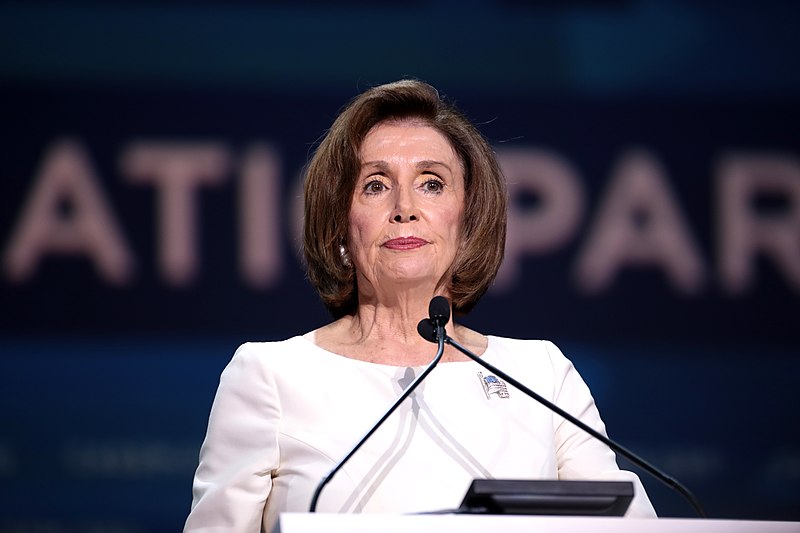
All eyes are on the House to vote on two major proposals that would put forth a big portion of US President Joe Biden’s agenda to the public. House Speaker Nancy Pelosi said that the House will not vote on a spending package higher than the $3.5 trillion budget resolution.
In a “Dear Colleague” letter, Pelosi said that the House will not vote on a spending package that would be higher than the $3.5 trillion proposal sent by Biden and the Senate Democrats. However, Pelosi noted that the respective panels in the House and the Senate are reviewing the bills for possible Byrd rule violations that could change the top-line number.
“The President and Senate Democrats sent us a budget resolution with a cap of $3.5 trillion. I have promised Members that we would not have House Members vote for a bill with a higher top-line than would be passed in the Senate. Hopefully, that will be at the $3.5 trillion number,” Pelosi said in the letter.
“Our legislation is being reviewed by the House and Senate Budget Committees for possible Byrd violation challenges in order to narrow our exposure in a Byrd bath. The House and Senate are already in agreement on most of the bills,” Pelosi added. “We must be prepared for adjustments according to the Byrd rule and an agreed to number.”
Pelosi’s letter follows internal debates among Democrats regarding the price tag for the budget resolution as some Democratic lawmakers are opposed to the $3.5 trillion price tag. Back in July, Senate Majority Leader Chuck Schumer and Senate Budget Committee chair Bernie Sanders announced that they reached a deal regarding the budget resolution proposal. The $3.5 trillion resolution would go into social programs as part of the Democratic-led infrastructure bill.
Meanwhile, Pelosi and the House Democrats introduced a bill this week that looks to limit presidential powers by addressing the list of complaints made against twice-impeached former president Donald Trump during his presidency. The bill, also known as the Protecting Democracy Act, would bring in reforms that would adjust the requirements and restrictions regarding the compliance with congressional subpoenas and pardons, as well as the independence of the inspector general, and transitions between presidential administrations among many others.
“Donald Trump made this legislation a necessity, but this is bigger than about any one particular president,” said Rep. Adam Schiff, who is the bill’s lead sponsor. “The former president trampled many of our sacred norms and institutions, violating laws, and breaking long-standing precedent with shocking ease.”













