


 Yen Slides as Japan Election Boosts Fiscal Stimulus Expectations
  Australian Household Spending Dips in December as RBA Tightens Policy
  Lee Seung-heon Signals Caution on Rate Hikes, Supports Higher Property Taxes to Cool Korea’s Housing Market
  Vietnam’s Trade Surplus With US Jumps as Exports Surge and China Imports Hit Record
  Gold and Silver Prices Climb in Asian Trade as Markets Eye Key U.S. Economic Data
  South Africa Eyes ECB Repo Lines as Inflation Eases and Rate Cuts Loom
  Dollar Near Two-Week High as Stock Rout, AI Concerns and Global Events Drive Market Volatility
  RBI Holds Repo Rate at 5.25% as India’s Growth Outlook Strengthens After U.S. Trade Deal


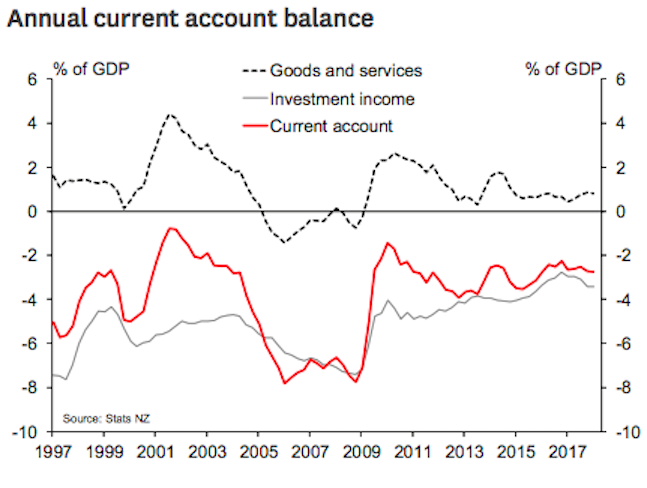
New Zealand’s current account deficit widened slightly to 2.8 percent of GDP in the year to March. While this was the largest deficit in two years, it remains low relative to history. The result was in line with expectations, and has no implications for our other economic forecasts.
In seasonally adjusted terms, the quarterly deficit increased substantially in March, reaching just over USD3 billion – the biggest in nine years. The main factor was a widening in the trade deficit for goods. The value of exports fell by 5.9 percent, while imports rose by 2.4 percent.
However, the softness in exports is expected to be reversed next quarter. Export commodity prices have improved since March, and the volatility in export volumes is often a product of the timing of shipments.
The rise in imports was mostly due to prices, with world oil prices higher and the New Zealand dollar weaker over the quarter. But import volumes held steady after a sharp rise in the previous quarter, particularly for imports of plant and machinery.
"We’ve been anticipating some slowdown in business investment this year, in line with the drop in business confidence. But there is little evidence for an investment slowdown yet, at least in the trade figures," Westpac Research commented in its latest report.
Meanwhile, New Zealand’s relatively small current account deficits in recent years mean that its overseas borrowing requirement has been much smaller than in the past. Indeed, the New Zealand economy has effectively been able to outgrow its debts.













