


 Global PC Makers Eye Chinese Memory Chip Suppliers Amid Ongoing Supply Crunch
  Nvidia, ByteDance, and the U.S.-China AI Chip Standoff Over H200 Exports
  FDA Targets Hims & Hers Over $49 Weight-Loss Pill, Raising Legal and Safety Concerns
  Uber Ordered to Pay $8.5 Million in Bellwether Sexual Assault Lawsuit
  Missouri Judge Dismisses Lawsuit Challenging Starbucks’ Diversity and Inclusion Policies
  OpenAI Expands Enterprise AI Strategy With Major Hiring Push Ahead of New Business Offering
  SoftBank and Intel Partner to Develop Next-Generation Memory Chips for AI Data Centers
  Palantir Stock Jumps After Strong Q4 Earnings Beat and Upbeat 2026 Revenue Forecast
  SpaceX Pushes for Early Stock Index Inclusion Ahead of Potential Record-Breaking IPO
  Nvidia CEO Jensen Huang Says AI Investment Boom Is Just Beginning as NVDA Shares Surge
  TSMC Eyes 3nm Chip Production in Japan with $17 Billion Kumamoto Investment
  Elon Musk’s Empire: SpaceX, Tesla, and xAI Merger Talks Spark Investor Debate
  Weight-Loss Drug Ads Take Over the Super Bowl as Pharma Embraces Direct-to-Consumer Marketing
  SpaceX Prioritizes Moon Mission Before Mars as Starship Development Accelerates
  Rio Tinto Shares Hit Record High After Ending Glencore Merger Talks
  Sony Q3 Profit Jumps on Gaming and Image Sensors, Full-Year Outlook Raised


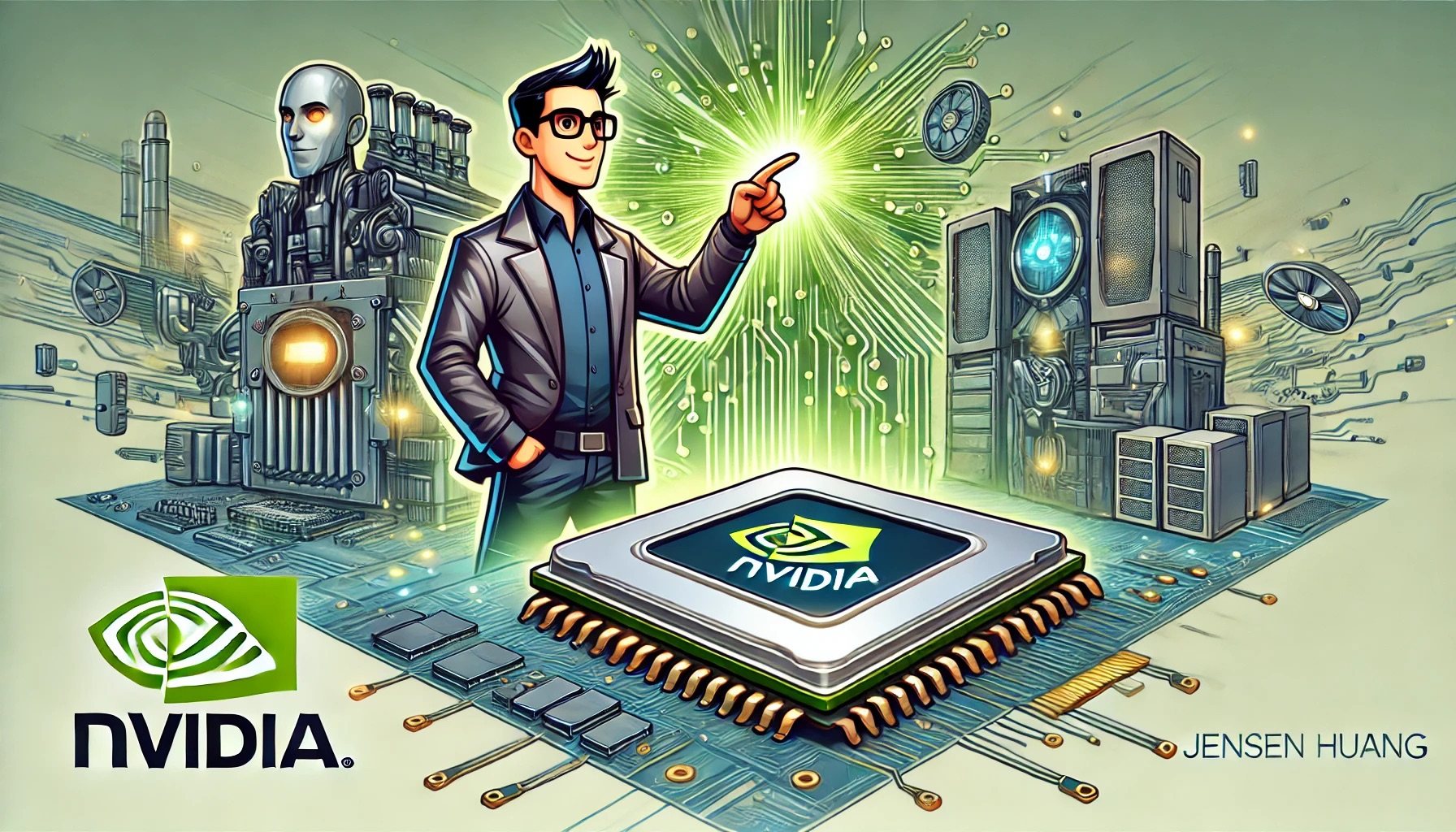
Speaking at Gartner's IT Symposium, Nvidia CEO Jensen Huang warned business technology leaders that embracing AI is crucial for survival, emphasizing its transformative impact on chip design, software, and supply chain operations.
AI-Powered Organizations: The Future of Business
In order to be ready for what he terms a "new industrial revolution," Nvidia CEO Jensen Huang warned thousands of business technology leaders that their companies must transform into AI-powered organizations.
At Tuesday's IT Symposium/Xpo event in Orlando, held by market research and consulting firm Gartner, Huang made the argument that all CEOs and CIOs need to do is start using AI, and everything else will fall into place.
Nvidia's AI Strategy: From Chip Design to Supply Chain
According to Huang, the Santa Clara, California-based semiconductor behemoth has already implemented this mentality, using AI for tasks like chip design, software development, and supply chain management.
At the event, Huang told The Wall Street Journal that chief information officers should look for something their company is already doing well and see if artificial intelligence can improve it. He spoke about how those three categories "move the needle most profoundly" for Nvidia. "When it’s our most impactful work, it’s easiest to get energy around it."
The Creation of Nvidia's "AI Brain"
Gartner fellow, distinguished VP, and chief of research Daryl Plummer conducted the live interview with Huang.
Nvidia is developing its own "AI brain," as Huang puts it, for the distant future. What this means is that businesses should gather information about their operations, consumer interactions, and business processes and then give it to AI. One day, CEOs and CIOs "can just talk to" AIs built from this data, according to Huang.
According to Huang, "everybody should do that" after learning that Nvidia has begun transforming all of its private data into an AI.
Overcoming AI's Data Challenges
According to Huang, the company is launching a solution to help AI better interpret and process PDF files in order to achieve this goal. Conventional AI has generally struggled to parse "unstructured data" such as PDFs and emails.
Huang added that this will eventually lead to "large populations of digital workers," or AI agents, working side by side with humans in departments like sales, marketing, engineering, and supply chain. Getting there will need everyone to master the art of AI instruction, even company tech executives.
Nvidia's Partnerships in the AI Space
According to Huang, Nvidia is collaborating with SAP and ServiceNow to "put agents into their system," and the company has also collaborated with Accenture to develop an agent platform suitable for usage in private data centers.
"You’re still going to be doing programming," he stressed. "But you will be programming some kind of a structured way of communicating with AIs."
AI-Assisted Chip and Software Development
Nvidia currently employs AIs to assist in chip design and software development. These individuals are "basically AI chip designers" and "AI software engineers," according to Huang's interview with the Journal.
Adding, "Nowhere in the foreseeable future do we expect AI to be able to do what our employees can," Huang continued.
Expanding Nvidia's AI Chips Beyond Cloud Platforms
Huang announced onstage that the company's chips are available in data centers and private cloud platforms, not only cloud platforms offered by other vendors. This is good news for chief information officers (CIOs), who are currently responsible for managing expectations around the commercial value of artificial intelligence (AI) while still pushing its limitations.
According to Huang, "Today's computing is done everywhere" during the interview with the Journal. "Accelerated computing will be everywhere, AI will be everywhere."













