


 U.S. Stock Futures Rise as Markets Brace for Jobs and Inflation Data
  Taiwan Says Moving 40% of Semiconductor Production to the U.S. Is Impossible
  Vietnam’s Trade Surplus With US Jumps as Exports Surge and China Imports Hit Record
  Global PC Makers Eye Chinese Memory Chip Suppliers Amid Ongoing Supply Crunch
  Amazon Stock Rebounds After Earnings as $200B Capex Plan Sparks AI Spending Debate
  Australian Pension Funds Boost Currency Hedging as Aussie Dollar Strengthens
  American Airlines CEO to Meet Pilots Union Amid Storm Response and Financial Concerns
  DBS Expects Slight Dip in 2026 Net Profit After Q4 Earnings Miss on Lower Interest Margins
  Missouri Judge Dismisses Lawsuit Challenging Starbucks’ Diversity and Inclusion Policies
  Samsung Electronics Shares Jump on HBM4 Mass Production Report
  TrumpRx Website Launches to Offer Discounted Prescription Drugs for Cash-Paying Americans
  SpaceX Pivots Toward Moon City as Musk Reframes Long-Term Space Vision
  FDA Targets Hims & Hers Over $49 Weight-Loss Pill, Raising Legal and Safety Concerns
  Lee Seung-heon Signals Caution on Rate Hikes, Supports Higher Property Taxes to Cool Korea’s Housing Market
  UK Starting Salaries See Strongest Growth in 18 Months as Hiring Sentiment Improves
  Once Upon a Farm Raises Nearly $198 Million in IPO, Valued at Over $724 Million


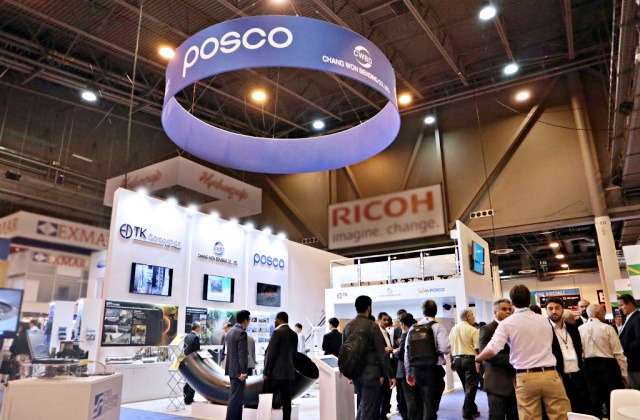
POSCO is the latest major company that is affected by the ongoing truckers' strike in South Korea. The union truckers have not returned to work yet, and on Sunday, they have been in a protest for six straight days already.
According to Reuters, the strike continues as the talks with the government did not make any progress. They have been demanding a pay increase, and apparently, this was not granted.
The truckers' strike affected many companies, and at this point, it has already crippled the cargo transport at major ports and industrial centers in South Korea. It was reported that the country's transport ministry officials held a meeting with the union leaders for the third round of negotiations that lasted more than 10 hours. However, the talks still failed as the two parties could not reach an agreement.
Moreover, the ministry urged the truckers to return to work but continue to go on strike instead as they could not settle or narrow their differences. A union official said that it is uncertain if there will be more talks in the future, but the ministry said it will still continue with the negotiation.
A senior official of the union said that groups from 16 regions will discuss what their next step will be. This strike has intensified the shortage of several goods, including batteries and semiconductor products, since South Korea is a major supplier of these items as well as auto parts and mobile gadgets.
Indeed, with the union members' refusal to return to work, the global supply chain that has already been disrupted by COVID-19 and the war in Ukraine may turn for the worst. Many ports worldwide are struggling with supply stoppage and slowdown in chips. This is why the strike is not only threatening for companies in South Korea but in other countries as well.
POSCO, Hyundai, and Kia are three of the most affected firms right now. It was even reported that the steelmaker was forced to close down its facilities for lack of materials that could not be transported to the production plants due to the strike. Meanwhile, the ministry released a statement about the failed talks on Sunday.
"The truckers refused to budge from their initial demand that the system be unconditionally extended with measures to include more freight items eligible for the law," The Korea Times quoted the ministry as saying in a statement. "We explained that logistics operators are calling for the abolishment of the system, citing the unverified causal relationship between the system and the decrease of road accidents due to lack of sleep or freight trucks being overloaded."













