


 China Warns US Arms Sales to Taiwan Could Disrupt Trump’s Planned Visit
  Japan Election 2026: Sanae Takaichi Poised for Landslide Win Despite Record Snowfall
  Federal Judge Restores Funding for Gateway Rail Tunnel Project
  New York Legalizes Medical Aid in Dying for Terminally Ill Patients
  US Pushes Ukraine-Russia Peace Talks Before Summer Amid Escalating Attacks
  Japan’s Prime Minister Sanae Takaichi Secures Historic Election Win, Shaking Markets and Regional Politics
  Sydney Braces for Pro-Palestine Protests During Israeli President Isaac Herzog’s Visit
  Bosnian Serb Presidential Rerun Confirms Victory for Dodik Ally Amid Allegations of Irregularities
  Jack Lang Resigns as Head of Arab World Institute Amid Epstein Controversy
  India–U.S. Interim Trade Pact Cuts Auto Tariffs but Leaves Tesla Out
  Israel Approves West Bank Measures Expanding Settler Land Access
  Ghislaine Maxwell to Invoke Fifth Amendment at House Oversight Committee Deposition
  Trump Congratulates Japan’s First Female Prime Minister Sanae Takaichi After Historic Election Victory
  Trump Backs Nexstar–Tegna Merger Amid Shifting U.S. Media Landscape
  Trump Signs Executive Order Threatening 25% Tariffs on Countries Trading With Iran
  U.S.-India Trade Framework Signals Major Shift in Tariffs, Energy, and Supply Chains
  Ohio Man Indicted for Alleged Threat Against Vice President JD Vance, Faces Additional Federal Charges


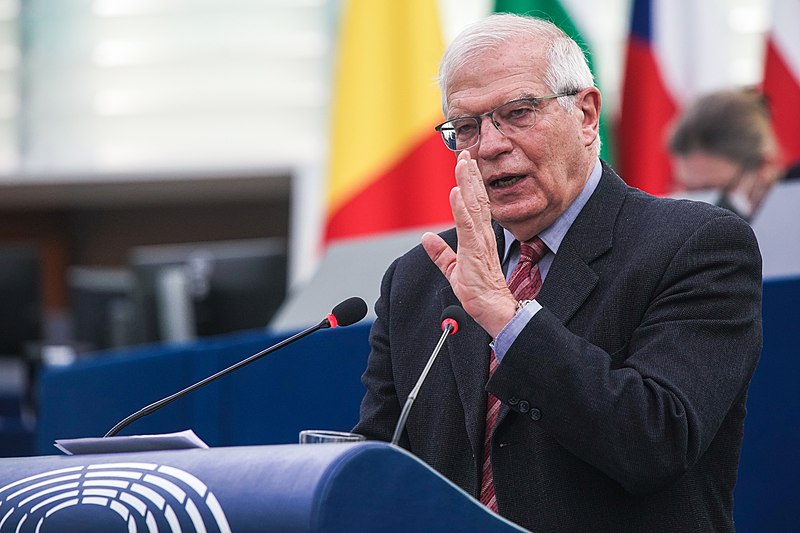
The European Union’s foreign policy chief announced this week that the bloc’s defense ministers agreed to start working on an EU military assistance mission. The agreement comes as Russia continues to wage war on Ukraine for the seventh month this year.
EU foreign policy chief Josep Borrell said Tuesday that the defense ministers of the bloc agreed to set up a military assistance mission for Ukraine. Borrell made the comments following the meeting among the bloc’s defense ministers in Prague.
“There are many training initiatives on the way but the needs are enormous and we need to ensure the coherence of these efforts,” said Borrell. “I can say that all members states agree clearly on that and on launching the work necessary to define parameters for a EU military assistance mission for Ukraine.”
Aside from starting on the work needed to set up an EU military assistance mission, diplomats also said Tuesday that the bloc’s foreign ministers likely agree with tightening visas for Russians.
The measure would suspend a visa facilitation agreement with Russia and make Russians pay more and wait longer for their visas to be issued.
This comes as the bloc remains divided over whether or not to issue a widespread visa ban for Russians, which Ukraine has called for. Some EU member countries have also backed a widespread visa ban for Russians.
Some countries, such as Germany and France, have cited that dissidents must be allowed to leave Russia. German foreign minister Anna Baerbock said a visa ban would only punish dissidents who seek to flee Russia.
“We caution against far-reaching restrictions on our visa policy, in order to prevent feeding the Russian narrative and trigger unintended rallying around the flag effects and/or estranging future generations,” said the two countries in a joint memo.
Ukrainian foreign minister Dmytro Kuleba said Russia fought a war with Georgia and illegally annexed Crimea in 2014 since obtaining easier EU visas in 2007. Kuleba said travelling to Europe has no transformative effect on Russians.
Eastern and Nordic European countries have supported such a ban, with some saying they may resort to a regional one if no agreement is reached at an EU level.













