


 Pentagon Ends Military Education Programs With Harvard University
  TrumpRx Website Launches to Offer Discounted Prescription Drugs for Cash-Paying Americans
  Japan Election 2026: Sanae Takaichi Poised for Landslide Win Despite Record Snowfall
  Trump Allegedly Sought Airport, Penn Station Renaming in Exchange for Hudson River Tunnel Funding
  New York Legalizes Medical Aid in Dying for Terminally Ill Patients
  TrumpRx.gov Highlights GLP-1 Drug Discounts but Offers Limited Savings for Most Americans
  Trump Backs Nexstar–Tegna Merger Amid Shifting U.S. Media Landscape
  Trump Allows Commercial Fishing in Protected New England Waters
  Trump Lifts 25% Tariff on Indian Goods in Strategic U.S.–India Trade and Energy Deal
  Nighttime Shelling Causes Serious Damage in Russia’s Belgorod Region Near Ukraine Border
  India–U.S. Interim Trade Pact Cuts Auto Tariffs but Leaves Tesla Out
  Trump Says “Very Good Talks” Underway on Russia-Ukraine War as Peace Efforts Continue
  U.S. Lawmakers to Review Unredacted Jeffrey Epstein DOJ Files Starting Monday
  U.S. to Begin Paying UN Dues as Financial Crisis Spurs Push for Reforms
  China Warns US Arms Sales to Taiwan Could Disrupt Trump’s Planned Visit
  Missouri Judge Dismisses Lawsuit Challenging Starbucks’ Diversity and Inclusion Policies


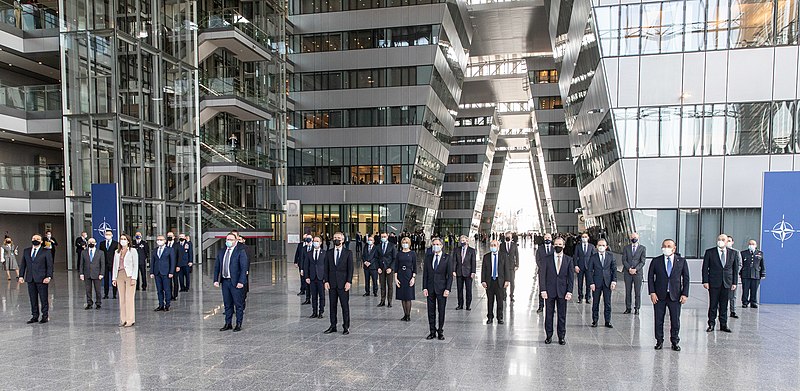
Following the talks between the US and Russia over Ukraine, Russian officials are now meeting with officials from NATO this week. Both sides are holding talks as fears remain over the security of Ukraine.
Officials from NATO and Russia are holding talks in Brussels this week in the midst of tensions in the region, exacerbated by the situation at the border shared by Russia and Ukraine. NATO Secretary-General Jens Stoltenberg is presiding over the discussions at the alliance’s headquarters. The talks between the two sides follow a week of discussions in western cities that aim to quell fears that Russia may decide to carry out an invasion of Ukraine.
“It is a timely opportunity for dialogue at a critical moment for European security. When tensions are high, it is even more important that we sit down around the same table and address our concerns,” said Stoltenberg during the meeting.
All 30 ambassadors of the alliance are present during the meeting. On Russia’s side, senior officials including Deputy Foreign Minister Alexander Grushko and Deputy Defense Minister Alexander Fomin were present.
NATO, the US, and Ukraine are accusing Russia of deploying up to 100,000 troops at the border it shares with Ukraine in recent months. The three have repeatedly warned of imposing severe sanctions on Russia should an invasion be carried out.
Russia has dismissed the possibility of invading Ukraine and accused the United States and NATO of undermining security in the region. Moscow has also created a list of demands that it wants the US and NATO to fulfill, with the list sent to Washington in December.
Russian President Vladimir Putin said that the requests are simple but Western powers have deemed the demands as unacceptable such as refusing NATO membership to Ukraine and former Soviet countries.
The meeting with NATO follows Russia’s meeting with officials from the US in Geneva, Switzerland, in talks that lasted for hours. While no breakthrough was reached between both sides, they have mutually agreed on efforts to reduce tensions in the region. Despite warnings given by Washington not to invade Ukraine, Moscow has also responded with its own warning, saying that the US should not underestimate the risks that come with the ongoing standoff between Russia and the West.













