


 Iraq PM Visits Washington as U.S. Oil, Gas Deals Take Center Stage
  Asian Currencies Weaken as Stronger Dollar Weighs, Yen Supported by GPIF Repatriation Hopes
  Australian Business Conditions Hold Steady as Easing Cost Pressures Face New Oil Price Risks
  US-Iran Strikes Escalate as Strait of Hormuz Crisis Pushes Oil Prices Higher
  Goldman Sees Foreign Investors Driving India Stock Market Recovery
  Gold Price Holds Near $4,000 as Middle East Tensions and Fed Rate Hike Bets Grow
  Deutsche Bank Sees Global Capital Shifts Reshaping Long-Term U.S. Dollar Outlook
  Gordie Howe Bridge to Open July 27 After U.S.-Canada Reach Toll Revenue Agreement
  Oil Prices Surge as U.S.-Iran Conflict Escalates and Strait of Hormuz Risks Grow
  South Korea Central Bank Set to Raise Interest Rates as Inflation Stays Elevated
  Trump Signs Executive Order to Boost AI Research in Childhood Cancer
  Trump and Merck KGaA Partner to Slash IVF Drug Costs and Expand Fertility Coverage
  South Korea’s KOSPI Triggers Trading Curb as AI Chip Stock Selloff Deepens
  Japanese Yen Holds Steady as Intervention Hopes Grow Ahead of U.S. CPI Data
  EU Weighs New Trade Restrictions on Israeli West Bank Settlements
  SpaceX’s Starship Completes 11th Test Flight, Paving Way for Moon and Mars Missions


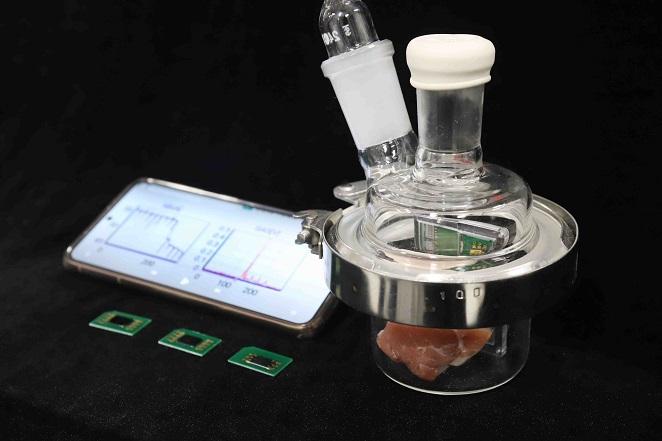
The Korea Research Institute of Bioscience and Biotechnology developed a portable ‘electronic nose’ that can check in real-time whether meat has spoiled.
The research team developed the electronic nose by creating two types of new compounds that can react to foul-smelling compounds and putrescine and applying them to a bionano sensor.
Cadaverine and putrescine generate bad odors caused by meat decay.
The portable electronic nose uses a small battery and features an easy-to-replace sensor.
Kwon Oh-seok, a researcher at the Korea Research Institute of Bioscience and Biotechnology, noted that the electronic nose not only measures meat freshness but also provides data on the correlation of various factors affecting meat decay, including temperature and humidity.







