


 Lee Seung-heon Signals Caution on Rate Hikes, Supports Higher Property Taxes to Cool Korea’s Housing Market
  Asian Markets Surge as Japan Election, Fed Rate Cut Bets, and Tech Rally Lift Global Sentiment
  Japan Economy Poised for Q4 2025 Growth as Investment and Consumption Hold Firm
  Trump Lifts 25% Tariff on Indian Goods in Strategic U.S.–India Trade and Energy Deal
  South Africa Eyes ECB Repo Lines as Inflation Eases and Rate Cuts Loom
  Vietnam’s Trade Surplus With US Jumps as Exports Surge and China Imports Hit Record
  Gold and Silver Prices Climb in Asian Trade as Markets Eye Key U.S. Economic Data
  U.S. Stock Futures Rise as Markets Brace for Jobs and Inflation Data
  Bank of Japan Signals Readiness for Near-Term Rate Hike as Inflation Nears Target
  Australian Pension Funds Boost Currency Hedging as Aussie Dollar Strengthens
  Dollar Near Two-Week High as Stock Rout, AI Concerns and Global Events Drive Market Volatility
  Nikkei 225 Hits Record High Above 56,000 After Japan Election Boosts Market Confidence
  Trump Signs Executive Order Threatening 25% Tariffs on Countries Trading With Iran
  UK Starting Salaries See Strongest Growth in 18 Months as Hiring Sentiment Improves
  Trump’s Inflation Claims Clash With Voters’ Cost-of-Living Reality


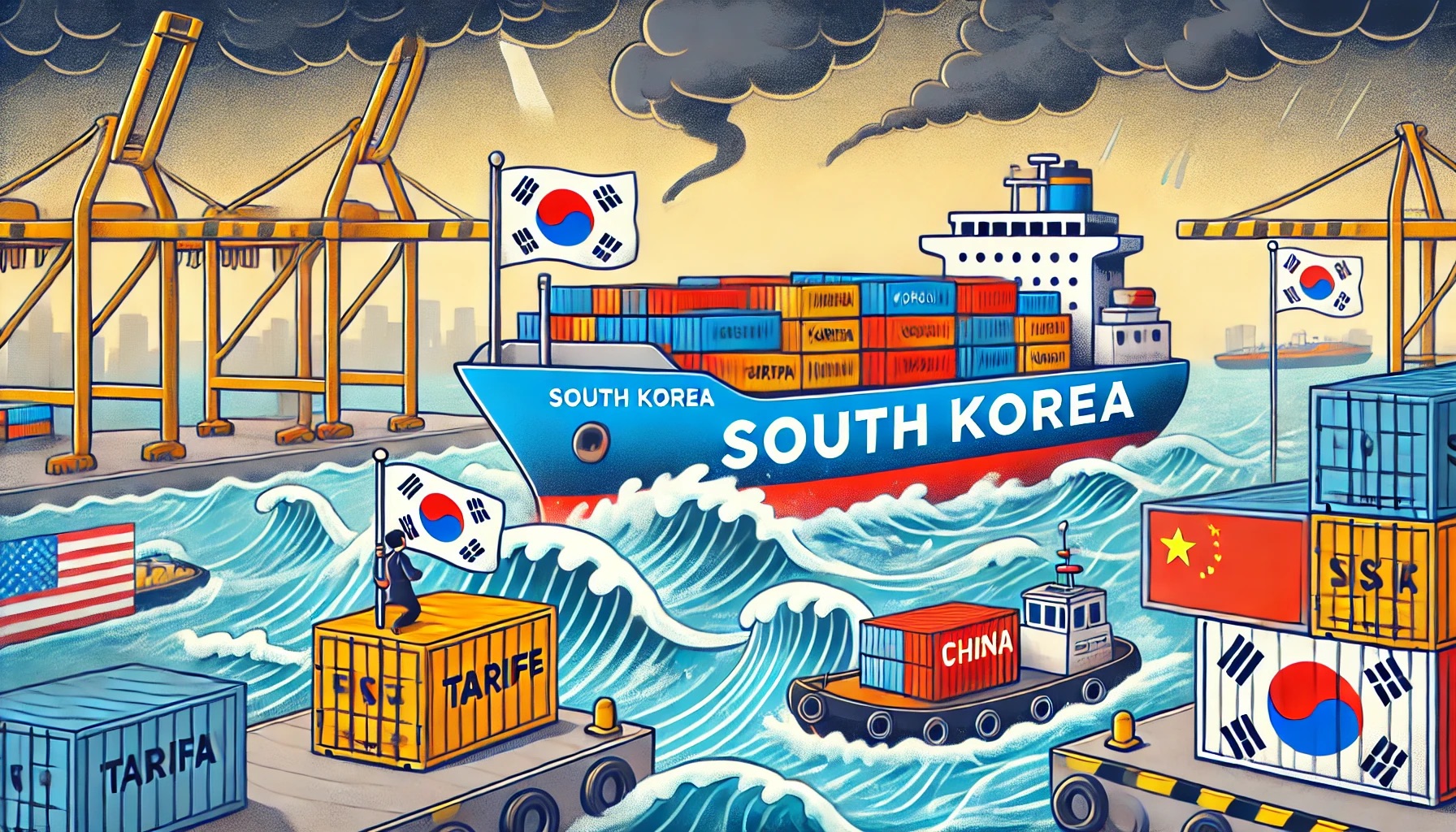
South Korea’s export growth slowed to its weakest pace in 14 months, climbing only 1.4% in November. Declining shipments to the United States and China, driven by mounting tariff uncertainties, underline intensifying trade pressures on the South Korean economy.
Tariff Uncertainty Clouds South Korea's Export Outlook
According to trade data released on Sunday, South Korea's export growth declined for four consecutive months in November, reaching its worst level in fourteen months. This was due to a decline in exports to both the US and China, driven by uncertainty surrounding tariffs, Reuters explains.
Following a 4.6% increase in October, exports from Asia's fourth-largest economy increased by 1.4% year-on-year in November, reaching $56.35 billion.
Annual export growth continued for the fourteenth month in a row, albeit at the slowest rate in the series thus far, falling short of economists' consensus predictions of a 2.8% gain (as reported in a Reuters poll).
In a recent statement, the soon-to-be president of the United States, Donald Trump, promised to levy a 25% tariff on goods imported from Mexico and Canada—a move that is likely to have an impact on South Korean businesses—and "an additional 10% tariff, above any additional tariffs" on China, the country's largest trading partner.
US and China Shipments Decline Sharply
After eight straight months of growth, shipments to China were down 0.6%, while shipments to the US plummeted 5.1%, marking their first decline since July 2023. The increase in exports to the EU was 0.9%.
Due to strikes at key auto parts suppliers and shipping delays caused by severe weather, automobile sales dropped 13.6%, their worst loss since June 2020, while semiconductor sales grew 30.8%, the smallest growth in 11 months, Investing.com points out.
"The government will team up with the private sector and utilise all available resources to export even a dollar more by the end of the year," said Ahn Duk-geun, Trade Minister.
South Korea's Imports See First Decline in Five Months
The 2.4% decline to $50.74 billion in imports was in contrast to the 1.7% increase the previous month and the 0.4% gain predicted by analysts. The drop occurred after a five-month absence.
In November, the nation's trade surplus widened to $5.61 billion, from $3.15 billion in October.













