


 Brazil Court Bars Flavio Bolsonaro From Visiting Jair Bolsonaro Ahead of Election
  Russia Launches Missile and Drone Attacks on Kyiv, Zaporizhzhia, and Kharkiv
  Western Allies Push for More Air Defenses for Ukraine at Paris Summit
  EU Ministers Split as Support Grows for Ban on Trade With Israeli West Bank Settlements
  Minnesota Wildfires Spread as Governor Tim Walz Deploys National Guard
  Republican Senator Lindsey Graham Dies at 71, Leaving South Carolina Senate Seat Vacant
  Zelenskiy Plans Ukraine Government Shake-Up as Prime Minister Svyrydenko Set to Step Down
  Iran's Supreme Leader Vows Revenge as Trump Threatens Massive U.S. Military Response
  Trump to Deliver National Address on Declassified 2020 Election Intelligence
  UK Sanctions 24 Russian-Linked Targets Over Cyberattacks and Election Interference
  US-Iran Strikes Escalate as Strait of Hormuz Crisis Pushes Oil Prices Higher
  DOJ Subpoenas New York Times Journalists Over Air Force One Leak Report
  Reuters/Ipsos Poll: Most Americans Expect U.S.-Iran War to Be Prolonged
  Venezuela Appoints Felix Plasencia to Lead Foreign Relations and Trade
  Trump Tells Congress Iran Hostilities Restarted, Citing New 60-Day War Powers Window
  Iran Says It Closes Strait of Hormuz After Warning Shot at Vessel


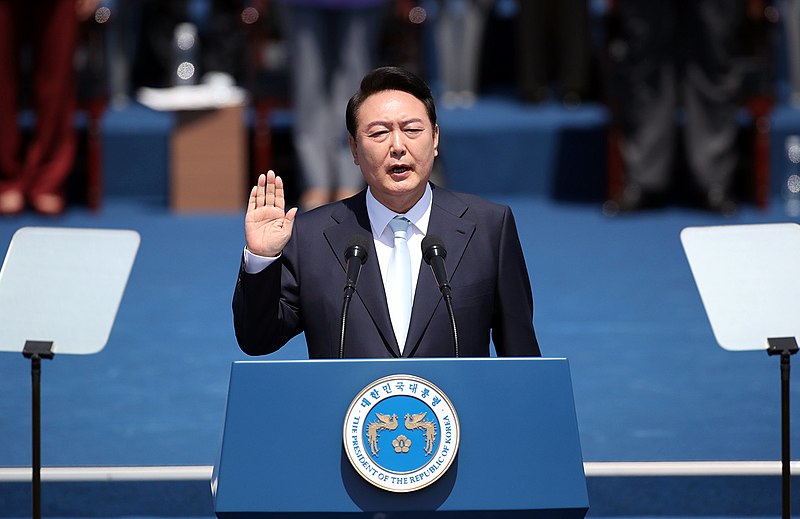
This week, South Korean President Yoon Suk-yeol was officially inaugurated as the country’s new leader. In his inauguration speech, Yoon suggested that he was ready to make an economic proposal with North Korea should Pyongyang decide to shut down its nuclear program.
According to Reuters, Yoon – who is expected to take a more hardline approach to North Korea – said in his inauguration speech that Pyongyang’s weapons program poses a threat to the peninsula. However, the conservative South Korean leader said he is ready to present an economic plan to North Korea if it denuclearizes.
“While North Korea’s nuclear programs are a threat to not only our security and that of Northeast Asia, the door to dialogue will also remain open so that we can peacefully resolve this threat,” said Yoon.
“If North Korea genuinely embarks on a process to complete denuclearization, we are prepared to work with the international community to present an audacious plan that will vastly strengthen North Korea’s economy and improve the quality of life for its people,” said Yoon.
While Yoon did not elaborate on the plan, his national security adviser Kim Sung-han told the outlet back in February that his team intends to devise a plan where Pyongyang could earn sanctions relief or economic aid in exchange for denuclearizing its military arsenal.
Yoon has signaled on taking a tougher stance on North Korea and has previously warned that a pre-emptive strike may be carried out if there is a possible attack. Yoon has previously pledged to strengthen South Korea’s deterrent capabilities.
Japanese foreign minister Yoshimasa Hayashi said Tuesday, following his meeting with Yoon, that Japan and South Korea have agreed to improve relations. Hayashi, who attended Yoon’s inauguration in Seoul, told reporters that Yoon wanted to be in close communication with Japan in order to mend relations between both countries.
“South Korea is an important country and cooperation…is indispensable for the stability of this region, including response to North Korea,” said Hayashi.
“We agreed that we should not leave the Japan-South Korea relations getting worse,” said Hayashi, noting the co-operation between the two countries and the trilateral cooperation of Japan-South Korea-US.







