


 Trump to Deliver National Address on 2020 Election Intelligence, Voting Machine Security
  Venezuela Appoints Felix Plasencia to Lead Foreign Relations and Trade
  HHS Watchdog Reports $5.56 Billion in Healthcare Fraud Recoveries as Enforcement Actions Decline
  Iraq PM Visits Washington as U.S. Oil, Gas Deals Take Center Stage
  EU Ministers Split as Support Grows for Ban on Trade With Israeli West Bank Settlements
  UK Sanctions 24 Russian-Linked Targets Over Cyberattacks and Election Interference
  Trump Administration Bars U.S. Travelers From Congo Flights Amid Ebola Outbreak
  Iranian Missile Strike on UAE Oil Tankers Kills Indian Crew Member in Strait of Hormuz
  Zelenskiy Plans Ukraine Government Shake-Up as Prime Minister Svyrydenko Set to Step Down
  UN Says Hamas Disrupted Gaza Aid Distribution, Group Denies Allegations
  Trump Tells Congress Iran Hostilities Restarted, Citing New 60-Day War Powers Window
  Israel-Lebanon Talks Resume in Rome as Ceasefire and Troop Withdrawal Remain Elusive
  Trump Administration Hands Over Key Evidence in Minnesota Immigration Shooting Investigations
  Brazil Court Bars Flavio Bolsonaro From Visiting Jair Bolsonaro Ahead of Election
  Trump Administration Launches AI Cybersecurity Partnership to Protect Critical Infrastructure
  Israeli Strikes Kill Six in Gaza as Ceasefire Talks Continue in Cairo


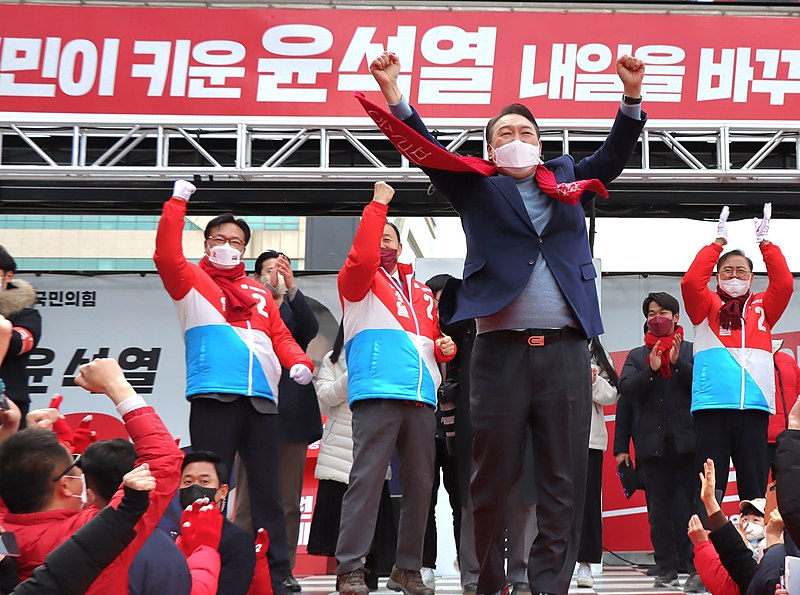
Following a close and bitter presidential race, South Korea has elected its new leader. Conservative opposition candidate Yoon Suk-yeol won the presidency, defeating his liberal rival Lee Jae-myung.
Yoon was elected to the presidency in South Korea this week in a close race between him and Lee. The conservative candidate won 48.6 percent of the country’s votes while Lee had 47.8 percent, from over 98 percent of votes that were counted. Yoon will be succeeding outgoing president Moon Jae-in, for a five-year term and will take office in May.
Yoon, who is a former top prosecutor, said Thursday that he intends to honor the Constitution and the parliament while working with the opposition parties when he takes office. Yoon said that his election was a “victory for the great people.” Yoon also thanked Lee and his other rival candidates in his acceptance speech.
“Our competition is over for now,” said Yoon. “We have to join hands and unite into one for the people and the country.”
In a separate event with supporters, Yoon also said that as president, “national unity” would be among his top priorities, along with his belief that all people should be treated equally regardless of their political, regional, and socioeconomic differences.
When it came to foreign policies, Yoon said that he intends to deal with provocations from North Korea sternly and seek to ramp up trilateral security cooperation with the US and Japan. An enhanced alliance with Washington would also be at the forefront of Yoon’s foreign policy while taking a more assertive approach on China.
Voter turnout during this year’s elections was at 77.1 percent with a record early voting, despite concerns that ballot counting would take longer due to the votes from COVID-19 patients. Around 44 million South Koreans 18 years old and above were eligible to vote. During early voting last week, 16 million ballots were cast.
With Yoon as the next president, he is set to face a host of challenges plaguing the country, with a low birth rate, rising house prices, and the effects of the COVID-19 pandemic on the country.







