


 Trump Slams Super Bowl Halftime Show Featuring Bad Bunny
  Japan’s Prime Minister Sanae Takaichi Secures Historic Election Win, Shaking Markets and Regional Politics
  U.S. Lawmakers to Review Unredacted Jeffrey Epstein DOJ Files Starting Monday
  Israel Approves West Bank Measures Expanding Settler Land Access
  Trump Says “Very Good Talks” Underway on Russia-Ukraine War as Peace Efforts Continue
  Trump’s Inflation Claims Clash With Voters’ Cost-of-Living Reality
  New York Legalizes Medical Aid in Dying for Terminally Ill Patients
  Jack Lang Resigns as Head of Arab World Institute Amid Epstein Controversy
  Trump Congratulates Japan’s First Female Prime Minister Sanae Takaichi After Historic Election Victory
  Japan Election 2026: Sanae Takaichi Poised for Landslide Win Despite Record Snowfall
  Trump Backs Nexstar–Tegna Merger Amid Shifting U.S. Media Landscape
  US Pushes Ukraine-Russia Peace Talks Before Summer Amid Escalating Attacks
  Trump Signs Executive Order Threatening 25% Tariffs on Countries Trading With Iran
  China Warns US Arms Sales to Taiwan Could Disrupt Trump’s Planned Visit
  Bangladesh Election 2026: A Turning Point After Years of Political Suppression
  Trump Lifts 25% Tariff on Indian Goods in Strategic U.S.–India Trade and Energy Deal
  Antonio José Seguro Poised for Landslide Win in Portugal Presidential Runoff


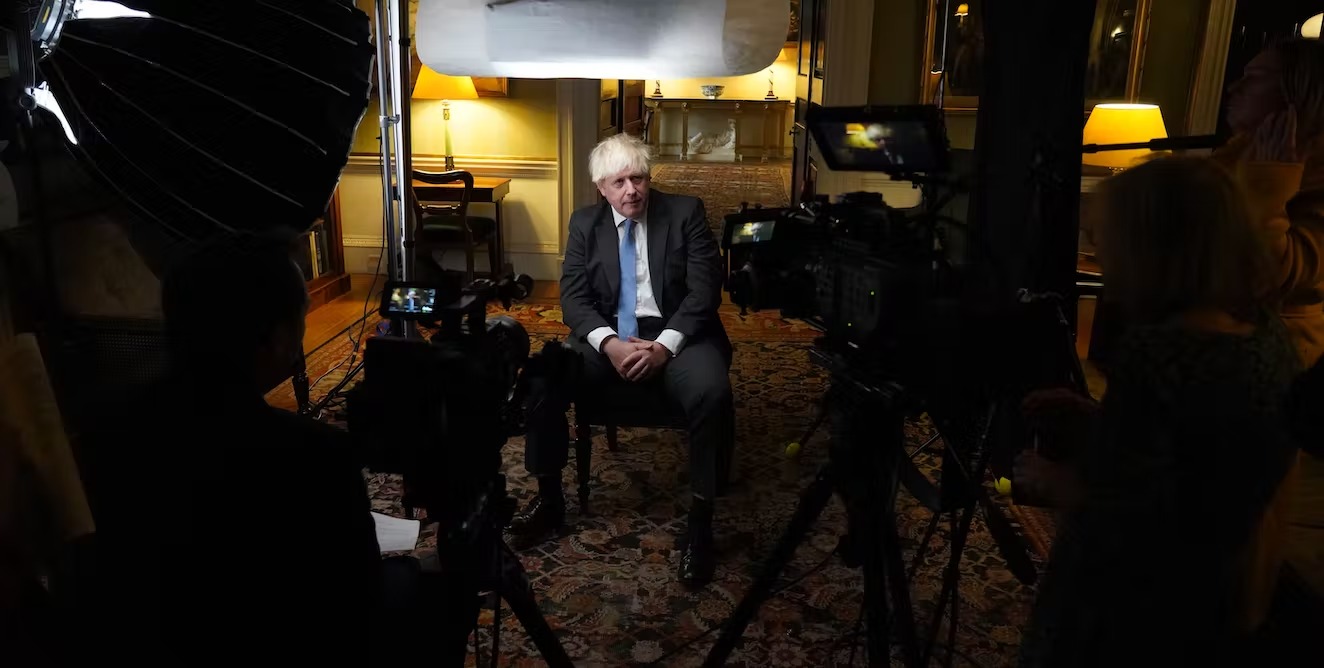
Most people probably don’t know who the BBC’s chairman is, or even that the BBC has a chairman. Yet this normally obscure figure has recently hit the headlines. Richard Sharp, BBC chairman since February 2021, is a former banker and a major donor to the Conservative party.
Sharp has links with both former prime minister Boris Johnson and current prime minister Rishi Sunak. Around the time of his appointment, Sharp was involved in securing a large personal loan for Johnson through his distant cousin Sam Blyth.
“What I did do was to seek an introduction of Sam Blyth to the relevant official in government,” said Sharp, who said he had one meeting with the cabinet secretary and head of the civil service, Simon Case, to facilitate the introduction. “We both agreed that to avoid any conflict that I should have nothing further to do with the matter. Since that meeting I have had no involvement whatsoever with any process.”
The problem with this is that the chairman of the BBC is appointed by the prime minister.
The story has fuelled accusations of sleaze against the Conservatives. Perhaps more significantly, it’s another bad story for the BBC, coming hot on the heels of drastic funding cuts and uncertainties about the corporation’s future, spoiling the celebratory mood as the corporation marks its centenary year.
However, looking at the history of the role, it’s clear that this is one more episode in a long-running debate about politics and the governance of the BBC.
A political appointment
The position of chairman was created when the BBC became a publicly owned corporation in 1927. The chairman, and the members of the board they oversaw, would be appointed by whoever was in government at the time.
However, appointees were supposed to be chosen on a non-political basis. This system aimed to avoid the appearance of direct state control, while still allowing the government to influence the policies of the BBC.
Initially, the idea was that the chairman would play a hands-on role. However, the domineering first director general of the BBC, Sir John Reith, refused to concede any of his authority. He ensured that the chairman’s role was limited to confirming the policies devised by the director general.
Despite this dilution of the chairman’s powers, accusations have often been made that they act as a tool of government influence over the BBC. These allegations have had some substance.
In 1967, then prime minister Harold Wilson, who thought that the BBC was biased against the Labour party, appointed Lord Hill of Luton as chairman to rein in director general Hugh Carleton Greene. Hill had formerly chaired the Independent Television Authority, responsible for overseeing ITV, the BBC’s main rival at the time.
This was the first time that someone from the world of commercial television had been brought in to help run public broadcasting. It was widely seen inside the BBC as an attempt to put a leash on the corporation. Greene left the BBC shortly afterwards.
Claims about political influence peaked in the 1980s when Margaret Thatcher appointed Conservative supporter Stuart Young as chairman, with William Rees-Mogg (father of current MP Jacob Rees-Mogg) as vice-chairman. Thatcher was concerned that, with its critical coverage of the Falklands War and the Troubles in Northern Ireland, the BBC was undermining her leadership and acting unpatriotically.
One BBC senior executive thought that Rees-Mogg behaved less like a BBC vice-chairman and “more like the leader of the opposition”. After Young died, Thatcher replaced him with another loyal Conservative, Marmaduke Hussey.
Hussey helped force out the BBC director general Alasdair Milne and brought in new, reforming senior leadership, including director general John Birt . Remarkably, Birt managed to win over the Conservatives Thatcher and John Major and Labour prime minister Tony Blair. He later became a senior advisor to Blair’s New Labour.
Trust and the BBC
Subsequently, close links between the Labour party and later BBC chairman Gavyn Davies and director general Greg Dyke didn’t prevent a disastrous clash between the BBC and the government in 2003/4 over the Iraq War. Part of the fallout of this crisis was the creation of new governance structures.
The board was replaced by a new BBC Trust, supposedly to reinforce accountability and editorial rigour. However, this didn’t dilute potential government influence: the members and chair of the trust were all government appointees.
The BBC Trust proved incapable of handling the scandals faced by the corporation from 2011 onwards, including revelations of historic crimes committed by broadcaster Jimmy Savile on BBC premises and evidence of significant mismanagement over a failed archive digitisation project, which cost £100m.
By 2015, even the chair of the trust acknowledged it was not fit for purpose. The following year, it was replaced by a new BBC board: half the members would be appointed by the BBC but the other half, including the chair, would be direct government appointees. Considering recent reports about links between Sharp and Johnson, this system now also seems to be flawed.
Critics of the BBC would argue that problems with the corporation’s governance reflect the outdated nature of the very idea of public broadcasting. It has been suggested, for example, that we might dispense with the public corporation and its links with the state, and instead restructure the BBC as a subscriber-owned mutual like the National Trust.
However, it is debatable whether this change would dilute government influence in any significant way. And many of the things the BBC does, such as the World Service, wouldn’t easily operate under such a model.
The one thing that’s clear is that, after 100 years, we still haven’t worked out the best way to govern the BBC.













