


 Asian Stocks Plunge as AI Chip Selloff Hits South Korea and Japan
  IMF, World Bank Meetings Face Global Economic Risks Amid Iran War
  Trump Defends Russian Diesel Deal Amid US Sanctions Backlash
  Bank of America Predicts Yen Rebound as USD/JPY Faces Risks
  Deutsche Bank CEO Urges Faster German Economic Reforms
  Oil Prices Fall as Trump Ceasefire Claim Shifts Market Focus to U.S. CPI
  Global Stocks Mixed as Oil Falls Ahead of US Earnings
  Philippines Current Account Deficit Seen at $19.1 Billion in 2026
  UK Finance Minister Healey Calls for Fiscal Discipline Amid Global Risks
  Oil Prices Surge Above $106 After Deadly Saudi Airport Attack
  Wall Street Ends Mixed as Investors Await CPI and Bank Earnings
  European Stocks Rise as Oil Prices Fall Ahead of US CPI
  Trump Secures Russian Diesel Deal as US Fuel Prices Surge
  Asian Currencies Steady as Dollar Nears 18-Month High Ahead of US CPI
  Oil Prices Fall as Russia Signals Higher Diesel Exports
  Fed's Hammack Urges Faster Rate Hikes to Fight Inflation
  Gold Prices Rebound as Dollar Weakens Ahead of US Inflation Data


 Add as a preferred source on Google
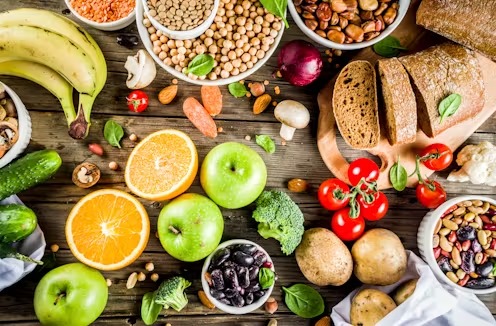


More than 75% of the food consumed in the world today comes from just 12 plant and five animal species. The over-dependence on this small selection, which includes rice, maize and wheat, damages the environment and human health, and it makes our globalised food system vulnerable to shocks. But on top of all this, it also has negative economic impacts.
Our recent paper shows why crop diversity is the key to the transformation of the food system. We suggest that a diversity-based system can provide multiple benefits for the health of people and planet and distribute the financial profits more equitably.
As opposed to industrial monocultures, farms that grow a variety of crops and trees are better for the environment because they increase the richness of non-farmed species, improve nutrient cycling and carbon sequestration, and support the livelihoods of farmers.
For example, a 2023 study of agroforestry in east Africa suggested that unlike monocultures that produce only cereal grains, multi-crop systems support livelihoods by producing firewood, construction material, timber, medicinal plants and other non-wood forest products in addition to food.
These farms also often support alternatives to conventional agriculture, adopting farming practices that include regenerative farming and permaculture (that is, sustainable land-use).
A 2021 report looking at regenerative farming in Africa found that this form of agriculture could add more than US$15 billion (£11.7 billion) to the African economies per year by 2030, increasing to US$70 billion by 2040 (one fifth of the current agricultural GDP of sub-Saharan Africa). The same report found this could create more than a million full-time jobs by 2030, and nearly 5 million jobs by 2040.
The current global trade in food commodities such as corn, rice, soybean, sugarcane and wheat is now controlled by a small number of big companies. They have influence on all aspects of the food system including production, processing, packaging and transport.
Viewing food as a profitable investment rather than a source of sustenance has introduced serious inequalities. One consequence is foreign direct investment in developing countries displacing small-scale farmers, which contributes to inequalities in land ownership and exacerbates food insecurity.
Diversity for health
Food and health are closely interconnected and modern medicine is increasingly recognising the connections between the so-called “gut-immune-brain axis”.
A study of UK adults showed that consumption of ultra-processed food is associated with increased risk of metabolic diseases such as cancer and heart disease. Yet two thirds of the calories consumed by adolescents in the UK come from industrially produced and ultra-processed food.
If the food system is able to deliver “real food”, made up of a variety of minimally processed ingredients, that will probably lead to better health outcomes. This again can have profound economic benefits, as a greater variety of food sources improves the gut microbiome, promoting better physical and mental health, and reducing the burden on healthcare providers.
Our research is exploring pathways for transforming the food system so that environmental concerns, nutritional needs and cultural traditions are prioritised.
We suggest that diversity needs to be introduced at all levels in the food system. Diversifying the plant and animal species from which our food comes is certainly a sensible starting point, but diversity needs to become the key principle in how we organise the entire food system.
Production and processing
Land that grows a wider range of crops will also support a broader range of farming practices including agroforestry, permaculture and regenerative farming.
Such farmland will support a greater diversity of habitats, and richer varieties of non-farmed species. Varied farming landscapes can promote more local and regional food economies founded on a wide variety of seasonal produce typically grown on small-scale family farms. These tend to provide economic benefits to a larger section of the community.
Trade and transport
The diversity of food products will require a diversity of food processing and packaging technologies run through local enterprises.
The storage, distribution and transport of a wider variety of crops, vegetables, fruits and meat products will also require an infrastructure that supports more local businesses as opposed to large supermarkets dependent on globalised supply chains.
Global trade in high-value food commodities needs to be better regulated, with particular focus on inequalities in land ownership, unequal access to markets, and industrial monopolies marginalising small-scale producers, processors and distributors.

Permaculture practices are a good example of more sustainable farming. columbo.photog/Shutterstock
Consumption and nutrition
Food production, processing and supply that puts the emphasis on local and regional economies will also benefit consumers. More diverse sources of food can improve the diversity of the gut microbiome.
In contrast, the industrialised food system has made food cheap and abundant, but it comes at a cost to the environment and human health. Locally produced and seasonal food can be more expensive, but with support from governments to regulate prices and to promote local and regional food economies, food could remain affordable.
Governments need to see food as integral to the public sector economy, alongside things like healthcare and environmental protection.
Ultimately, a diversity-based food system could provide environmental benefits, reduce climate vulnerabilities, and improve health and wellbeing. But it could also transform local and regional food economies and provide secure access to nutritious products to some of the most food-insecure people in society.







