


 Evernorth XRPN Nasdaq Listing Delayed to October 12
  JPMorgan CEO Jamie Dimon Warns Mythos AI Raises Cyber Risk Tenfold
  Ethereum Price Drops Below $2,600 as Long Liquidations Hit 4-Month High
  US Government Moves $1 Billion in Bitcoin Amid Sale Speculation
  XRP Whale Activity Drops 27% in Eight Days Amid Market Sell-Off
  Zcash Privacy Demand Rises as AI Exposes Bitcoin Transactions
  Kazakhstan and Tether Explore Tenge Stablecoin and RWA Tokenization
  Robinhood Buys $25 Million in Bitcoin for Corporate Treasury
  Bitmine to Stop Ethereum Buying After Reaching 5% ETH Supply
  Solana Price Drops 3% Despite Samsung USDC Partnership
  Jameson Lopp Downplays AI Threat to Bitcoin Cryptography
  David Schwartz to Reveal XRP Ledger Future at Ripple Swell 2026


 Add as a preferred source on Google
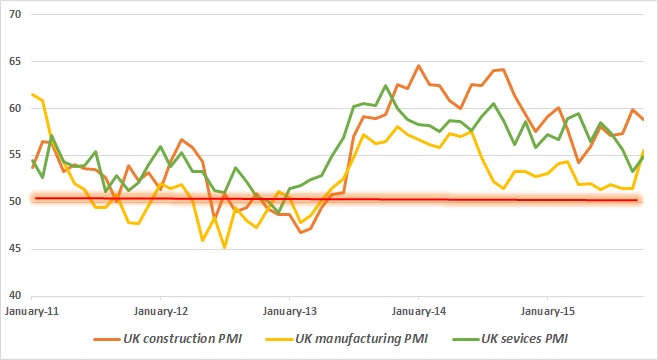
Last three days of PMI report from Markit economics have shown that UK economy is quite robust heading into final quarter of the year.
- Monday's manufacturing PMI showed, strong rebound in manufacturing sector. PMI surprised to the upside to 55.5 compared to 51.7 in September and 51.3 expected. Growth in new orders have been encouraging. Report provided evidence that in spite of weakness from abroad, domestic economy has fastened. Manufacturing sector contributes 14% to GDP.
- Tuesday's construction PMI was way above 50 mark, (above which signals expansion) at 58.8. Though headline PMI slowed down from September's 59.9, growth was broad based. All three components, residential, commercial and civil engineering business activity grew with commercial leading the way. Moreover job creation in the sector has hit 11 month high. Construction sector contributes 6% to GDP.
- Today's services PMI painted similar robust picture. Growth rate in services sector has strengthened for first time in four months and headline PMI moving to 54.9 in October from 53.3 in September. Employment has started growing again at fast pace, fastest since May. Services sector contributes 79% to GDP.
As of now, fourth quarter seem to have started on a positive note for UK economy, however deflationary threat is still at large. BRC shop prices dropped for 30th consecutive month, declining by -1.8% in October.
Pound however failed to gain much from improvement dockets as Bank of England policy meeting scheduled tomorrow, followed by NFP report from US on Friday. Pound is currently trading at 1.542 against Dollar.







