


 Moonshot AI Executives Seek Settlement Ahead of Hong Kong IPO
  OpenAI Revenue Hits $50 Billion, Below Earlier $70 Billion Estimate
  Apple Names Steve Smith M&A Chief in Leadership Shakeup
  Trump Buys Up to $25M in Meta Stock, Invests in SpaceX Debt
  Oracle Uses Trucked Natural Gas to Power AI Data Centers Amid Pipeline Delays
  Elon Musk Eyes Semiconductor Manufacturing Expansion With $15 Billion Terrafab Project
  Amazon in Talks to Acquire AI Startup Decart for $7 Billion
  Robinhood Chain Eyes Priority Gas Auctions for Faster Trades
  Meta Launches Muse Wonder AI Models, Shares Rise 3.7%
  Samsung, SK Hynix Shares Plunge as China Chip Competition Grows
  Apple Supplier Luxshare Sees Limited Impact From US Patent Probe
  Apple Cuts iPhone 18 Pro Production Orders Amid Weak Demand
  Nvidia’s China AI Chip Market Share Falls to 34% as Huawei Gains Ground
  Samsung, SK Hynix Shares Fall as China's CXMT Advances DRAM Technology
  Amazon Cuts More Jobs as AI Investment Expands


 Add as a preferred source on Google
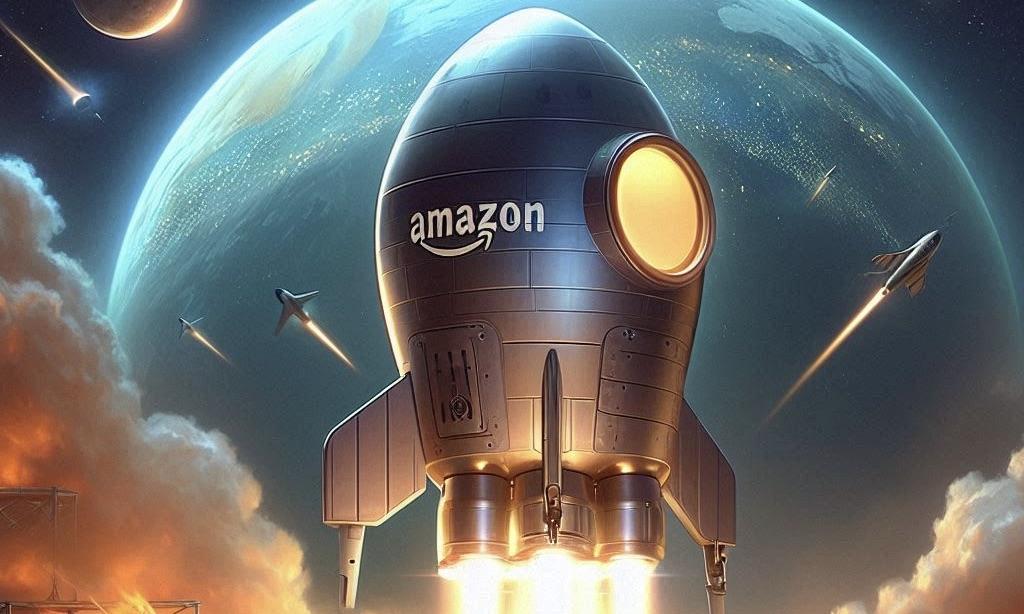
Amazon's Project Kuiper, a rival to Starlink, has postponed its initial satellite launch to the fourth quarter of 2024, according to a recent blog post. The beta trials for the satellite internet system will now begin in early 2025, impacting the rollout schedule.
Amazon's Project Kuiper Launch Delayed to Q4 2024, Beta Trials Pushed to 2025
Project Kuiper, Amazon's competitor to Starlink, appears to be experiencing delays. As per a blog post from Amazon, the initial launch of Project Kuiper is now anticipated to occur in the fourth quarter of 2024. According to Teslarati, Project Kuiper's initial production satellites were expected to be launched in the first half of 2024.
In a blog post, Amazon disclosed its revised Project Kuiper timeline. The e-commerce behemoth anticipates that the first completed production Project Kuiper satellites will be delivered to launch sites this summer, paving the way for an exciting future. The satellites are expected to be launched in the fourth quarter, and satellite production is anticipated to increase in the years leading up to 2025, promising a robust and efficient system.
“We expect to ship our first completed production satellites this summer, and we’re targeting our first full-scale Kuiper mission for Q4 aboard an Atlas V rocket from ULA (United Launch Alliance). We will continue to increase our rates of satellite production and deployment heading into 2025, and we remain on track to begin offering service to customers next year,” Amazon wrote in its blog post.
Amazon's beta trials of its satellite internet system have been postponed until the following year, following the postponement of Project Kuiper's initial launch to Q4. The company previously anticipated that the beta trials would commence with commercial customers later this year. In a statement to PCMag, Amazon stated that the beta trials will occur the following year. "We anticipate that we will commence providing demonstrations to enterprise customers in early 2025."
Launch Partner Issues and FCC Pressure Contribute to Amazon's Project Kuiper Delays
PCMag reported that problems with the satellite internet system's launch partners may have been a significant factor in the delays of Project Kuiper. However, Amazon did not explain this. In 2022, Amazon disclosed that it intended to use next-generation Blue Origin, Arianespace, and ULA rockets to facilitate Project Kuiper's launches. Nevertheless, developing and deploying their next-generation rockets has been challenging for the ULA, Arianespace, and Blue Origin thus far.
Amazon hinted at this in its blog post, stating that it would be employing the Altas V, an older rocket from ULA, for the initial launch of Project Kuiper later this year. Amazon may also be experiencing some pressure from the FCC, as the agency reportedly mandates that half of its proposed satellite constellation for Project Kuiper be launched by July 2026.
Photo: Microsoft Bing







