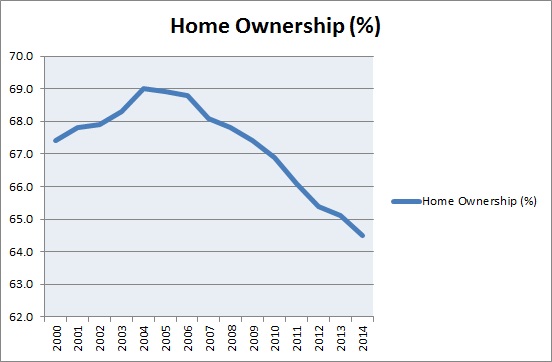
Home ownership is a key data showing economic health, as it points at what percentages of people own the place they live in. If the house is not owned the occupant pays a considerable fee, reducing their wallet size. Hea…
Home ownership is a key data showing economic health, as it points at what percentages of people own the place they live in.
If the house is not owned the occupant pays a considerable fee, reducing their wallet size. Healthy growth points to overall growing wealth in the economy and reduction in inequality.
Last boom of 2003-2007 saw healthy rise of homeownership in US, that fueled the markets for Mortgage backed securities before the market was shattered during the crisis.
The rate of home ownership neared 70 percent in 2004 but faltered since then and housing market finally got busted in 2008.
Despite improvement in US economy, growth in the housing market is yet to pick up pace. Recent data pointed at that. Moreover FED officials also expressed their concern over the condition.
Since rates are already rising in US and Federal Reserve is about start the rate rise starting this year, the housing market is expected to continue to feel the heat.
After the first rate hike is taken care with, it would be vital to watch out the reactions in the housing market and FED is expected to remain cautious over the development.
Australia's September 2026 labour report shocked to the negative: unemployment climbed to 4.7% from 4.6% and employment dropped by 39,300 against expectations for a 20,000 increase. Part-time work dropped by 73,700, whic…
UNCX Network, a cryptocurrency token vesting platform formerly known as UniCrypt, suffered a security exploit on Wednesday that drained approximately $86,000 from its shared Ethereum token pool. Blockchain security firm …
Solana is preparing to introduce its highly anticipated Alpenglow consensus upgrade on October 21, 2026, marking one of the blockchain's biggest technological changes since its launch in 2020. The upgrade aims to signifi…