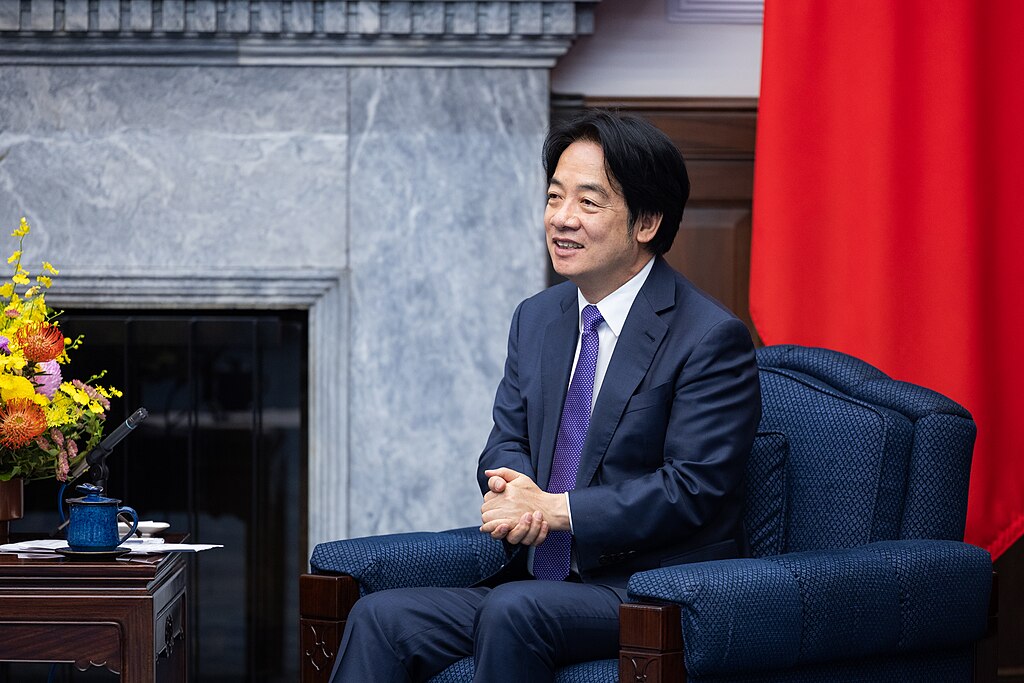
Republican Senator Jim Banks visited Taipei and delivered a direct message to Taiwan's President Lai Ching-te: the island's parliament must stop stalling and approve a proposed special defense budget. Banks, a member of the U.S. Senate Armed Services Committee, emphasized that passing the budget would send a powerful signal to Beijing and the international community that Taiwan is committed to defending itself through strength rather than submission.
President Lai introduced a $40 billion supplemental defense spending proposal last year to bolster Taiwan's military capabilities against China, which continues to claim the island as part of its territory. However, Taiwan's Legislative Yuan — where opposition parties hold the majority — has yet to reach a consensus, with competing and less costly alternatives still under debate.
During his meeting with Lai, Banks drew a parallel between the Taiwanese president's defense push and U.S. President Donald Trump's proposed $1.5 trillion military spending plan, praising Lai's leadership on the issue. He stressed that legislative action was now essential to demonstrate resolve. Banks was among 37 bipartisan U.S. lawmakers who wrote to Taiwanese officials in February expressing concern over the budget delays. Another delegation of American legislators delivered a similar message during a separate visit to Taipei the previous week.
The largest opposition party, the Kuomintang (KMT), maintains it supports increased defense spending but refuses to approve what it characterizes as a blank check. The KMT also argues that diplomatic engagement with Beijing remains just as critical as military preparedness. KMT chairwoman Cheng Li-wun is currently visiting China and may meet with President Xi Jinping.
President Lai reiterated that Taiwan values peace but believes only genuine strength can secure it. He also made clear that any dialogue with Beijing cannot come at the expense of Taiwan's democracy, freedom, or national sovereignty. China continues to refuse direct talks with Lai, labeling him a separatist — a characterization he firmly rejects.