


 Tesla Holds $960 Million in Bitcoin as BTC Gains Top $710 Million
  Lululemon Cuts Jobs, Restructures Team After Product Quality Issues
  Arm Shares Fall Over 3% After Qualcomm Wins License Dispute
  BlackRock CEO Warns Data Center Ban Could Trigger US Recession
  Epic Games Delays Disney Shooter, Shifts to AI-First Development
  Samsung, SK Hynix Shares Fall as China's CXMT Advances DRAM Technology
  SpaceX Starlink Restrictions Disrupt Ukraine Military Operations
  Nvidia CEO Jensen Huang Open to Cutting Chip Supply Over Unsafe AI
  TSMC Profit Set to Surge 65% as AI Chip Demand Drives Record Earnings
  CVS Pharmacy Agrees to $315 Million Opioid Settlement
  Meta Launches Muse Wonder AI Models, Shares Rise 3.7%
  Apple Intelligence Set for China Launch in December With iOS 27.3
  ASML Raises 2026 Sales Forecast as AI Chip Demand Surges
  AT&T Sells Mexico Wireless Business to Televisa for $2 Billion
  Trezor Cuts Reseller Network After Ledger Security Breach
  Arm Breaches Qualcomm License Deal, Jury Awards $2


 Add as a preferred source on Google
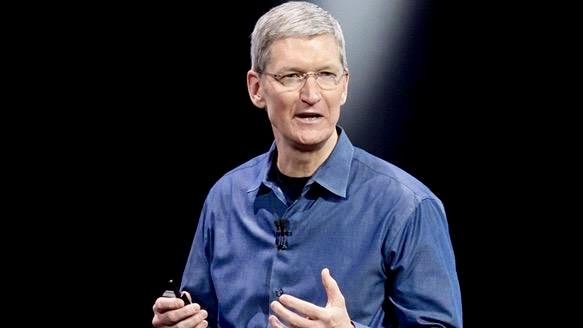
Apple CEO Tim Cook’s 2011 critique of Intel’s chipmaking capabilities shifted Apple’s focus to TSMC, forging a partnership that transformed the tech world. This pivotal decision underscored Apple’s reliance on cutting-edge innovation.
Apple’s Early Views on Intel’s Manufacturing Capabilities
While establishing TSMC, the biggest contract chip manufacturer in the world, Apple CEO Tim Cook was forthright in his description of Intel's contract manufacturing division to TSMC founder Dr. Morris Chang. Dr. Chang detailed his experiences in founding TSMC and meeting with Apple CEO Tim Cook to discuss chip manufacturing in his autobiography.
According to the facts, Cook expressed his dissatisfaction with Intel's contract manufacturing capabilities to Chang in a meeting that would shape a choice that had far-reaching consequences for the semiconductor industry.
The majority of the processors used by Apple's many electronic devices—including the iPhone, MacBook, iPad, and countless more—are contracted out to TSMC. Apple tried a dual-source method for its chip needs with some iPhone models, but due to alleged quality issues with Samsung Foundry's products, the company had to rely on TSMC as its sole-source for all processing chip requirements. The iPhone is Apple's most popular product.
TSMC’s Partnership With Apple Transforms Chipmaking
Thanks to their tight cooperation, Apple is able to have complete creative control over the design of its computer chips and smartphones. Because it can get its hands on TSMC's cutting-edge production technology before any other company in the world, the latter has allowed it to move away from Intel's processors.
The founder of TSMC, Dr. Morris Chang, discussed in detail his initial discussions with Apple regarding the possibility of TSMC producing iPhone chips.
Although subsequent Apple devices, including the iPad, made advantage of the A series CPUs, the iPhone was the pioneer in this regard. Up until the Apple A8, which underpinned the iPhone 6 series, Samsung was the go-to manufacturer for Apple's CPUs used in the iPhone, iPod, and other products.
Jeff Williams Connects TSMC to Apple’s Leadership
Since the 2014 debut of the A8, which used the 22-nanometer manufacturing process, TSMC has progressively taken over all of Apple's chip production needs, replacing Samsung.
In his autobiography, Chang recounts his initial meeting with Tim Cook, Apple's CEO, in order to get contract manufacturing orders for Apple's processors. The encounter between Chang and Cook was arranged, in large part, by Apple's COO, Jeff Williams, he claims. Terry Gou, founder of Foxconn and a cousin of Chang's wife, introduced Williams and Chang.
One of Apple's main contract manufacturers for iPhones and other devices is Foxconn. Along with TSMC, it has become one of the largest companies in its field and was instrumental in Apple's decision to move production overseas.
Intel’s Challenges Pave the Way for TSMC
Following Gou's introduction, Chang and Williams enjoyed a dinner together in Taiwan. According to Chang, Apple's chief operating officer approached him in 2011 to express interest in a potential chip contract manufacturing partnership with Intel.
As a result, Apple and TSMC temporarily halted their negotiations over the same orders for two weeks, and Chang traveled to the United States to speak with Cook, WCCFTECH shares.
At dinner at Apple's headquarters, the founder of TSMC reportedly heard Cook reassure him that there was no need to be concerned. He says that the CEO of Apple did not say anything specific regarding Intel's profits or expenses, but he did say that Intel was not an excellent OEM.







