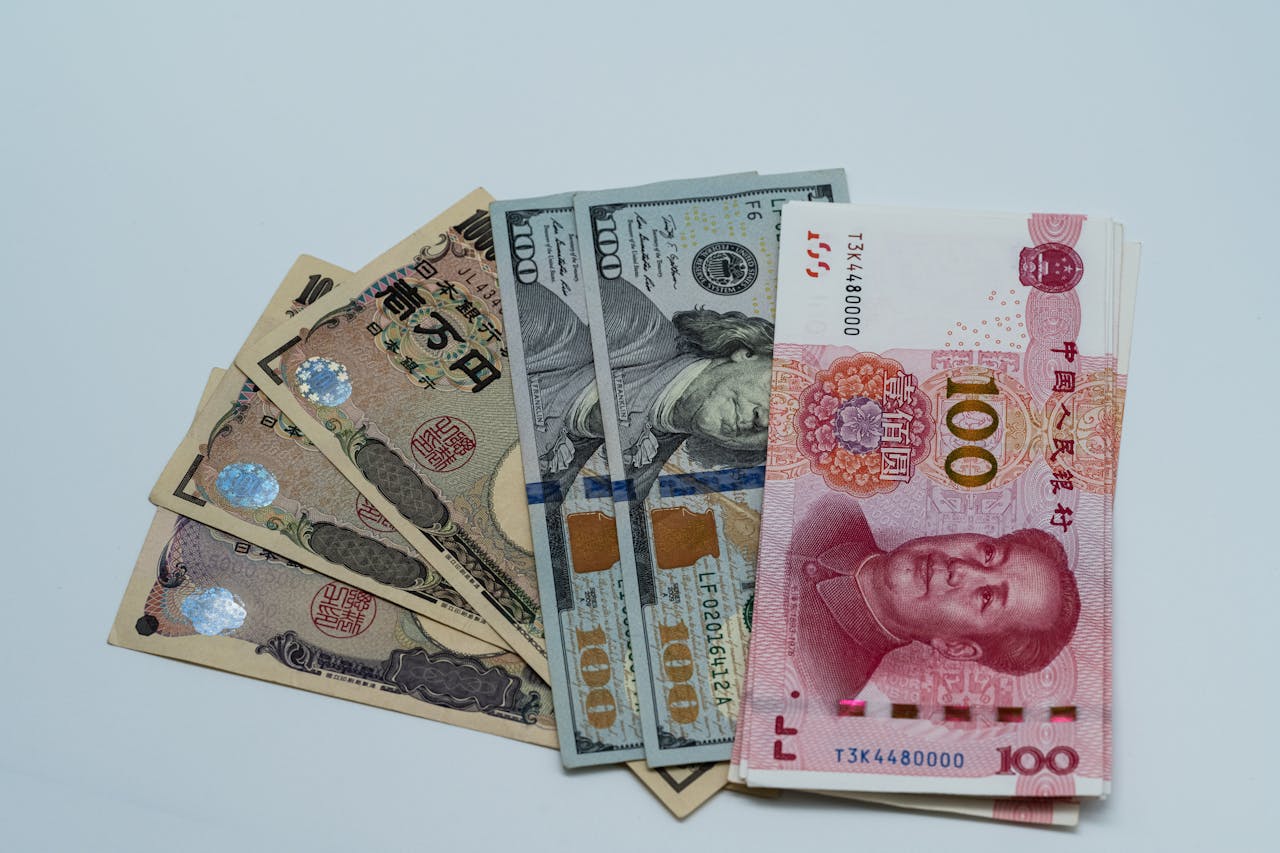
Asian currencies traded mostly steady on Wednesday as investors turned their focus to the upcoming U.S. Federal Reserve meeting, where markets are increasingly pricing in a potential interest rate cut. The cautious sentiment kept most regional currencies near the flatline, while the Indian rupee weakened further to a fresh all-time low, pressured by persistent capital outflows and rising dollar demand.
The U.S. Dollar Index slipped 0.2% in Asian hours, with Dollar Index Futures also down 0.2% as of 06:32 GMT. Despite the softer dollar, the rupee’s USD/INR pair surged to a record 90.32 early in the session and hovered at 90.27 by 06:25 GMT. Analysts pointed to weak trade performance, tepid portfolio inflows, limited foreign direct investment, and ongoing uncertainty around a U.S.–India trade agreement as key factors driving the imbalance between dollar supply and demand. MUFG analysts emphasized that heightened import needs and a widening current account deficit are amplifying pressure on the currency.
Across the region, most Asian currencies remained stable ahead of critical U.S. economic data releases, including the ADP private-sector jobs report and the November PCE inflation reading, both of which could influence the Fed’s policy direction next week. The Japanese yen edged 0.2% lower against the dollar, the South Korean won held near unchanged levels, and the Chinese yuan in onshore trade slipped 0.1%. The Singapore dollar also traded flat.
In contrast, the Australian dollar strengthened, with the AUD/USD pair gaining 0.3% to reach a one-month high after Australia posted stronger-than-expected third-quarter GDP growth. Although quarterly growth came in at 0.4%—slightly below forecasts—annual growth accelerated to 2.1%, the fastest pace in two years. Rising inflationary pressures combined with resilient economic performance may prompt the Reserve Bank of Australia to keep interest rates steady for longer.