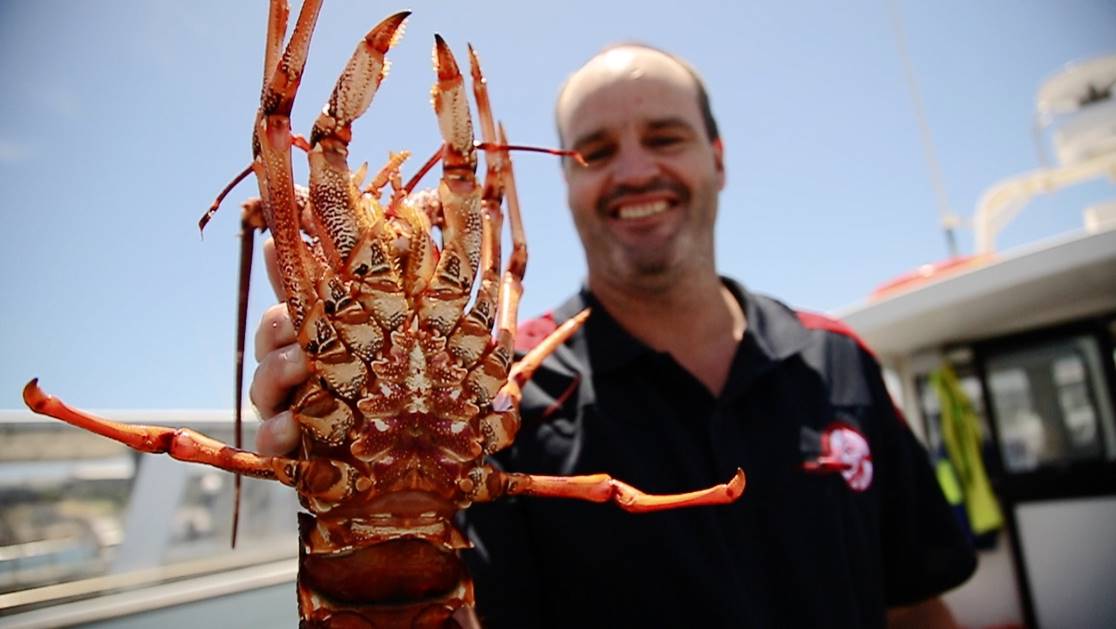
Australian authorities recently amended legislation to allow commercial rock lobster fishers to sell large quantities from the back of their boats during December and January after China imposed a near-total import ban.
So far the Australian public has responded enthusiastically, offering a much-needed lifeline to Camarda and his fellow vendors.
On a pre-Christmas weekday, the world-renowned western rock lobster was sold directly on the quay for $34 a kilogram — a 36 percent markdown.
But demand across Australia is high that some supermarkets placed limits on the number of lobsters customers can buy.
Australia’s rock lobster exports were worth half a billion US dollars annually, with 94 percent usually going to China.
But a few weeks ago, China imposed a near-total import ban on lobster as part of a politically charged “shadow trade war.”
China has been raising a list of issues including Australia’s call for an inquiry into the COVID-19 origins, and a ban of Huawei’s in the nation’s 5G network.
So far, the Australian economy has returned to growth in the last quarter, exiting a COVID-induced recession.
But individual businesses have been forced to find new customers as a dozen Australian sectors hit with import levies, with the barley industry particularly badly hit. Exporters stand to lose as much as $2-4 billion worth of sales.
Some barley farmers have planted other grains or re-routed shipments to the Middle East.
Before the COVID-19 pandemic, prices topped $80 a kg in Western Australia and usually averaged around $53 per kilo.