


 Asian Currencies Mixed as Yen Weakens, Dollar Holds Firm
  Bangladesh GDP Growth Accelerates to 4.6% on Industrial Rebound
  Oil Prices Rise as Gulf Hurricane and Middle East Supply Risks Mount
  Gold Prices Rise as Dollar Weakens, Treasury Yields Fall
  Asian Currencies Steady as Dollar Eyes Fourth Weekly Gain
  Dollar Near 18-Month High as Euro, Yen and Pound Weaken
  European Stocks Fall as Oil Rises Ahead of Fed Minutes
  Wall Street Falls as Oil Prices Rise and Tech Stocks Slide
  Trump Secures Russian Diesel Deal as US Fuel Prices Surge
  US Dollar Rises for Fourth Week as Fed Rate Hike Bets Grow


 Add as a preferred source on Google
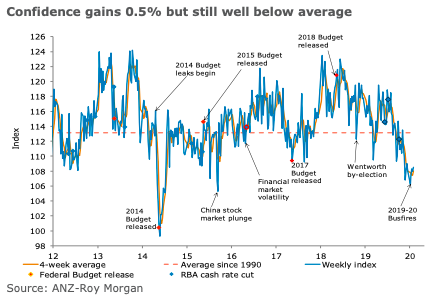
Australia’s ANZ-Roy Morgan consumer confidence edged up a touch last week, reversing the prior week’s decline, remaining well below average. Overall financial conditions were little changed, with offsetting moves in ‘current’ and ‘future’ finances.
Further ‘Current economic conditions’ gained 2.1 percent, while ‘future economic conditions’ declined 2.5 percent last week.
‘Time to buy a major household item’ gained 2.7 percent compared to a decline of 2.4 percent previously. The four-week moving average of ‘inflation expectations’ was up by 0.1ppt to 4.0 percent.
Meanwhile, the weekly reading rose to 4.2 percent, its highest level since early September, perhaps reflecting the lift in headline inflation reported in the December 2019 CPI report.
"Broadly stable consumer confidence in the face of news about the coronavirus, albeit at a level well below average, provides some comfort for the outlook. The decisive policy action taken the Government to protect the health and wellbeing of Australian citizens may be seen as a positive development that provides at least some offset to community concerns about the health and economic consequences of the virus. The coming week will be dominated by RBA commentary and some key data, not least the December retail sales figure, which is expected to confirm weak Christmas spending," said David Plank, ANZ’s head of Australian Economics.







