


 Asian Currencies Steady as Dollar Eyes Fourth Weekly Gain
  UK Finance Minister Healey Calls for Fiscal Discipline Amid Global Risks
  Dollar Near 18-Month High as Euro, Yen and Pound Weaken
  Bangladesh GDP Growth Accelerates to 4.6% on Industrial Rebound
  US Stock Futures Rise as Oil Prices Fall Ahead of Q3 Earnings
  France to Release 10 Million Barrels of Diesel to Ease Fuel Prices
  Global Stocks Mixed as Oil Falls Ahead of US Earnings
  US Treasury Yields Ease After Strong 10-Year Auction as Global Bonds Struggle
  Bank of America Predicts Yen Rebound as USD/JPY Faces Risks


 Add as a preferred source on Google
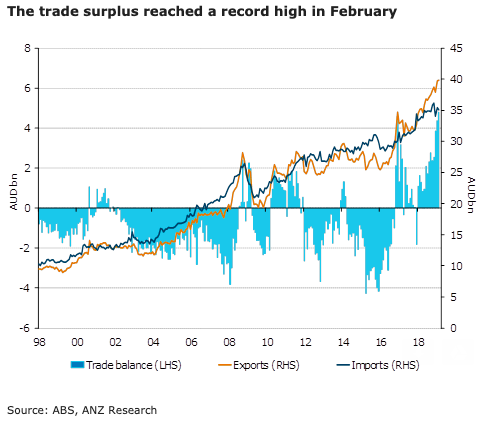
Australia’s trade balance improved in February to a record surplus, following January’s strong surplus. Underlying this were broadly steady exports, with a rise in iron ore offsetting a decline in coal.
A decline in imports was largely due to lower fuel imports, likely reflecting price effects. After surging in January, exports of non-monetary gold did not retreat significantly in February.
The monthly trade balance improved to a surplus of AUD4,801 million in February. Underlying this was a 1 percent fall in imports, while exports were broadly flat in the month.
Resource exports rose 11.4 percent in the month, as an 11.1 percent increase in metal ores and minerals offset a 12.7 percent decline in coal. Rural goods fell 1.1 percent, led by 6.1 percent declines in both cereals and wool. Manufacturing exports fell 3.2 percent, due to a 27 percent fall in transport equipment. Service exports rose 1.7 percent as travel increased 2.2 percent.
Imports intermediate and other merchandise goods fell 4 percent m/m, largely due to a 10.7 percent decline in fuel imports. Imports of capital goods declined 2.3 percent m/m as telecommunications equipment fell 6.2 percent and civil aircraft declined 19.3 percent.
Meanwhile, consumption goods imports rose 0.1 percent, despite an 18.4 percent surge in car imports. Service imports rose 2.8 percent, reflecting a 4.4 percent rise in travel.







